
Review · TOKYO
Tokyo: 60min Panoramic Open Top Bus Tour with Audio Guide
Tokyo is easiest to grasp from above street level, and this open-top double-decker ride gives you a fast look at the city’s changing face. In one hour, you pass government buildings, Tokyo Tower, waterfront districts, Rainbow Bridge, and old Ginza streets without changing trains or guessing where to walk next.
I like the broad, uninterrupted views and the simple route from Tokyo Station. I also like the price: at $14, it is a reasonable way to get your bearings, especially if you have limited time. The main catch is that it is not a hop-on hop-off bus, and rain may force the roof closed or cancel the outing.
Key points to know before you board
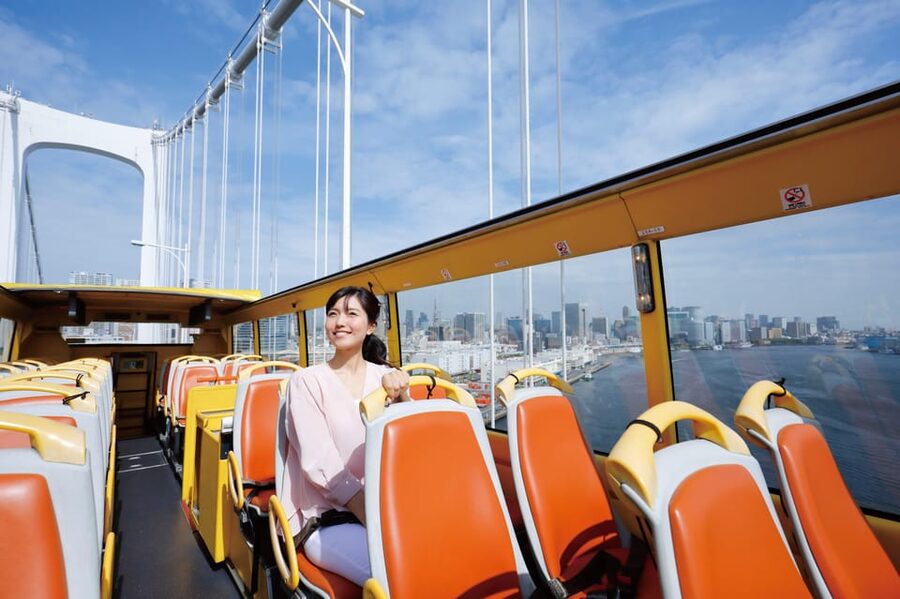
- Rainbow Bridge brings the best breeze: The crossing gives you an open view of Tokyo Bay and the waterfront districts.
- Tokyo Tower appears from several angles: The route lets you see the tower in ways a normal street walk rarely allows.
- The ride lasts exactly one hour: You get a compact overview, not a full sightseeing day.
- Audio guidance uses your own equipment: Bring a smartphone that works in Japan and your own earphones.
- The bus returns to Tokyo Station: The Hato Bus office near the Marunouchi South Exit is both the starting and ending point.
- Weather can change the experience: The roof may close in rain, and heavy rain can lead to cancellation.
Why this short Tokyo bus ride works
Tokyo can feel like several cities stitched together: government offices around Hibiya, high-rise business streets near Toranomon, bright Ginza shopping lanes, and open waterfront districts around Odaiba and Toyosu. This tour links those areas in a single loop.
I would use it early in a Tokyo visit. The route will not replace walking through Ginza or exploring Tsukiji, but it shows you how the parts fit together. You get a quick sense of distance, direction, and scale while sitting in one place.
The bus is a double-decker with an open top, so the view is the main event. You are not looking through a small side window or watching the city slide past at platform level. From the upper deck, buildings, bridges, signs, and road patterns are easier to see.
The Japanese-speaking guide handles the live tour, while GPS-based narration is available in English, Chinese, Korean, Spanish, French, Thai, Indonesian, and Vietnamese. That arrangement matters. You can follow the route in your preferred language, but you should not expect an English-speaking guide sitting beside you.
More Sightseeing Bus Tours in Japan
- Tokyo: Open Top Panoramic Sightseeing Bus with Audio Guide
★ 3.8 · 254 reviews - Departing from Takayama [Regular sightseeing bus] World Heritage Sites Shirakawago and Gokayama Ainokura
★ 4.5 · 137 reviews - Tokyo: Morning Sightseeing Bus Tour
★ 4.4 · 109 reviews
Tokyo Station makes a practical starting point
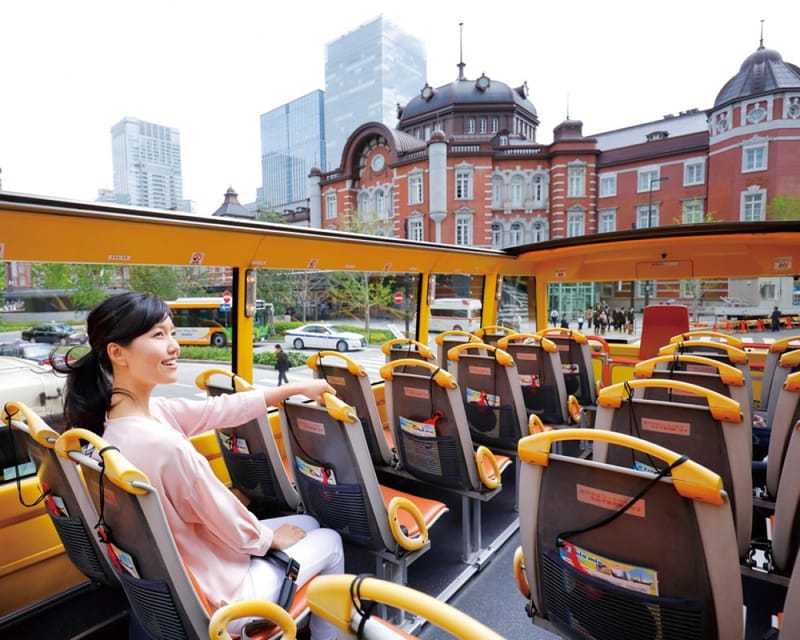
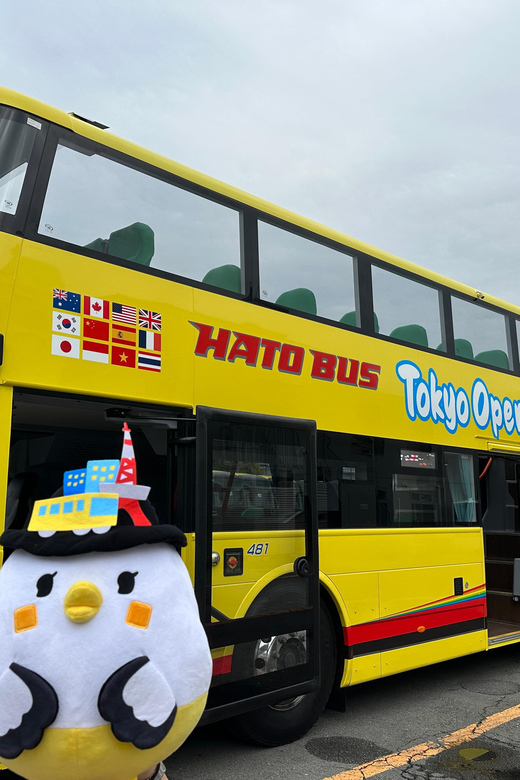
The meeting point is the Hato Bus Tokyo office near the JR Tokyo Station Marunouchi South Exit. After leaving the station, turn left and walk straight for about two minutes. The yellow Hato Bus stop is the useful landmark.
Give yourself time to find the correct exit. Tokyo Station is large, and arriving at the wrong side can turn a short walk into a longer station crossing. The listed coordinates are 35.678964, 139.765781 if you use a map app.
Starting and finishing here is convenient if you are already near the Marunouchi district. It also works well before or after a train journey, though you should allow time to locate the bus stop rather than arriving at the last minute.
The bus returns to the same Hato Bus office. That makes the outing easy to pair with a Tokyo Station meal, a walk around the Marunouchi South Exit, or onward rail travel.
Hibiya Park and the National Diet Building
The first part of the route passes Hibiya Park and the National Diet Building. You will not get off, so treat these as moving views rather than stops.
Hibiya Park gives the route a softer opening after the traffic around Tokyo Station. The National Diet Building then shifts the scene toward Japan’s political center. From an open-top bus, the view is less about entering either place and more about seeing how formal government buildings sit within central Tokyo.
The guide’s narration is useful here because the bus does not pause for a long visit. Keep your phone ready if you want to use the GPS audio system, and listen for the point where the route moves toward Toranomon.
Toranomon and Tokyo Tower from the upper deck
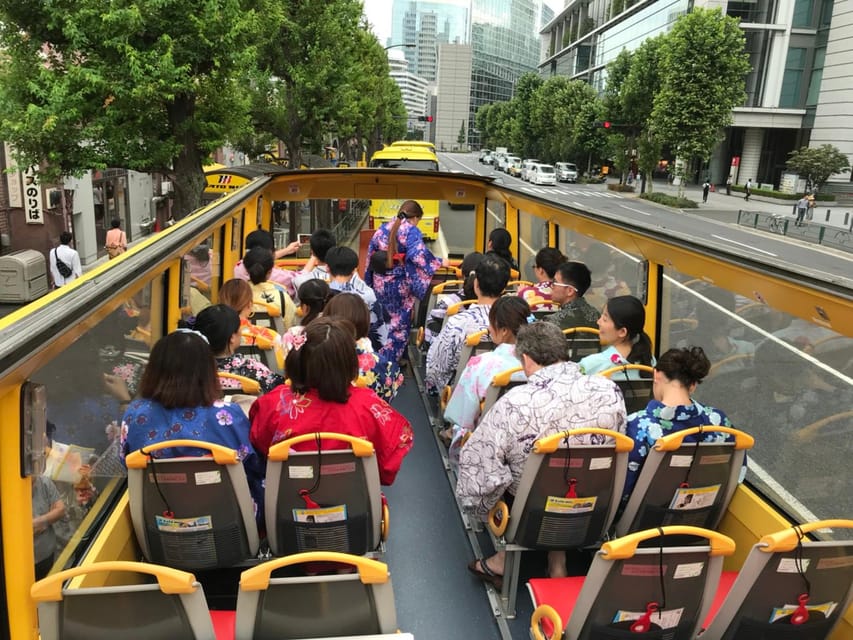
Toranomon is a business district, and the route shows you Tokyo in its working-day form rather than only its famous sightseeing points. Tall office buildings and busy streets make more sense when seen as part of the larger central city.
Tokyo Tower is the visual highlight for many people. The bus gives you several angles as it passes, which is one reason the open-top format earns its keep. A tower that can feel partly hidden at street level becomes easier to frame from above.
The bus does not stop at Tokyo Tower, so you will need a separate visit if you want to go inside or spend time around its base. Still, the moving views are useful. You can see how the orange-and-white tower rises above the surrounding city rather than viewing it from only one fixed lookout.
More Open-Top Bus Tours in Japan:
- Okinawa: Double-Decker Open Top Bus Tour for Shuri Castle
★ 4.0 · 3 reviews - Rome: Big Bus Hop-on, Hop-off Open-Top Sightseeing Tour
★ 4.1 · 9,537 reviews - Prague: Sightseeing Dinner Cruise on Open-Top Glass Boat
★ 4.4 · 6,314 reviews - New York: Hop-on Hop-off Sightseeing Tour by Open-top Bus
★ 4.2 · 5,863 reviews
Crossing Rainbow Bridge into the bay districts
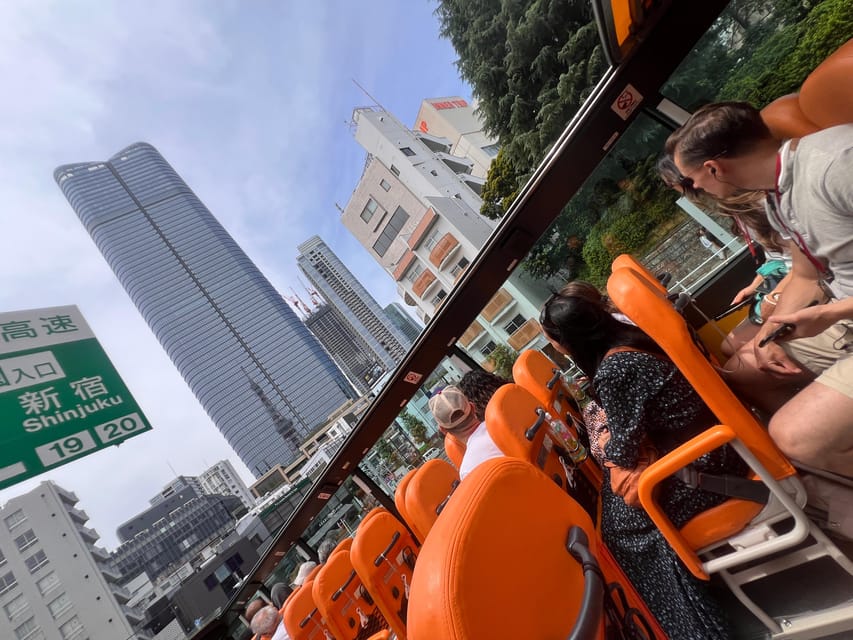
The route’s biggest change comes at Rainbow Bridge. You leave the dense central streets and cross toward Tokyo Bay, with the breeze and open sky replacing the tight walls of downtown roads.
This is the part where weather matters most. On a clear day, the open-top position gives you a broad view while crossing the bridge. On a rainy day, the roof may be closed, which changes the feel of the ride. Heavy rain can cancel the tour altogether.
Odaiba follows the bridge. This waterfront district is known for its wide roads and open setting, so it feels different from Ginza or Toranomon. The bus gives you a quick visual tour rather than time to explore on foot.
You should also expect wind on the upper deck, especially around the bridge. Bring a light layer even if the weather feels mild at street level. That is practical advice rather than a promise about conditions, which can change quickly.
Odaiba and Toyosu show Tokyo’s newer side

Odaiba and Toyosu help explain Tokyo’s modern waterfront development. The route passes through both districts, giving you a look at broad roads, large-scale buildings, and bay-side city planning.
You will not have time to stop for shopping, museums, markets, or waterfront walks. That is the trade-off for fitting so much into one hour. I would think of this section as a preview. If a district catches your interest, mark it for a separate visit.
Toyosu adds another layer to the route. It is part of the bay area that has become closely tied to Tokyo’s modern food and development story, but this bus ride only passes through. The audio guidance can provide context as the bus moves, though your attention may shift between listening and taking in the view.
Tsukiji, Kabuki-za, and Ginza on the return
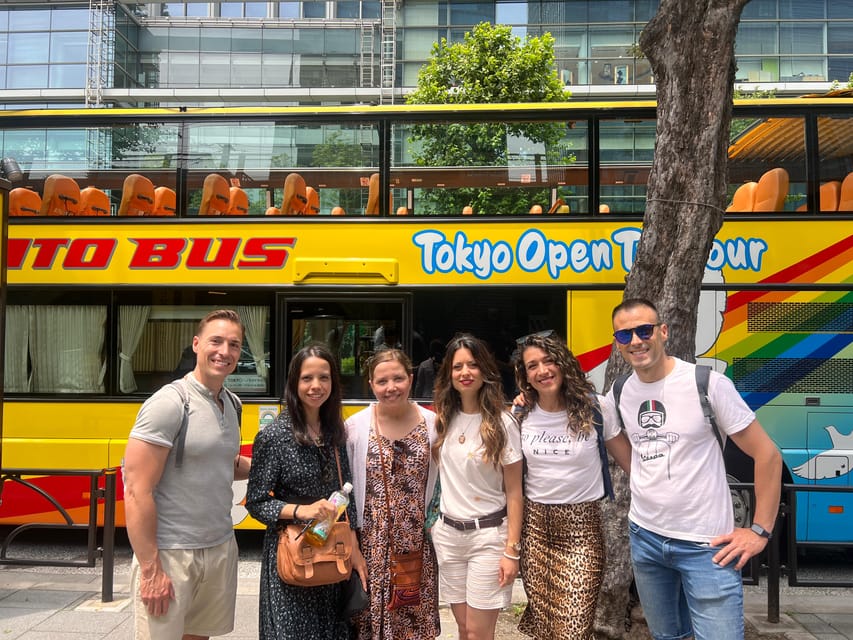
The route then heads back toward the older and more central parts of Tokyo, passing Tsukiji Outer Market, Kabuki-za, and Ginza.
Tsukiji Outer Market is a place where you will likely want more than a quick look. Since the bus does not stop, you cannot shop or eat during the tour. Still, passing it helps you place the market within the city, and you can return later if you want a slower visit.
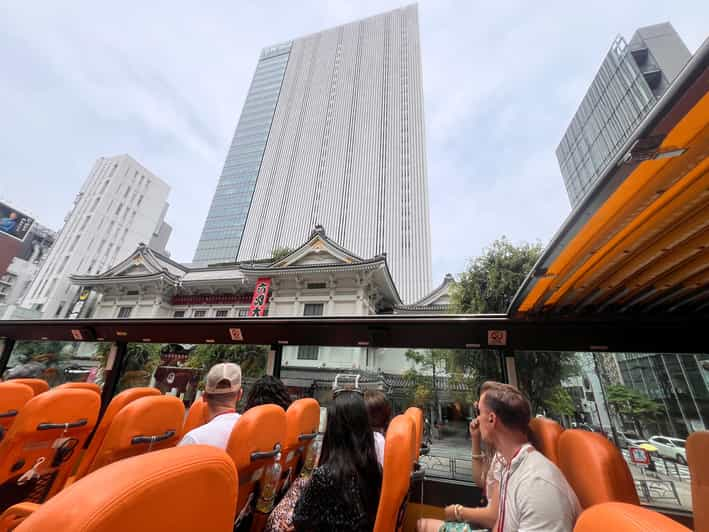
Kabuki-za brings a strong contrast. Its distinctive theater building is one of the route’s memorable urban sights, even from a moving bus. The tour does not include a performance or interior visit, so regard it as a landmark sighting.
Ginza closes the loop with some of Tokyo’s best-known central streets. The area is associated with department stores, polished storefronts, and major avenues. From the upper deck, you see the district as part of a larger traffic and street network, not just as a shopping destination.
The bus then returns to the Hato Bus office by Tokyo Station. In one hour, you have crossed from government Tokyo to the bay and back through the city’s older commercial core.
Eight audio languages, with one important catch

GPS automated guidance is available in English, Chinese, Korean, Spanish, French, Thai, Indonesian, and Vietnamese. The live guide speaks Japanese.
You must bring a smartphone that can be used in Japan and your own earphones. The bus does not provide GPS devices or earphones for rental. The audio system is free, but technical problems or faulty earphones do not qualify for a refund.
That means the audio guide is a useful option, not something to treat as guaranteed equipment. Charge your phone before setting out, check that your earphones work, and make sure you understand how your phone connects to mobile data or Wi-Fi in Japan.
If you do not want to use the audio system, you can still enjoy the views and follow the Japanese guide as best you can. But anyone booking specifically for English narration should arrive prepared with the required phone and earphones.
What $14 buys you

At $14 per person, this is one of the cheaper organized ways to see several major parts of Tokyo in a single hour. You are paying for the bus, the open-top viewpoint, the route, and the audio guidance, not for admission to landmarks or a stop-by-stop sightseeing program.
The value is strongest in three situations:
- You have only a short time in Tokyo.
- You want an easy first look before choosing neighborhoods to explore.
- You like city views more than long museum visits or guided walks.
The value is weaker if you need time at each sight. You cannot hop off at Tokyo Tower, walk through Tsukiji, or linger in Ginza. You also do not get hotel pickup, food, or drinks.
I would not book this as your only Tokyo sightseeing activity. I would book it as a compact orientation ride, especially if the open-air view matters to you. The route covers enough ground to make the price sensible, but the one-hour limit keeps the experience firmly in the overview category.
Weather, comfort, and simple rules
Rain is the main uncertainty. The roof may be closed in wet weather, and heavy rain or bad weather can cancel the tour. Since the open-top view is the central reason to choose this activity, check the forecast before you commit to a tight schedule.
Eating is not allowed on the bus. Drinks in plastic bottles are permitted, so carry water in an acceptable bottle if needed. Do not plan to bring a meal or market snack for the ride.
Children under six can join free without a seat, with one child per adult. If a child needs a seat, the pricing and booking conditions should be checked before you reserve.
The bus is not hop-on hop-off. You stay aboard for the loop and return to the same office. That makes the ride simple, but it also means you should choose it for the complete route rather than for transportation between two districts.
Free cancellation is available up to 24 hours before departure for a full refund. You can also reserve now and pay later, which helps if your Tokyo schedule is still shifting.
Who should book this one-hour loop
I would recommend it to first-time visitors who want to see Tokyo’s scale without spending half a day navigating trains. It also suits families and anyone who enjoys a moving city view with very little walking.
It is a good choice for photographers who want changing angles on Tokyo Tower, Rainbow Bridge, and the bay districts. Just remember that the bus keeps moving, so your best photos will depend on timing, weather, and a steady hand.
It is less suitable if you want deep information about one neighborhood, an English-speaking human guide, or time inside the major sights. The Japanese guide and multilingual GPS narration cover the basics, but this is not a private tour with long explanations at each landmark.
The experience is also less appealing on a day of persistent rain. The roof can close, and the main open-air benefit becomes smaller. If the weather is uncertain, keep your booking flexible.
Should you book the Tokyo open-top bus tour?
Book it if you want a low-cost, one-hour introduction to Tokyo with a strong view of the city from above. Rainbow Bridge, Tokyo Tower, Odaiba, Toyosu, Tsukiji, Kabuki-za, and Ginza give the route plenty of variety for $14.
Skip it if you need stops, hotel pickup, meals, or detailed guiding in English. The smartest plan is to take the ride near the start of your Tokyo stay, use it to choose the areas you want to revisit, and then explore those places on foot or by train.
FAQ
How long is the Tokyo open-top bus tour?
The tour lasts one hour.
Where does the bus leave from?
It leaves from the Hato Bus Tokyo office near the JR Tokyo Station Marunouchi South Exit.
Where does the tour end?
The bus returns to the Hato Bus Tokyo office at Tokyo Station.
Is this a hop-on hop-off bus?
No. This is a continuous one-hour route, and you remain on the bus until it returns to the starting point.
Which sights does the bus pass?
The route passes Hibiya Park, the National Diet Building, Toranomon, Tokyo Tower, Rainbow Bridge, Odaiba, Toyosu, Tsukiji Outer Market, Kabuki-za, and Ginza.
What languages are available for the audio guide?
GPS audio guidance is available in English, Chinese, Korean, Spanish, French, Thai, Indonesian, and Vietnamese.
Does the live guide speak English?
The live guide speaks Japanese. The multilingual narration is provided through the GPS audio system.
Do I need to bring my own earphones?
Yes. You must bring your own earphones and a smartphone that can be used in Japan. GPS devices and earphones are not provided for rental.
Can I eat or drink on the bus?
Eating is not allowed. Drinks in plastic bottles are permitted.
What happens if it rains?
The bus roof may be closed in rain. The tour may also be canceled because of bad weather or heavy rain.
More ride-at-your-own-pace passes around Japan
- Trieste Bus Tour with Audio Guide
★ 4.4 · 2,170 reviews - Los Angeles: Hop-On Hop-Off Bus Tour with Audio Guide
★ 3.7 · 2,030 reviews - Zurich: City Bus Tour with Audio Guide and Lake Cruise
★ 4.3 · 1,195 reviews - Istanbul: Hop-On-Hop-Off with Optional Audio Tour or Cruise
★ 4.2 · 1,058 reviews
More bus tours with commentary around Japan
- Rome: City Sightseeing Hop-on Hop-off Bus with Audioguide
★ 4.0 · 16,045 reviews - Milan: City Sightseeing Hop-On Hop-Off Bus with Audio Guide
★ 4.0 · 6,256 reviews - London: Christmas Lights Bus Tour With Live Guide
★ 4.0 · 5,410 reviews - Rome: Hop-on Hop-off Sightseeing Bus Tour with Audioguide
★ 4.1 · 4,801 reviews
Just joined the route map around Japan
- Osaka/Kyoto: Katsuoji, Kinkakuji, Arashiyama 1-Day Bus Tour★ 4.6 · 33 reviews
- Okinawa: Full-Day Bus Tour to Yanbaru National Park★ 4.3 · 44 reviews
- Okinawa: Tropical Dream , Ryukyu Mura, Banta Cafe Bus Tour★ 4.3 · 19 reviews
- Okinawa: Churaumi Aquarium, Ryukyu Village & Manza Bus Tour★ 4.5 · 118 reviews
- Okinawa: Double-Decker Open Top Bus Tour for Shuri Castle★ 4.0 · 3 reviews
- Okinawa: Bus Tour to Churaumi Aquarium with Sightseeing★ 4.3 · 20 reviews
- Okinawa Churaumi or Tropical, Kouri American Village BusTour★ 4.4 · 140 reviews
- Kyoto: Full-Day Guided Bus Tour to Top Highlights & Tickets★ 4.6 · 533 reviews
Tokyo Bus Tours, side by side.
Mt Fuji and Hakone 1-Day Bus Tour Return by Bullet Train
Read our review →
Tokyo: Meiji Shrine, Asakusa, Skytree Bus Tour and Cruise
Read our review →
Mt Fuji & Hakone Cruise, Drum Show Bus 1 Day from Tokyo
Read our review →
Tokyo: Mt.Fuji & Lake Kawaguchiko 1-Day Bus Tour w/Optional Lunch
Read our review →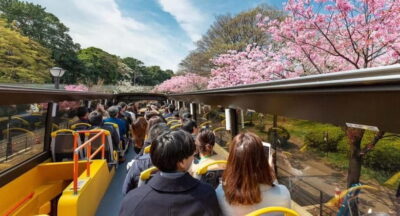
Tokyo: Open Top Panoramic Sightseeing Bus with Audio Guide
Read our review →
Other lists with this bus tour