
Review · JAPAN
Departing from Takayama [Regular sightseeing bus] World Heritage Sites Shirakawago and Gokayama Ainokura
Shirakawago gets the posters, but Ainokura Gassho Community gives you the quieter first look at Japan’s steep-roofed farmhouses. I like the smart pairing of a small mountain village with the larger Shirakawago, and I like having a comfortable bus for roads that are awkward to cover alone. The guides, including guides identified as Yamashia and Ikuichinami on some departures, explain routes and local customs before setting you loose.
The main catch is simple: this is transport with useful guidance, not a fully escorted walking tour. You explore on your own, and Shirakawago can feel short once lunch, shops, the museum, and the viewpoint compete for your time. At $64.80, it is a fair convenience buy, but not the cheapest way to reach the villages.
Key points at a glance
- Two very different World Heritage villages: Start with compact, quiet Ainokura, then spend longer in the larger and busier Shirakawago.
- A guide who sets you up well: Expect information in Japanese and English, maps, route advice, food suggestions, and seasonal notes before you walk independently.
- Comfortable access from Takayama: The air-conditioned medium or large bus removes the need to plan difficult rural connections.
- Three useful Shirakawago stops: You have time for the village, the Gassho-zukuri Minkaen open-air museum, and Tenshukaku Observatory.
- Lunch is your responsibility: The main Shirakawago stop includes time to eat, but no meal is included.
- Allow time for the ticket exchange: Redeem your voucher at the Nohi Bus station before departure, and arrive early enough to do it without a rush.
Why this bus trip works from Takayama
The appeal here is not simply getting from point A to point B. The villages of Gokayama and Shirakawago sit in mountain country, and arranging both by public transport takes more thought than many first-time visitors expect. This day trip gives you a fixed route, a driver who knows the roads, and a guide who explains what you are seeing along the way.
The bus leaves Takayama at 8:30 a.m. and returns to the same meeting point after about 7 hours and 20 minutes. That makes it a clean fit for a short stay in Takayama. You do not need to change buses in remote areas or worry about missing the final connection home.
The bus guide is not normally beside you for every village walk. Instead, the guide speaks on the bus, gives you a map and clear instructions, then lets you explore at your own pace. That arrangement suits me. You receive enough background to understand the roof design and village layout, but you are not marched from one house to the next.
The guidance can be practical rather than academic. Expect advice about where to eat, which route to take, how to reach the viewpoint, and what to see in the time available. Seasonal information about Hida food and local dialect also adds character to the ride. Some departures have received particular praise for guides such as Yamashia and Ikuichinami, though your guide will depend on the day.
More Sightseeing Bus Tours in Japan
- Tokyo: Open Top Panoramic Sightseeing Bus with Audio Guide
★ 3.8 · 254 reviews - Tokyo: Morning Sightseeing Bus Tour
★ 4.4 · 109 reviews - Tokyo: 60min Panoramic Open Top Bus Tour with Audio Guide
★ 4.0 · 40 reviews
Ainokura gives you the quiet opening
Your first stop is Ainokura, one of the gassho-zukuri settlements in Gokayama. The visit lasts about 50 minutes, with no separate admission charge listed for the village.
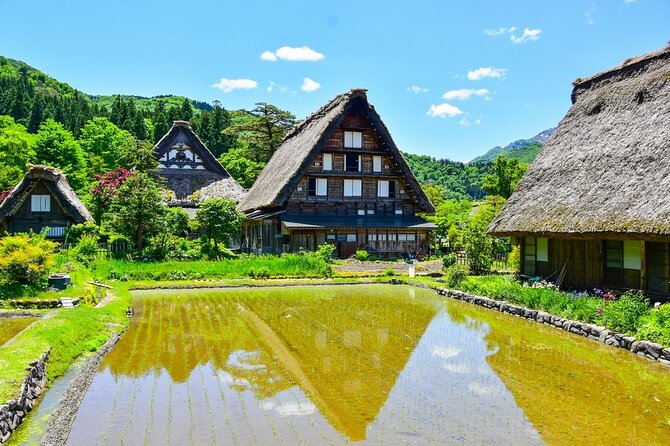
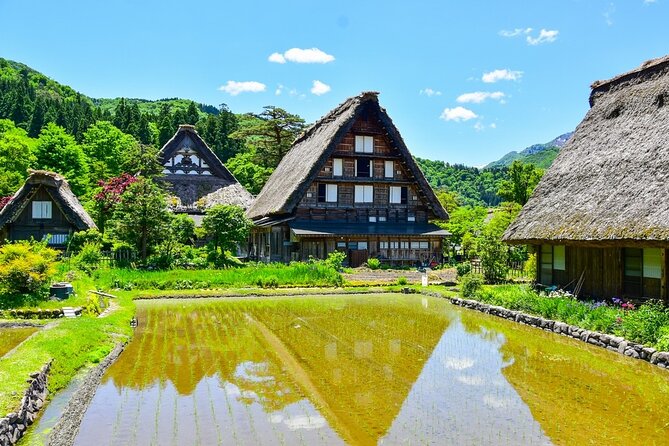
Ainokura is the right first stop because it is smaller and calmer than Shirakawago. Around 20 traditional gassho-zukuri houses remain here, set against the mountains. The steep triangular roofs were designed for areas with heavy snow, and their shape gives the village its instantly recognizable look.
Fifty minutes is enough to walk from one end of the settlement to the other, pause for photographs, and look closely at the houses and small religious buildings. It is not enough for a slow visit to every interior or a long meal. Think of Ainokura as a compact introduction, not a full morning.
I especially like the contrast it creates. You see a village that feels tied closely to the surrounding mountains before reaching Shirakawago, where the streets, shops, and visitor facilities are more active. If your priority is quiet atmosphere, use this first stop well. Stay alert to the meeting time, since a small village can still absorb your whole allowance if you stop at every viewpoint.
Shirakawago offers the bigger picture
The main stop lasts about two hours, followed by 30 minutes at the open-air museum and 20 minutes at the observatory. In practice, these stops form one extended visit, but you need to plan your choices.
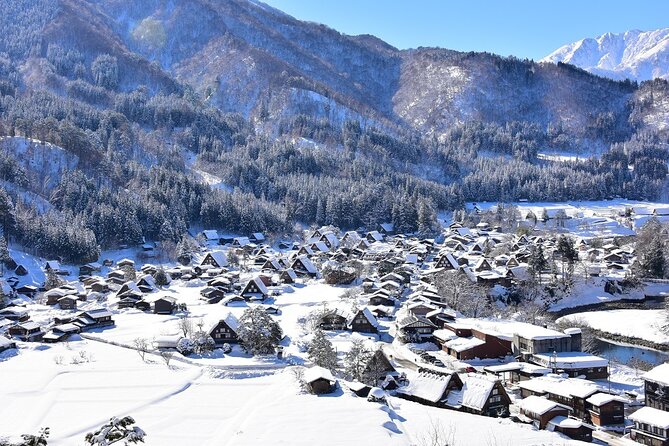
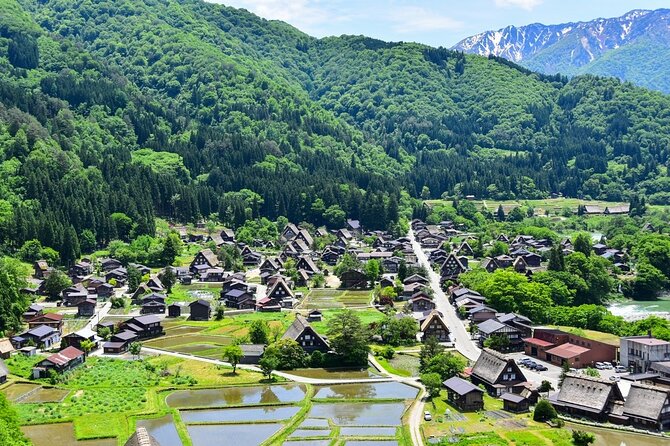
Shirakawago’s Ogimachi settlement contains 114 thatched gassho-zukuri houses. The village is larger than Ainokura and has more places to eat, shop, and enter. It is also the place most often shown in photographs, especially when snow covers the roofs and fields.
The village itself deserves your first attention. Walk among the houses, cross the streets and footpaths, and look for the details that make the settlement more than a postcard. The thick thatch, high roof angles, and close relationship between homes and mountain slopes explain why this building style developed here.
The drawback is time. Two hours sounds generous until you add lunch. Queues at restaurants can use a large part of the stop, and you may have to choose between eating, visiting a house, walking to the viewpoint, and browsing shops. One useful approach is to decide before arrival whether your priority is food, photographs, or indoor sights.
Several people find that an extra hour would make Shirakawago easier. That is a fair criticism. You can see the essential sights in the allotted period, but you may need to skip something. If you want the classic panorama, do not leave the observatory until the last minute.
The Minkaen museum adds substance
The 30-minute visit to Shirakawago Gassho-zukuri Minkaen is included in the price. This open-air museum gives you a chance to enter and inspect traditional buildings rather than only viewing their exteriors.
That matters because the outside of a gassho house tells only half the story. The museum helps you understand how these homes were used and how village life worked. It also gives you a more organized way to see several structures in one place.
You will need to judge how this fits with the village walk. Some people prefer spending the full stop around Ogimachi, while others find the museum more rewarding than wandering without a plan. I would give Minkaen serious consideration, particularly if you have already seen the main street and want a better sense of traditional house interiors.
The museum closes on Thursdays from December through March. If it is closed, the tour provides an original mascot instead. That is a small seasonal detail, but it is worth knowing if the museum is high on your list.
Same streets, a different ride:
- Mt Fuji and Hakone 1-Day Bus Tour Return by Bullet Train
★ 5.0 · 26,383 reviews - 1-Day Tokyo Bus Tour
★ 5.0 · 14,250 reviews - PERFECT KYOTO 1-Day Bus Tour
★ 5.0 · 13,518 reviews - Peaceful Hiroshima & Miyajima UNESCO 1 Day Bus Tour
★ 5.0 · 5,309 reviews
The observatory delivers the famous view
Tenshukakau Observatory, also described as Tenshukaku Observatory, sits on a hill northwest of Shirakawago. The view across Ogimachi is the one you have likely seen on posters: rows of gassho roofs laid out below the mountain slopes.
The scheduled stop is 20 minutes. That is enough for the view if you reach the spot promptly, but it does not leave much room for hesitation. Listen carefully to the guide’s directions, note the return time, and keep your visit focused.
Some people choose to skip the viewpoint because reaching it can take time. That is reasonable if your priority is food or the open-air museum. Still, if you want the classic image of Shirakawago, this is the stop that supplies it.
Snow changes the mood completely. The villages can look storybook-like after a snowfall, but winter also makes the roads and walking surfaces more demanding. The operator may cancel for poor weather, in which case you receive a different date or a full refund.
What the bus guide actually does
It is important to set the right expectation. You are not buying a private guide who walks with you through every lane. You are buying a regular sightseeing bus with a guide who provides information during the drive and prepares you for independent time at each stop.
That can be a strength. You are free to choose a restaurant, take photographs, visit the museum, or simply wander. The guide’s maps and route suggestions help you avoid wasting the first 20 minutes trying to understand where everything is.
The best departures appear to balance information and silence well. You receive local background without a nonstop lecture. Guides have explained village layouts, history, seasonal food, nearby areas, and practical walking routes. The bus driver also matters on this trip, since the road journey is a major part of the day.
The experience is bilingual when needed, with information given in Japanese and English. If your group happens to be made up of English speakers, the guide may speak only English. The tour is shared with other customers, and the vehicle may be medium or large.
Price, lunch, and the real value
At $64.80 per person, the value rests mainly in convenience. The fee covers the air-conditioned vehicle, guide service, village visits, the Minkaen admission, and the return journey to Takayama. Lunch is not included, and neither is a separate admission fee for the Ainokura village.
You can sometimes buy a similar Nohi Bus tour directly at the bus center for about 8,000 yen, according to one price comparison in the supplied information. That means the online booking price may include the convenience of reserving ahead, but you should compare the direct fare before paying.
The bus is worth more to you if your schedule is tight, you do not want to manage rural transport, or you prefer having a guide explain the basics. It is less attractive if you are comfortable arranging buses yourself and want to stay longer in Shirakawago.
For lunch, use the main Shirakawago stop. There are restaurants and shops in the village, but a popular place may have a queue. You can also bring your own food, though the tour does not promise a specific picnic area. Plan your meal early if you also want the viewpoint and museum.
Practical details before you go
The meeting point is at the Nohi Bus station area at 6-chōme-125 Hanasatomachi in Takayama. The bus leaves at 8:30 a.m. You redeem the voucher at the station before boarding, and this step has caused confusion for some people, so do not walk straight to the bus without checking in.
Your confirmation arrives when you book. The activity is near public transportation, and the operator says most people can participate. The booking information also lists a maximum of four people on the application form, which appears to refer to the number allowed in one booking rather than the full bus capacity.
Wear shoes suitable for walking around village roads and hills. The tour requires good weather, and poor conditions can lead to a date change or full refund. Free cancellation is available until 24 hours before the start time; changes or cancellations inside that window are not accepted.
The experience receives a 4.7 rating from 137 ratings, with 92 percent recommending it. The strongest pattern is clear: people value the comfortable ride, careful organization, good guides, and freedom to explore. The weaker points are also clear: some find the villages overhyped, the tour mainly transport, or Shirakawago too rushed.
Who should book this day trip?
I would choose it for a first visit to the region, especially if I had only a day in Takayama and wanted both Gokayama and Shirakawago. It is also a good match for anyone who wants a safe, simple bus journey through mountain country without renting a car.
It suits you if you like a little explanation followed by free time. It is less suitable if you want a private guide, long photography sessions, a slow lunch, or several hours in one village.
Book it if the two-village contrast appeals to you and transport planning does not. Skip it if you already know Shirakawago is your main goal and you want to set your own pace. For most first-time visitors, the combination of Ainokura, Shirakawago, Minkaen, and the observatory makes this a practical day out, provided you accept the firm schedule.
FAQ
Where does the tour start and finish?
It starts and ends at 6-chōme-125 Hanasatomachi, Takayama, Gifu 506-0026, Japan, near the Nohi Bus station.
What time does the bus leave?
The scheduled start time is 8:30 a.m.
How long does the experience last?
The full trip lasts approximately 7 hours and 20 minutes.
Is lunch included?
No. Lunch is not included, but you have time to eat at Shirakawago.
Is admission to the Minkaen included?
Yes. Admission to Shirakawago Gassho-zukuri Minkaen is included.
What happens if the Minkaen is closed?
The museum is closed on Thursdays from December through March. If it is closed, the tour provides an original mascot.
Is the tour guided throughout the village walks?
No. The bus guide gives information, maps, and recommendations, then you explore the villages independently during the scheduled free time.
Can I cancel for a refund?
You can cancel at least 24 hours before the start time for a full refund. Cancellations or changes made less than 24 hours before the start time are not accepted, and poor-weather cancellations offer a different date or full refund.
More history from the top deck around Japan
- From Kyoto: Nara History Guided Half Day Bus Tour with Lunch
★ 4.8 · 114 reviews - Prague: Historic City Center Bus Tour with Top Sights
★ 4.4 · 2,360 reviews - 2-Hour Gettysburg Battlefield Guided History Bus Tour with a National Park Guide
★ 4.5 · 2,201 reviews - Prague: Hop-on Hop-Off Historical Tram Ticket for Line 42
★ 4.1 · 1,702 reviews
Just joined the route map around Japan
- Osaka/Kyoto: Katsuoji, Kinkakuji, Arashiyama 1-Day Bus Tour★ 4.6 · 33 reviews
- Okinawa: Full-Day Bus Tour to Yanbaru National Park★ 4.3 · 44 reviews
- Okinawa: Tropical Dream , Ryukyu Mura, Banta Cafe Bus Tour★ 4.3 · 19 reviews
- Okinawa: Churaumi Aquarium, Ryukyu Village & Manza Bus Tour★ 4.5 · 118 reviews
- Okinawa: Double-Decker Open Top Bus Tour for Shuri Castle★ 4.0 · 3 reviews
- Okinawa Churaumi or Tropical, Kouri American Village BusTour★ 4.4 · 140 reviews
- Okinawa: Bus Tour to Churaumi Aquarium with Sightseeing★ 4.3 · 20 reviews
- Kyoto: Full-Day Guided Bus Tour to Top Highlights & Tickets★ 4.6 · 533 reviews
Japan Bus Tours, side by side.

Mt Fuji and Hakone 1-Day Bus Tour Return by Bullet Train
Read our review →

Peaceful Hiroshima & Miyajima UNESCO 1 Day Bus Tour
Read our review →
Kyoto: Fushimi Inari, Kinkakuji, Bamboo Grove 1 Day Bus Tour
Read our review →
Tokyo: Meiji Shrine, Asakusa, Skytree Bus Tour and Cruise
Read our review →
Tokyo: Kamakura & Enoshima Day Trip including Temple Tickets
Read our review →
Mt Fuji & Hakone Cruise, Drum Show Bus 1 Day from Tokyo
Read our review →Other lists with this bus tour