
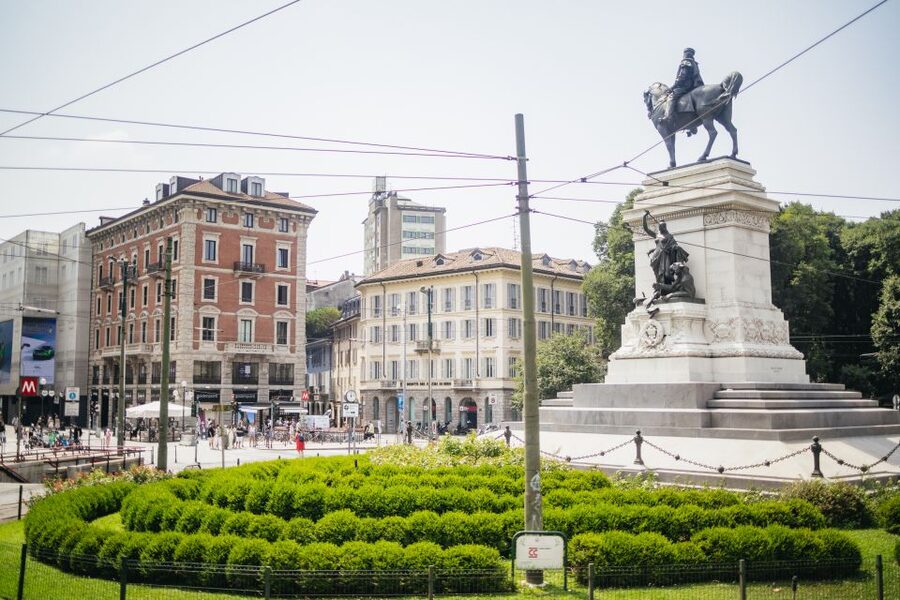
Review · MILAN
Milan: City Sightseeing Hop-On Hop-Off Bus with Audio Guide
Milan’s four-route sightseeing bus does more than circle the Duomo. It carries you from the old center to Navigli, Brera, City Life, and San Siro, giving you a quick look at parts of Milan you might skip on foot. I especially like the open-top city views and the freedom to switch routes with one ticket.
I also like the lively audio guide, which mixes landmarks with small local details, such as cotoletta alla Milanese and panettone. The main drawback is traffic. A missed bus can mean a long wait, and some audio sockets or speakers may not work, so check your headset soon after boarding.
Key points at a glance
- Four connected routes: See central Milan, Navigli, Brera, City Life, and San Siro on one pass.
- Best first ride: Line A gives you the classic center, including Castello Sforzesco, the Duomo, La Scala area, and Brera.
- Best route for a different side of Milan: Line D reaches Navigli and Piazza XXIV Maggio before returning through the historic core.
- Useful for short stays: You can cover a lot in one day, but two days gives you time to get off and visit sights.
- Good family feature: A special children’s audio commentary is included.
- Watch the timing: Milan traffic can slow the buses, and waits may feel long at some stops.
Four routes, one useful introduction to Milan
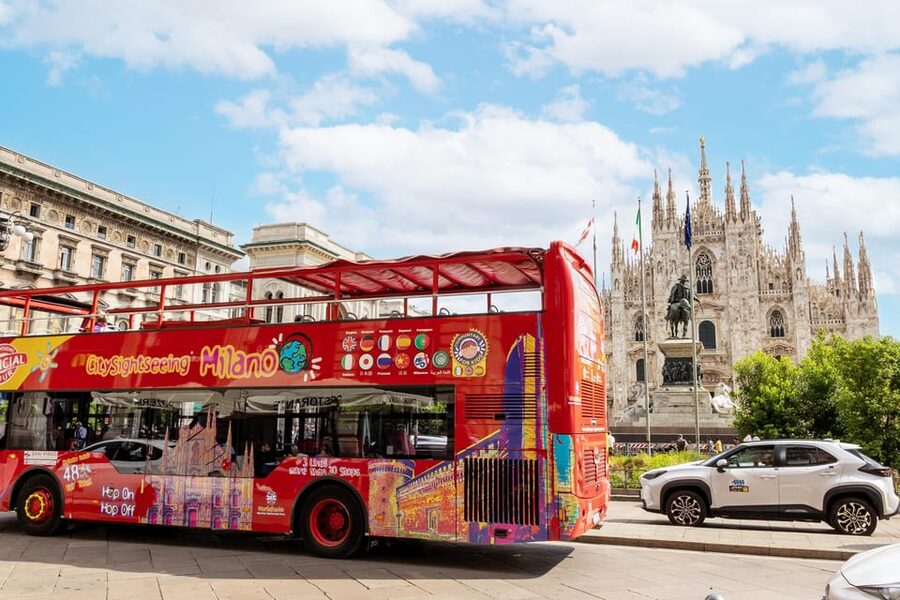
At $26 per person, this is a practical way to get your bearings without arranging separate transport between every sight. You can buy a pass for one, two, or three days, then ride all four routes during its validity.
The value depends on how you use it. If you stay on the bus for a complete circuit, the ticket works as a moving city overview. If you hop off at the Duomo, Castello Sforzesco, Navigli, or San Siro, it also becomes a simple transport tool.
I would use it early in a Milan visit. The first ride shows you how the city fits together, then you can decide which places deserve a longer visit. Several routes pass through the central area, so you may see the Duomo or Monte Napoleone more than once. That repetition is useful for orientation, but it means the four lines are not four entirely separate sightseeing tours.
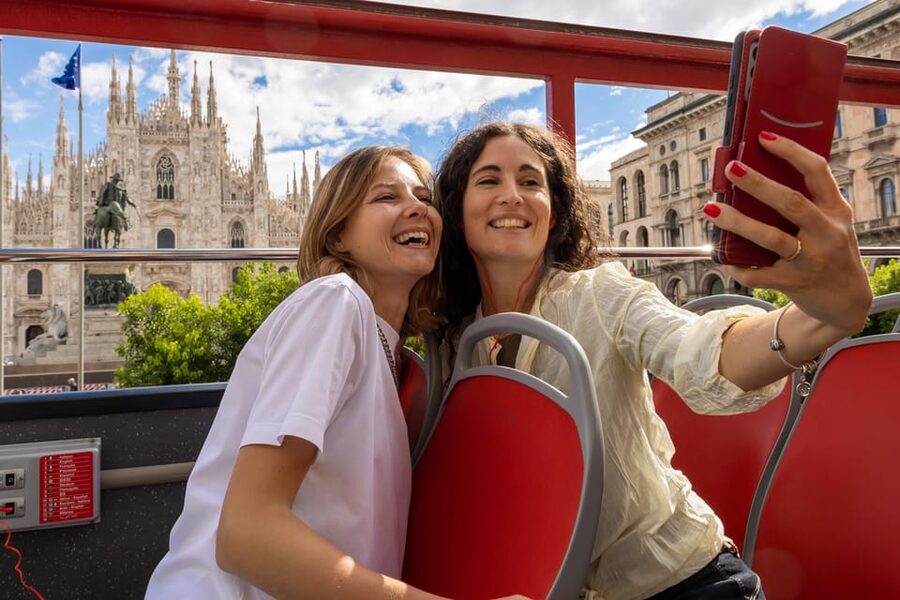
The buses are open-top and panoramic, though the exact bus and seating arrangement can vary. Milan’s streets give you a mix of broad avenues, grand façades, traffic, and ordinary neighborhoods. You see more from the upper deck, but an air-conditioned lower deck is helpful on hot days or when the weather turns.
More Hop-On Hop-Off Bus Tours in Italy
- Rome: City Sightseeing Hop-on Hop-off Bus with Audioguide
★ 4.0 · 16,045 reviews - Rome: Big Bus Hop-on, Hop-off Open-Top Sightseeing Tour
★ 4.1 · 9,537 reviews - Florence: Hop-on Hop-off Bus Tour: 24, 48 or 72-Hour Ticket
★ 4.0 · 6,283 reviews
Line A: Milan’s classic center from Castello to Moscova
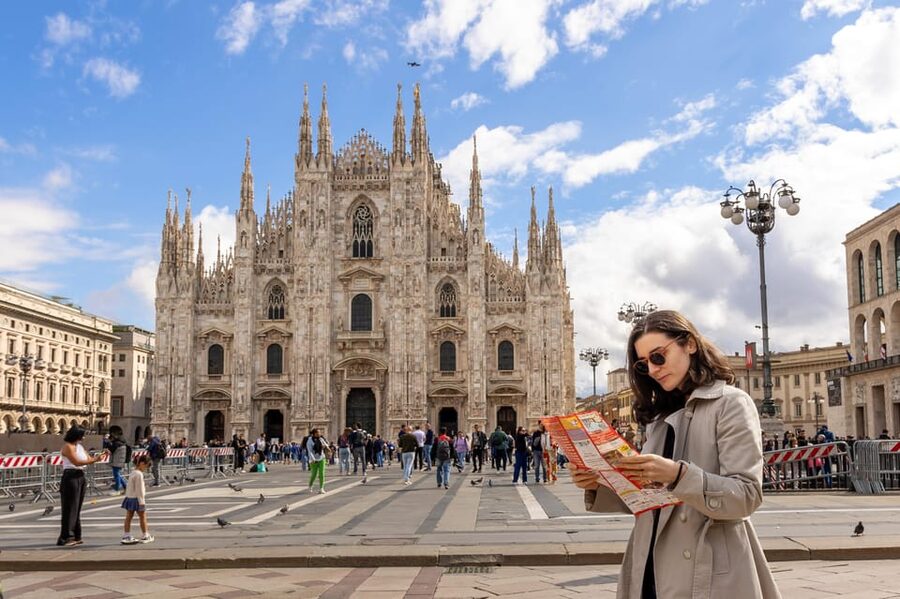
Line A starts at Castello, one of the easiest places to begin because Castello Sforzesco is both a major sight and a clear point on the map. The fortress leads into Parco Sempione, making this a good place to get off if you want architecture followed by open space.
The bus then reaches Cadorna, a major transport area, before continuing to Cenacolo. The Cenacolo stop is useful for the church and Leonardo da Vinci’s The Last Supper, but the attraction itself is not included. You need a separate ticket, and the bus pass only gets you to the area.
Corso Magenta gives you a look at one of central Milan’s elegant streets. From there, Line A reaches the Duomo, the city’s main landmark and the stop most people will use for a first walk. You can get off here for the cathedral, Galleria Vittorio Emanuele II, and nearby streets, but attraction admission is not part of this experience.
Monte Napoleone takes you toward Milan’s famous luxury shopping district. Manin and Moscova then show a different central side, with the route moving away from the cathedral toward streets and neighborhoods that feel less like a single monument zone.
If you have only a few hours, I would choose Line A first. It gives you the strongest mix of major sights, useful orientation, and classic Milan scenery.
Line B: Central Milan, the station, and Buenos Aires
Line B also begins at the Duomo, then follows the shared central stops of Monte Napoleone and Manin. After that, it continues to Repubblica and Palazzo Lombardia, bringing the modern business side of Milan into the picture.
Stazione Centrale is a useful stop for anyone staying near the main railway station or arriving there by train. It also lets you connect the historic center with a part of the city that many short visits overlook. Buenos Aires and Porta Venezia take you along a longer urban stretch before the route returns toward San Babila.
This line is less about one headline attraction and more about showing Milan as a working city. The Duomo and La Scala area can feel like a self-contained sightseeing zone. Line B helps you see how quickly that zone gives way to offices, shops, transport links, and residential streets.
If you are staying near the station, Line B may be especially convenient. If you have only one day and care mainly about the cathedral, castle, La Scala, and Navigli, you may prefer Lines A and D first.
Line C: San Siro, City Life, and the modern west
Line C starts at Castello and then heads through Triennale, a key stop for design and contemporary culture. The route continues to Arco della Pace, a large monumental arch near Parco Sempione, before reaching City Life.
City Life offers a look at Milan’s newer architecture and redevelopment. The route then passes Casa Milan, Mico Congress Centre, and Lotto Montebianco. At Casa Milan, football fans have a clear reason to get off, while the route’s farther stops lead toward San Siro.
The San Siro stop is one of Line C’s biggest selling points. It lets you reach the stadium area without making a separate trip across the city. You need to plan your time carefully, though. If you get off for only a quick photograph, the next bus may not come soon. Waiting for the next one can take a substantial part of your day.
After San Siro, the route loops back through Lotto Monterosa, Buonarroti, Pagano, Conciliazione, and Parco Sempione. This makes Line C useful for a broad city view, but it is not the most efficient choice if you want to visit each stop in depth.
I would take Line C for the ride itself, then choose one stop for a proper visit. Trying to combine San Siro, City Life, Triennale, and the central sights in a single short afternoon can leave you spending more time waiting than exploring.
More Sightseeing Bus Tours in Italy
- City Sightseeing Rome Hop-On Hop-Off Bus Tour
★ 3.5 · 5,446 reviews - Rome: Hop-on Hop-off Sightseeing Bus Tour with Audioguide
★ 4.1 · 4,801 reviews - Rome: Big Bus Hop-on, Hop-off Open-Top Sightseeing Tour
★ 3.5 · 2,580 reviews - Rome: City Highlights Open-Top Bus Night Tour
★ 4.1 · 2,038 reviews
Line D: Navigli, Brera, and the best contrast
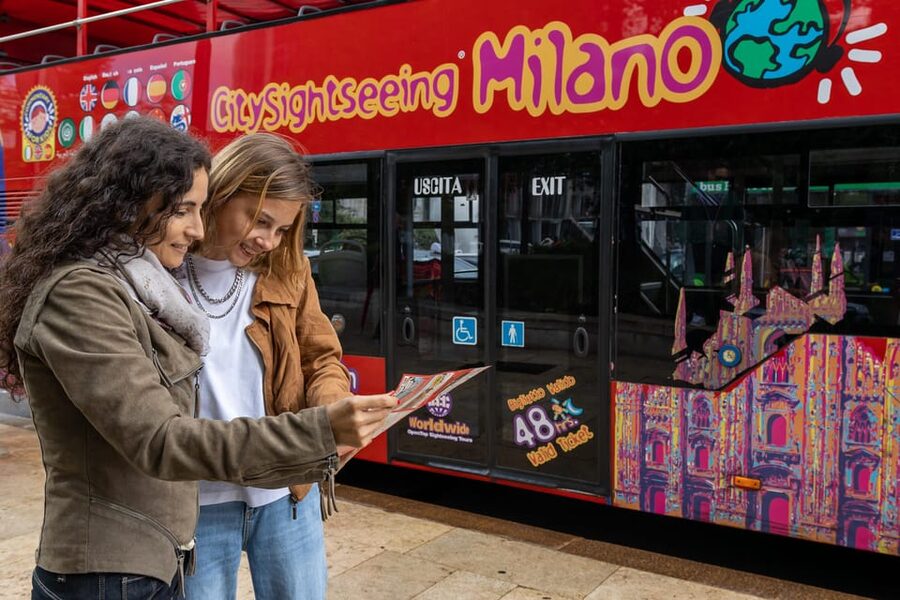
Line D starts at Castello and follows Cadorna and Cenacolo before making its most distinctive move toward Navigli. This is the route I would choose if you want something beyond the usual Duomo and castle circuit.
Navigli is known for its canals and waterside setting. The stop gives you a chance to get off, walk around, and see a more relaxed part of Milan. Piazza XXIV Maggio extends that view into the area around the canal district, while the route then returns to the Duomo and Monte Napoleone.
The final stop, Brera, is another strong reason to use Line D. Brera has a different feel from the grand scale of the cathedral area, with narrow streets, galleries, shops, and the Pinacoteca di Brera nearby. It is a good place to end a ride and continue on foot.
Line D repeats several central stops from Lines A and B, but its Navigli and Brera sections make it worthwhile. If you have a full day, I would ride Line A in the morning and use Line D later, getting off at Navigli or Brera rather than staying aboard for every loop.
The audio guide adds food and local details
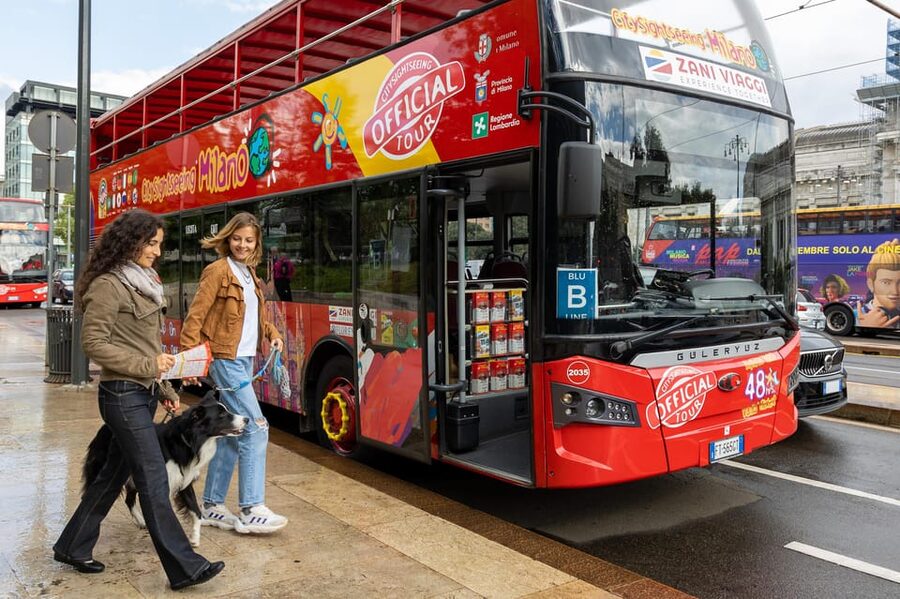
The recorded commentary is available in English, Italian, Spanish, French, German, Russian, Portuguese, Japanese, Chinese, and Arabic. A separate children’s audio option is included, which makes the bus more useful for families than a dry list of dates and building names.
The commentary covers familiar sights such as La Scala, Castello Sforzesco, and other notable buildings. It also includes Milanese food details, including the recipe for cotoletta alla Milanese and the story of panettone. Those touches matter because they connect the streets outside the window with everyday Milan.
The audio is not a replacement for a specialist museum guide. It is best used as a steady introduction while you watch the city go by. You can pause your sightseeing at any stop and continue later, but the recording itself is most useful when you are riding between places.
Bring your own attention to the equipment. Several buses have had audio sockets or speakers that did not work properly. Test the headset as soon as you sit down and move seats or ask staff for help if the sound is poor. Spare headphones or a working seat can make a big difference.
Starting points and the small logistics that matter
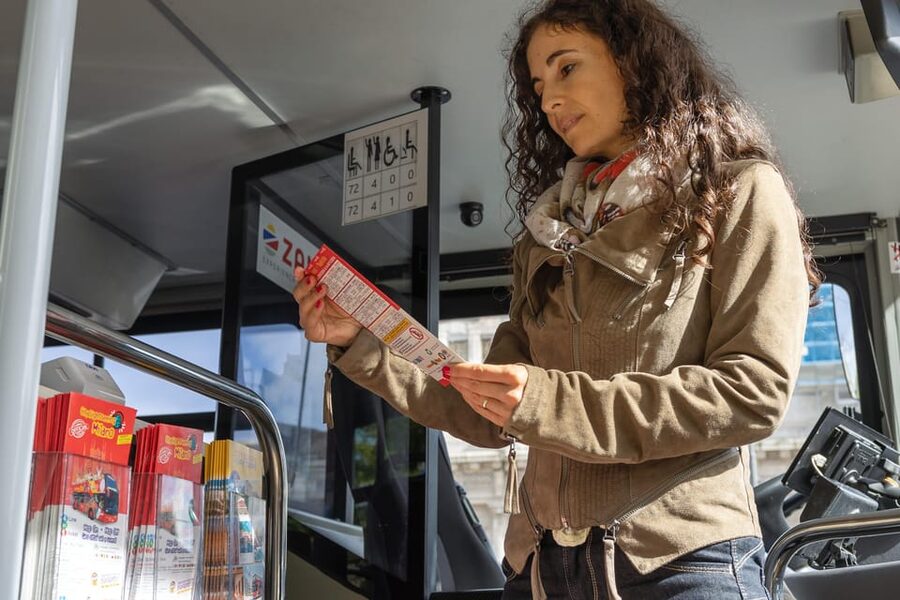
For Lines A, C, and D, the first stop is in Foro Bonaparte. This area is large, and finding the exact boarding point can be confusing if you follow only a general map pin or a photograph. Look for the corner near the travel information area rather than assuming the whole Foro Bonaparte is the stop.
Line B begins at Piazza Duomo, which is easier to identify but can be crowded and hectic. Staff are generally present at the main stops, and the buses are easy to recognize, but allow extra time for finding the right boarding point.
The ticket includes Wi-Fi onboard, a city tour map, and free walking tours through the mobile app in five languages. The app walking tours can be useful after you get off, especially when you want to continue exploring without returning immediately to the bus.
A host or greeter may speak Italian, English, or Spanish. The audio guide covers more languages than the staff, so choose your language before setting off if possible.
Traffic, frequency, and how to avoid wasting time
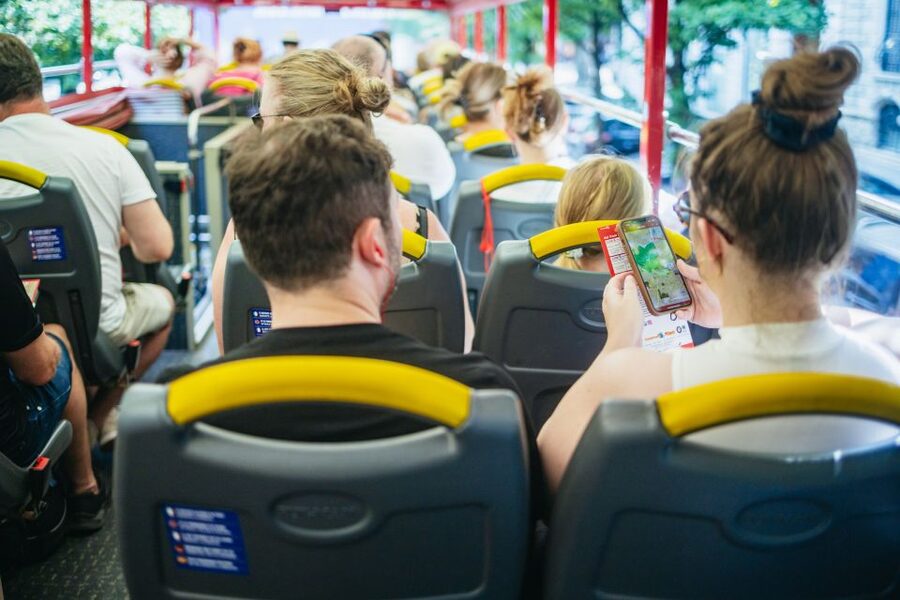
Milan traffic is the main factor you cannot control. Buses can lose time at traffic lights and in congested streets, especially on routes crossing the center. The published timetable may be accurate, but that does not mean every bus will arrive exactly when you expect.
Some waits can approach 50 minutes, and a missed bus can be frustrating if you have planned a tight schedule. At San Siro, the next ride may require a particularly long wait, so check the route timing before getting off.
I would not use this bus as your only plan for a timed attraction. Keep separate admission reservations, such as for the Cenacolo, flexible enough to allow for traffic. For a short stay, use the bus for broad sightseeing and walk between nearby central stops when that is quicker.
The open-top deck gives you better views, but it also exposes you to sun and weather. The lower deck offers shelter and air conditioning. Staff and drivers are often helpful, though service can vary from bus to bus, so ask directly if you need help changing routes or replacing faulty headphones.
Is one day enough, or should you buy three?
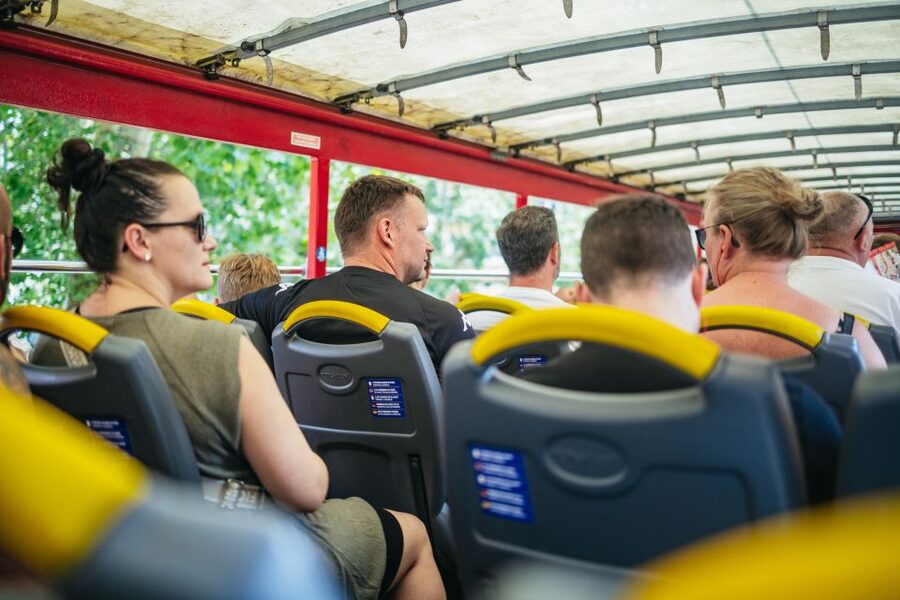
You can ride all four routes in one long day, especially if your goal is to see Milan from the bus rather than visit every attraction. One day works well for a first look, a tight schedule, or a visitor who wants to choose a few places to return to later.
Two days offer a better balance. You can ride the central routes on the first day, then use Line D for Navigli and Brera and Line C for San Siro or City Life on the second. This gives you time to get off without treating every stop like a race.
Three days make sense if you prefer a slow pace, want to combine sightseeing with several longer visits, or are using the bus partly as transport. They make less sense if you plan to walk most of the central area, since many major sights are relatively close together.
The pass is especially helpful for families, older visitors, and anyone who does not want to walk across Milan all day. It is also a good first-day choice for someone visiting the city for the first time.
How the $26 price works as a value
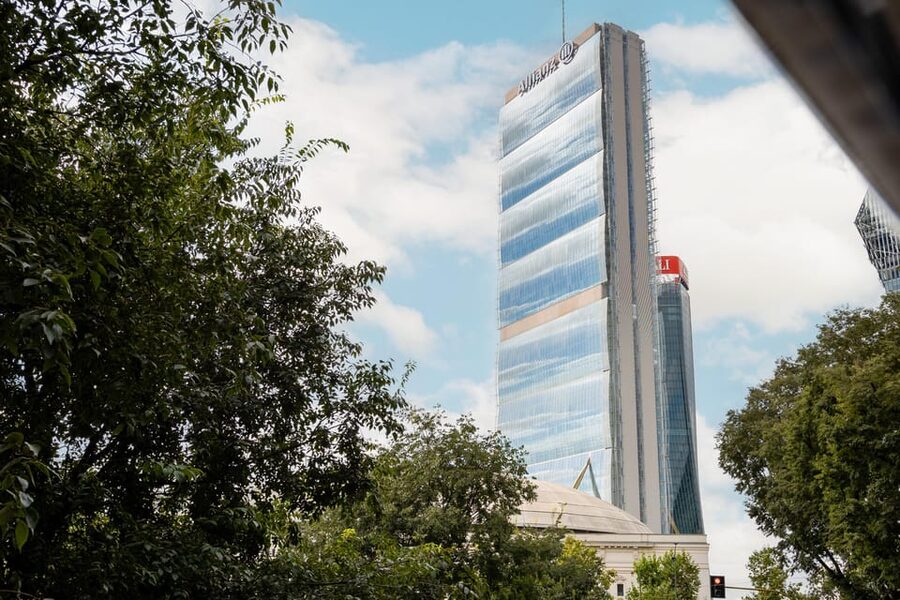
At $26, the ticket is not automatically the cheapest way to move around Milan. If you only need to travel between a hotel and the Duomo, public transport or walking may cost less. The value comes from combining transport with an audio tour and the ability to hop off at sightseeing stops.
You get access to four routes, not just one loop. That matters because Line D reaches Navigli and Brera, while Line C reaches San Siro and City Life. The map, Wi-Fi, audio commentary, and mobile walking tours add useful extras without requiring you to book separate city orientation activities.
The strongest value comes from using the pass at least several times. Ride one full circuit, then get off at two or three places that interest you. If you only sit on the bus for a short ride between two nearby stops, you are paying for features you are not using.
A 72-hour weekend ticket from June through September includes the Milan Night Tour, according to the operating information. That can improve the value for a summer weekend visit, but confirm the exact operating dates and availability before relying on it.
Should you book the Milan sightseeing bus?
I would book it if you have one or two days in Milan and want a clear first look at the city without walking everywhere. It is particularly useful for reaching San Siro, Navigli, City Life, and the station area, places that do not all fit naturally into one walking route.
I would choose the two-day option if your schedule allows it. One day can work, but traffic and long intervals between buses make it harder to enjoy several stops without rushing.
Skip it if your main plan is to walk the compact historic center and visit only the Duomo, La Scala, and Castello Sforzesco. In that case, the bus may repeat ground you can cover on foot. For everyone else, especially families and first-time visitors, it is a flexible way to get your bearings fast and decide where Milan deserves more of your time.
FAQ
How long is the Milan hop-on hop-off ticket valid?
You can choose a ticket valid for 1, 2, or 3 days. Starting times and availability depend on the selected date.
How many bus routes are included?
One ticket includes four connected routes, labeled Lines A, B, C, and D.
Which languages are available on the audio guide?
The audio guide is available in Spanish, Chinese, English, French, German, Italian, Russian, Portuguese, Japanese, and Arabic. A special children’s commentary is also included.
Where do I board the bus?
Lines A, C, and D begin at Foro Bonaparte. Line B begins at Piazza Duomo. Foro Bonaparte is large, so use the travel information area and confirm the exact corner before boarding.
Are attraction admissions included?
No. The bus ticket includes the sightseeing routes, audio commentary, Wi-Fi, map, and app walking tours, but admission to attractions is separate.
Can I cancel the booking?
Yes. You can cancel up to 24 hours in advance for a full refund. A reserve now and pay later option is also available.
More ride-at-your-own-pace passes around Italy
- Rome: Colosseum, Forum Audio Tour with Hop-on Hop-off Bus
★ 3.9 · 6 reviews - Los Angeles: Hop-On Hop-Off Bus Tour with Audio Guide
★ 3.7 · 2,030 reviews - Zurich: City Bus Tour with Audio Guide and Lake Cruise
★ 4.3 · 1,195 reviews - Istanbul: Hop-On-Hop-Off with Optional Audio Tour or Cruise
★ 4.2 · 1,058 reviews
More bus tours with commentary around Italy
- Trieste Bus Tour with Audio Guide
★ 4.4 · 2,170 reviews - Etna by Panoramic Bus, Audioguide 9 languages, from Catania
★ 4.2 · 364 reviews - Naples:Pompeii SkiptheLine Ticket audioguide Round-Trip Bus
★ 4.1 · 18 reviews - From Pompeii: Mount Vesuvius with bus, ticket and audioguide
★ 4.1 · 13 reviews
Just joined the route map around Italy
- Rome: Tiber River Hop-On Hop-Off Boat Tour Ticket★ 3.7 · 238 reviews
- Rome Hop On Hop Off Tour from Civitavecchia by Train★ 3.2 · 22 reviews
- Rome: Nighttime Tour by Open-Top Bus★ 3.8 · 447 reviews
- Rome Squares and Fountains Tour & River Boat Hop On Hop Off★ 4.6 · 16 reviews
- Rome: Hop-on Hop-off Bus tour + Pantheon Priority Entry★ 5.0 · 4 reviews
- Rome: Hop-On Hop-Off Bus & Vatican Museums Guided Tour★ 3.4 · 7 reviews
- Rome: Hop-on-Hop-off Bus with Vatican and Sistine Chapel★ 4.5 · 6 reviews
- Rome: Hop-on Hop-off Bus and Colosseum, Ancient Rome Tour★ 4.0 · 9 reviews
Milan Bus Tours, side by side.
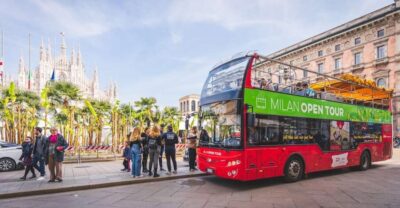
Milan: Gray Line Milan Open Tour Hop-On Hop-Off Bus Tour
Read our review →
Milan Hop-On Hop-Off Bus Tour with Four Routes
Read our review →
Milan: Best of Skip-the-Line Duomo Rooftops Guided Tour
Read our review →
Milan Duomo Rooftops Tour + Optional Hop-on-Hop-off ticket
Read our review →
Skip-the-Line Duomo & La Scala Museum Tour + Hop On Hop Off
Read our review →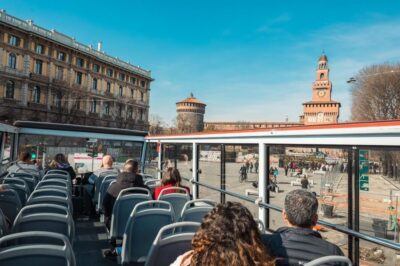
Milan: Skip-the-Line Duomo Guided Tour & Hop-on Hop-off Bus
Read our review →
Other lists with this bus tour