
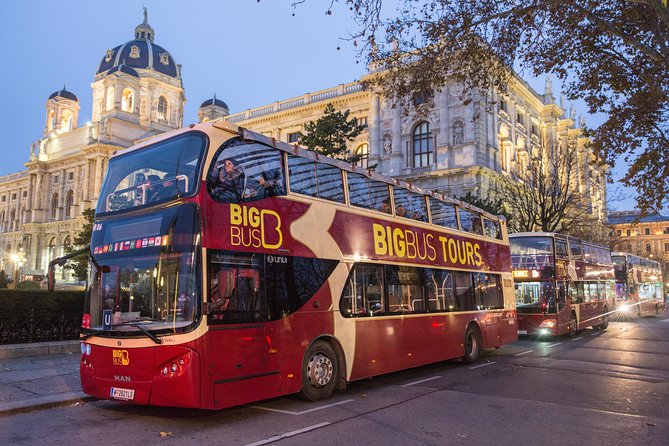
Review · VIENNA
Big Bus Vienna Hop-On Hop-Off Sightseeing Tour
Vienna’s Big Bus is at its best when you want a quick city orientation without wearing out your shoes. Two routes connect the old center with places farther out, including Schönbrunn Palace, the Prater Ferris wheel, the Danube, and Belvedere. I like the freedom to ride the full loop first, then hop off where the city catches your eye.
I also like the covered upper deck, a useful touch in cold or rainy weather, and the included walking tour on selected tickets. The main drawback is time: traffic, red lights, and one-way loops can turn the advertised 1 hour 50 minutes into two or three hours.
Key points to know before you board
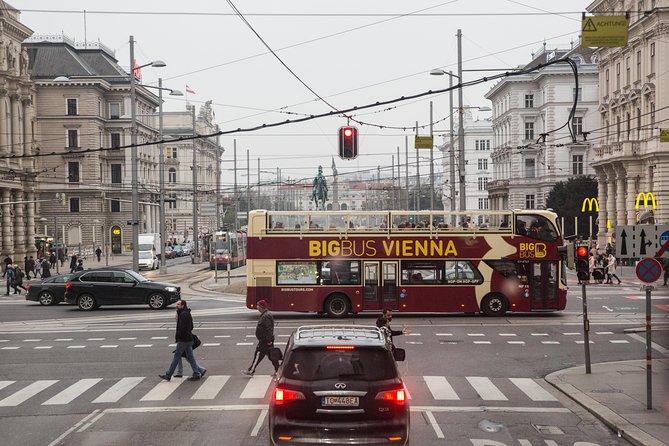
- Two useful routes: The red city route covers central Vienna, the Danube, Prater, Hundertwasser House, and the United Nations area. The blue route reaches Schönbrunn and the Belvedere palaces.
- Best for orientation: Stay aboard for a full circuit before planning your stops, especially if you have only one day.
- Audio in eight languages: English commentary is available, though the quality and amount of information can vary by bus.
- Selected tickets add real value: Some include a 90-minute English walking tour, and the 48-hour walking-tour ticket includes a Viennese sausage plate.
- Watch the clock: Buses generally operate from morning into early evening, so a 24-hour ticket does not mean 24 hours of continuous service.
- River cruise caution: Cruise departures can change because of heavy rain, high water, or other conditions. Confirm the schedule with Big Bus staff before building your day around it.
What the Big Bus Vienna tour is really good at
The Big Bus does not replace Vienna’s museums, palaces, or cafés. It gives you a practical frame for the city. Vienna is spread out enough that walking between the center, Schönbrunn, Belvedere, and the Danube can eat up much of your day. The bus lets you see those districts with less effort.
I would use it in two ways. First, take a full loop to understand the layout. Second, use the stops as launching points for places you already want to visit. This works especially well if someone in your group cannot walk long distances. One full circuit can provide a satisfying look at Vienna without requiring you to get off at every stop.
The audio commentary adds background as you ride, with options in eight languages and free WiFi on board. It is useful for identifying buildings and setting the scene, but do not expect a detailed lecture on every palace or church. Some rides have been praised for clear, well-timed information, while others have had gaps, music loops, or weak headsets.
More Hop-On Hop-Off Bus Tours in the world:
- Barcelona: 24 or 48-Hour Hop-On Hop-Off Bus Tour
★ 4.4 · 20,872 reviews - Rome: City Sightseeing Hop-on Hop-off Bus with Audioguide
★ 4.0 · 16,045 reviews - Paris: Tootbus Hop-on Hop-off (Optional River Cruise)
★ 4.3 · 15,279 reviews
Choosing between the red and blue routes
The red route is the stronger choice for a first look at Vienna. It begins near the Opera and moves through the central sights before heading toward the Danube and outer districts. The blue route is more of a palace and museum connection, linking Schönbrunn with Belvedere and Vienna’s main train station.
If your time is limited, prioritize the red route for the city center. If imperial residences are high on your list, add the blue route. A 24-hour ticket can work if you plan carefully, but the 48-hour option gives you much more breathing room for palace visits, lunch stops, and a walking tour.
The routes operate as loops, not as a two-way shuttle. This matters. If you board at stop 7 and want to get off near stop 4, you may need to ride most of the loop before reaching it. Use the Big Bus app’s stop finder and live tracking feature to reduce wasted time.
Red route: Vienna’s center, Prater, and the Danube
Opera and Albertina
The red route begins around the Vienna State Opera and Albertina, an excellent starting point for the historic center. The Opera is one of Vienna’s great cultural symbols, while the Albertina occupies part of the former Hofburg complex and is known for its art collections.
This is a good place to begin if you want coffee, shopping, or a short walk before riding. It can also be confusing because the starting area has more than one nearby stop name, including Opera and Walfischgasse. Check the stop map before boarding.
More Sightseeing Bus Tours in the world:
- Barcelona: City Sightseeing Hop-On Hop-Off Bus Tour
★ 4.4 · 10,061 reviews - Rome: Big Bus Hop-on, Hop-off Open-Top Sightseeing Tour
★ 4.1 · 9,537 reviews - City Sightseeing London Hop-On Hop-Off Bus & Bookable Extras
★ 4.4 · 7,374 reviews - Hamburg: Line A Sightseeing Hop-On Hop-Off Bus Tour
★ 4.6 · 6,958 reviews
House of Music
The House of Music is an interactive museum devoted to sound, music, and Vienna’s musical traditions. Even if you do not go inside, the stop places you near the central sights and makes a useful connection point between the Opera and Hofburg areas.
The bus commentary may give you a quick introduction, but save detailed questions for a visit inside the museum or a guided walk.
MuseumsQuartier and Mariahilferstrasse
The stop at Babenbergerstraße serves the MuseumsQuartier and the Mariahilferstrasse shopping area. MuseumsQuartier brings together major art institutions, courtyards, cafés, and public spaces. Mariahilferstrasse is more commercial, with shops and places to pause for lunch.
This is one of the better stops for mixing sightseeing with ordinary city life. Get off here if you want a break from monuments and a chance to see how Vienna’s central districts function day to day.
Hofburg and the Museums
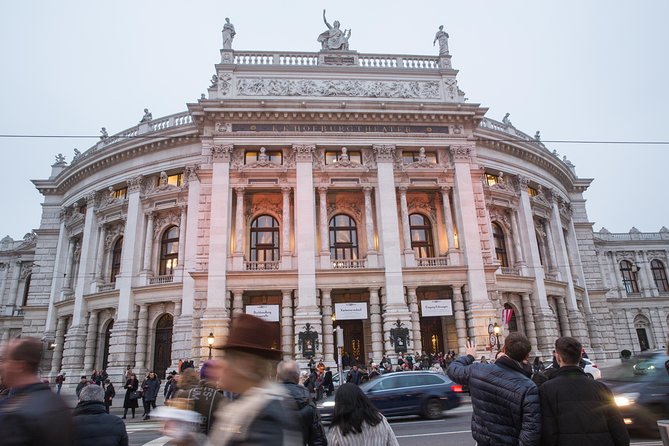
At Burgring, you are close to the Hofburg, the former residence of the Habsburg dynasty. The complex includes grand courtyards, state rooms, museums, and the Spanish Riding School area. The Hofburg is not a quick five-minute photo stop. Give it time if you plan to enter.
The nearby museums make this one of the most useful places to hop off. You can visit an exhibition, walk through the imperial center, or continue toward the Opera on foot.
Rathaus and Votive Church
The City Hall stop brings you near Vienna’s Rathaus and the broad Ringstrasse. The architecture here shows Vienna’s late nineteenth-century ambition, with monumental public buildings arranged along the old city fortifications.
Votive Church is another worthwhile stop, especially for its tall Gothic form and prominent twin towers. These stops are close enough to pair with a walk, but traffic can slow the bus along the Ringstrasse. Do not schedule a tight museum admission immediately after boarding.
Schwedenplatz and the river connections
Schwedenplatz sits beside the Danube Canal and offers access to river-cruise departures. It is also a practical stop for food, drinks, and connections into the central pedestrian districts.
The river cruise is not guaranteed to run on a fixed plan in all conditions. Heavy rain and high water can affect departures, so ask Big Bus staff about the day’s schedule before you get off specifically for the boat.
Prater and the Giant Ferris Wheel
The Prater stop serves Vienna’s famous amusement park and Giant Ferris Wheel. The wheel offers broad views over the city, while the Prater itself has a different mood from the imperial center, with rides, food stalls, and open space.
This is a good example of why the bus route is useful. Prater is not the sort of place most people want to reach on foot from the Hofburg, especially after a full day of sightseeing. Allow extra time if you plan to ride the Ferris wheel or explore beyond the main entrance.
Blue Danube piers, Danube Tower, and Alte Donau
Several red-route stops serve the Danube and river-cruise piers. These include Blue Danube locations, the Danube Tower, and Alte Donau. The area feels less like old Vienna and more like the modern city, with open water, large transport routes, and newer districts.
The Danube Tower is the obvious highlight here. The Old Danube offers a calmer waterside setting. These stops are best for a longer outing, not a quick hop off and on. Check bus times before leaving the vehicle, since the outer section can take longer to reconnect with the center.
Vienna International Centre and Reichsbrücke
The Vienna International Centre, also called Uno City, brings you into the modern international district. Reichsbrücke and Danube Island show another side of Vienna, with broad spaces and river views rather than palace façades.
I would choose these stops only if you have extra time or a special interest in modern Vienna. They are useful additions to the route, but first-time visitors with one day should usually give priority to Hofburg, Schönbrunn, the Opera, and Belvedere.
Hundertwasser House and Stadtpark
Hundertwasser House is one of the most visually unusual stops. Its uneven surfaces, strong colors, and playful design contrast sharply with Vienna’s formal imperial architecture. It is a quick photo opportunity from the outside, though the nearby Hundertwasser Village adds more context.
Stadtpark is a gentler final stop, with paths, lawns, and the famous Johann Strauss monument. It is an easy place to stretch your legs after a long ride and return toward the center.
Blue route: Schönbrunn, Belvedere, and the palace districts
Mariahilfer Gürtel and the Technical Museum
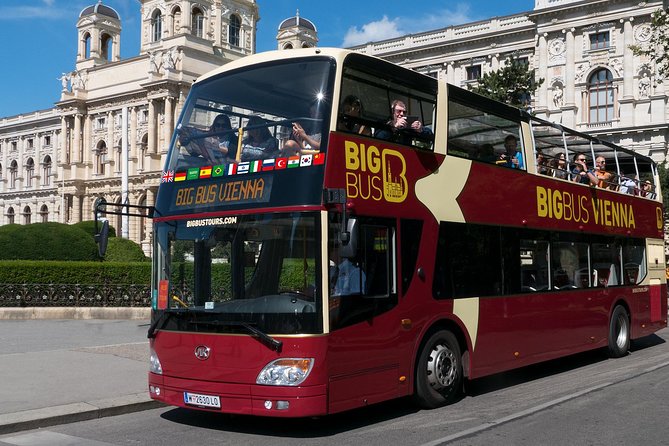
The blue route starts near the Opera and runs toward Mariahilferstrasse. The stop at the Museum of Science and Technology offers a useful indoor option, especially on a rainy day or for families interested in machines, transport, and science.
The route then continues toward Schönbrunn. Traffic around the Gürtel and palace district can be slow, so allow more time than the printed loop length suggests.
Schönbrunn Palace and Zoo
Schönbrunn is the major reason to take the blue route. The former imperial summer residence has formal gardens, grand rooms, and extensive grounds. The nearby zoo adds another possible stop, but seeing both palace and zoo properly can take most of a day.
Do not treat Schönbrunn as a quick photo stop. If you plan to enter, check your available time before boarding the bus. The route is valuable because it connects the palace with central Vienna, but the visit itself needs a generous block of time.
Main Train Station
The Hauptbahnhof stop is practical rather than scenic. It can help you connect with Vienna’s wider transport network and serves as a route point between Schönbrunn and Belvedere.
For most sightseeing plans, use it as a transport reference rather than a main attraction. It is also a reminder that the blue route links several different parts of the city, not just famous monuments.
Upper and Lower Belvedere
Upper Belvedere is known for its palace setting and art collection, while Lower Belvedere offers another part of the former complex. The two sites are related but not identical, so check which building contains the exhibition or rooms you want to see.
Belvedere is a strong stop for art and architecture. It also pairs well with the blue route because you can visit the palace area without making a separate cross-city journey.
Audio, walking tour, and the sausage plate
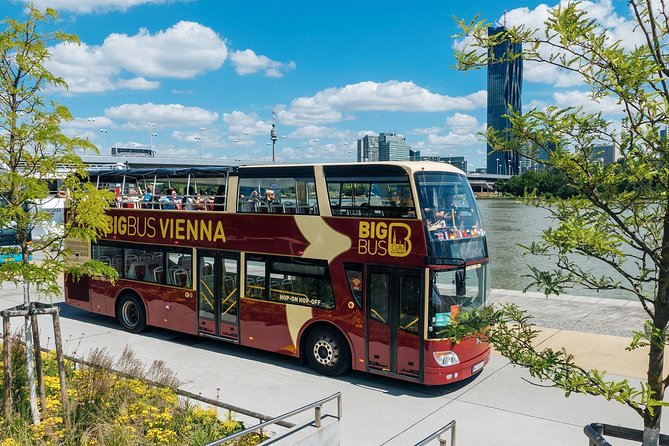
The onboard audio is available in eight languages, with English included. Earphones are used, and free WiFi is available. Bring patience with the equipment, since a loose connection or one-sided headset can spoil the experience. If the audio is not working, tell staff before leaving the stop.
The commentary is strongest as an introduction. It identifies major buildings and gives general background, but it may not provide enough detail for someone who wants a full account of Vienna’s art, politics, and architecture. I would pair the bus with a museum visit or walking tour rather than treating the recording as your only guide.
Selected tickets include a live English city walking tour. It begins at Stop 1, Opera, at 11:30 a.m. daily and lasts about 90 minutes. This is potentially the most valuable extra because a person on foot can explain details the bus must pass too quickly.
The 48-hour ticket with the walking tour also includes a free Viennese sausage plate at Zum Kaiser Sausage Stand, about a one-minute walk from Stop 1. It is a small perk, but it adds practical value if you plan to use the bus over two days.
Price, timing, and real value
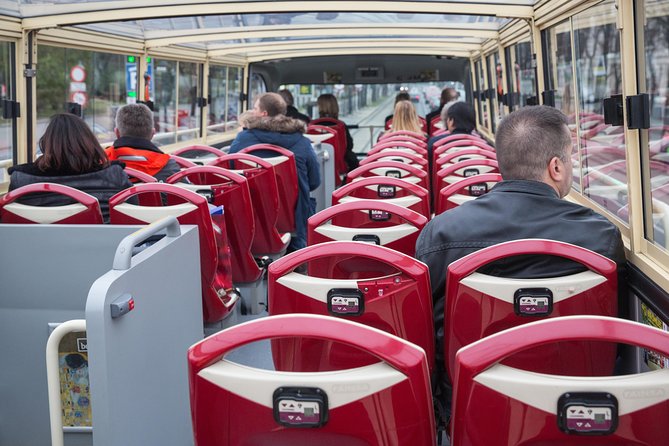
At $36.67 per person, the tour is not the cheapest way to move around Vienna. The value depends on how much you use it. One full ride gives you an overview, but a single loop can feel expensive if you spend much of it stuck at traffic lights and never hop off.
The ticket makes more sense when you use both routes, visit an outer attraction such as Schönbrunn, and take advantage of the walking tour or sausage plate when included. The 48-hour option is especially useful for a relaxed schedule. You can visit a palace one day, explore the center the next, and avoid forcing every stop into one long ride.
The 24-hour ticket suits a focused plan. Start early, ride the red route, visit one central sight, then use the blue route for either Schönbrunn or Belvedere. Keep your schedule loose. Bus service may run from about 9 a.m. to 6 p.m., so the word 24-hour describes ticket validity, not nonstop overnight service.
Who should book this Vienna bus tour?
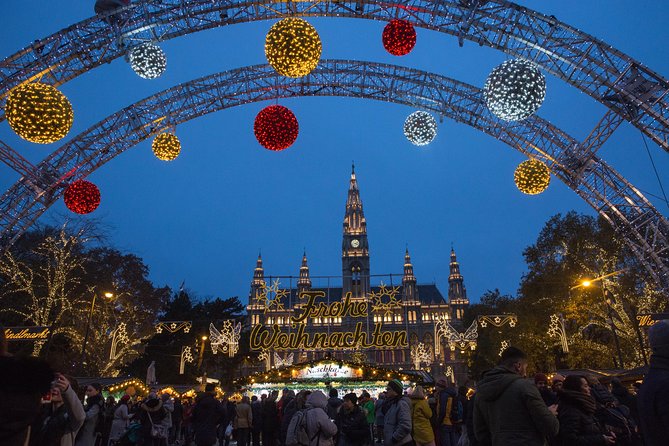
I would recommend it to first-time visitors, families, older adults, anyone with limited walking ability, and people with only a short stay. It is also useful in winter, when the covered upper deck lets you see the city without sitting fully exposed to the cold.
You should think twice if you have only a few hours and already know exactly which sights you want. Vienna’s center is walkable, and traffic can make the bus slower than expected. The one-way loop can also frustrate you if you need a direct ride between nearby stops.
For the best result, use the app to find stops and track buses, begin at the Opera, and ask staff about the river cruise before changing your plan. Leave room for delays, especially during peak traffic.
Should you book the Big Bus Vienna tour?

Book it if you want a low-effort overview, need help reaching Schönbrunn or Belvedere, or value the chance to sit while Vienna passes by. The route coverage is broad, staff are generally helpful, and the covered upper deck is a genuine advantage in poor weather.
Skip it if your Vienna visit is very short and your plan is limited to the compact historic center. The audio can be uneven, the bus may crawl through traffic, and the loop structure demands patience. For most people, the 48-hour ticket with the walking tour offers the clearest value, while the 24-hour ticket works only with a well-planned day.
FAQ
How long is the Big Bus Vienna tour?
The full ride is listed at approximately 1 hour 50 minutes, but traffic, stops, and roadworks can make the actual circuit take two or three hours.
Is the ticket valid for 24 or 48 hours?
You can choose a 24-hour or 48-hour ticket. Validity begins when you first use the ticket.
How many routes does the Vienna Big Bus include?
The experience offers two main routes. The red route covers central Vienna, the Danube, Prater, Hundertwasser House, and other city sights. The blue route connects areas including Schönbrunn and Belvedere.
Is audio commentary included?
Yes. Audio commentary and free WiFi are included. The audio is available in eight languages, including English.
Is a walking tour included?
A live English city walking tour is included with selected tickets. It begins at Stop 1 near the Opera at 11:30 a.m. daily and lasts 90 minutes.
Does the tour include a Viennese sausage?
The 48-hour ticket with the walking tour includes a free Viennese sausage plate at Zum Kaiser Sausage Stand, located about one minute from Stop 1. Other ticket options may not include it.
Does the ticket include a river cruise?
River-cruise access is connected with the Danube stops, but departures can change because of heavy rain, high water, or other conditions. Ask Big Bus staff for the current details.
Is hotel pickup included?
No. Hotel pickup and drop-off are not included. You board at one of the listed city stops.
Can I cancel the booking?
You can cancel for a full refund up to 24 hours before the experience start time. Cancellations or changes made within 24 hours are not accepted for a refund.
Just joined the route map around the world
- San Pedro de Atacama: Vallecito + Magic Bus★ 5.0 · 4 reviews
- Santander: City Sightseeing Hop-On Hop-Off Bus Tour & Train★ 4.3 · 170 reviews
- Santiago: 1-Day Hop-On Hop-Off Bus and Cable Car Ticket★ 4.3 · 332 reviews
- San Francisco: Sightseeing Sunset Tour by Open-Top Bus★ 4.4 · 105 reviews
- San Francisco: Movie Filming Locations Bus Tour★ 4.9 · 368 reviews
- San Fransisco: Vintage VW Bus Wine Country Tour Small Group★ 5.0 · 5 reviews
- SF: Napa & Sonoma Wine Tour & Hop-on Hop-off Tour (Save 15%)★ 4.5 · 2 reviews
- San Francisco: Hop-On Hop-Off Tour with Optional Night Tour★ 4.5 · 94 reviews
Vienna Bus Tours, side by side.
Vienna: Hop-On Hop-Off Sightseeing Bus Tour in 19 Languages
Read our review →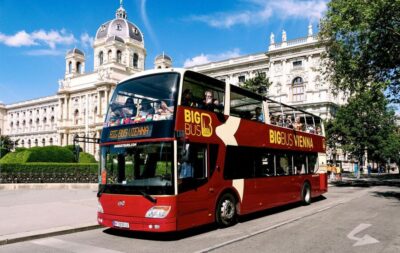
Vienna: Big Bus Hop-On, Hop-Off Tour by Open-Top Bus
Read our review →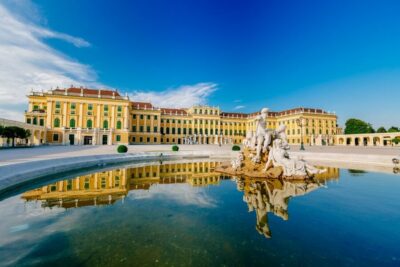
Vienna: Bus & Schönbrunn Palace Skip-the-Line Guided Tour
Read our review →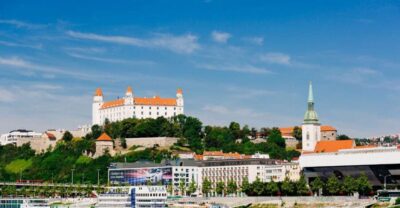
From Vienna: Guided Tour to Bratislava with Speed Boat Ride
Read our review →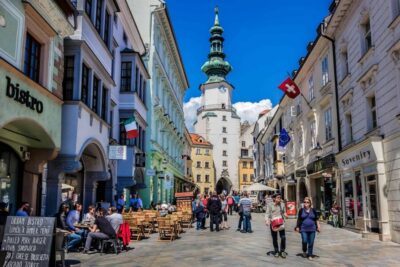
From Vienna: Roundtrip Bus to Bratislava with Walking Tour
Read our review →Other lists with this bus tour