
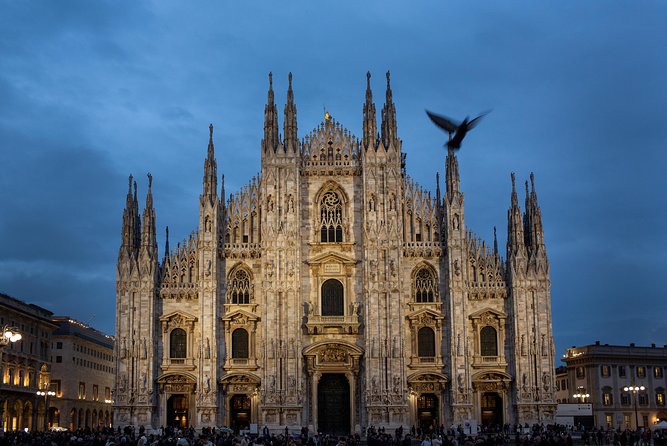
Review · MILAN
Milan Hop-On Hop-Off Bus Tour with Four Routes
Milan’s four-route bus tour is most useful as a big-picture introduction. In one day, you can pass the Duomo, La Scala, the Last Supper, Navigli, San Siro, Brera, and the shopping streets without wearing out your feet. I especially like the connected routes and the free bus-tracking app, since Milan’s sights spread across several neighborhoods.
I also like having 24-, 48-, or 72-hour choices, rather than being locked into a single loop. The main catch is that buses can be hard to find, departures may be about 30 minutes apart, and the recorded commentary is basic. This works best when you plan your stops in advance instead of treating the bus like a perfectly timed city shuttle.
Key points to know before you board
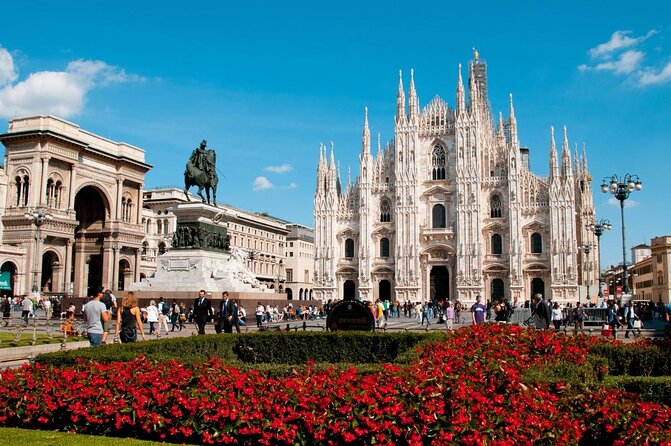
- Four connected routes: Red, blue, green, and yellow lines reach more than 30 stops across central Milan and its outer sights.
- Best first-day use: Ride a full loop early, then get off at the Duomo, Last Supper, Navigli, Brera, or San Siro.
- The audio guide is useful but uneven: It is available in 10 languages, though some headphone jacks and recordings may not work well.
- The app matters: The free Sightseeing Experience app shows bus locations in real time, though it may close unexpectedly.
- The 72-hour weekend bonus: From June through September, a 72-hour Saturday and Sunday ticket includes the Milan Night Tour.
- Value depends on your pace: The pass pays off when you make several stops or need a break from walking, not when you only want one short ride.
What the Milan bus tour is really good at
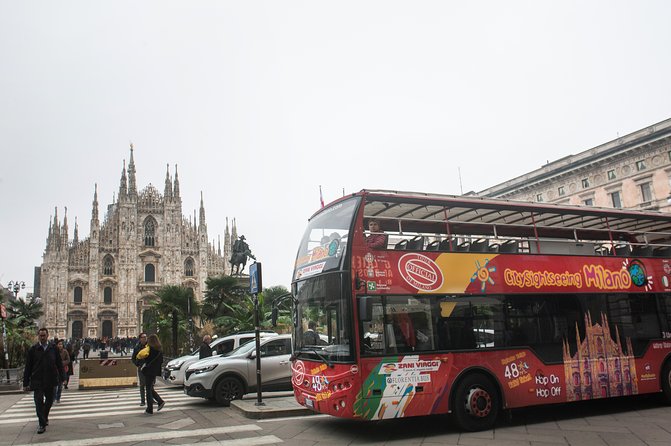
Milan is not difficult to reach by metro, but its main sights are spread out. The Duomo sits in the center, the Last Supper is west near Cadorna, Navigli lies south, and San Siro is well beyond the historic core. This bus fills the gaps between those places.
You can begin at the Duomo, Castello Sforzesco, Cadorna, or another listed stop. The buses are open-top double-deckers, so the upper level gives you the clearest look at streets and buildings. On a sunny day, it is a pleasant way to get your bearings. On a rainy day, bring patience, since wet seats and limited shelter can make the ride less comfortable.
The pass is valid for the time period you select: 24, 48, or 72 hours. That is important. A 24-hour ticket is not simply one calendar day. Once activated, it is meant to cover the selected period, so starting early gives you more useful sightseeing time.
The full loop takes about 80 to 90 minutes, depending on the route and traffic. That is long enough to make the first ride a proper city orientation. It is also long enough that you should not expect the bus to function like a quick taxi between every two sights.
More Hop-On Hop-Off Bus Tours in Italy
- Rome: City Sightseeing Hop-on Hop-off Bus with Audioguide
★ 4.0 · 16,045 reviews - Rome: Big Bus Hop-on, Hop-off Open-Top Sightseeing Tour
★ 4.1 · 9,537 reviews - Florence: Hop-on Hop-off Bus Tour: 24, 48 or 72-Hour Ticket
★ 4.0 · 6,283 reviews
Red Line: Duomo, La Scala, and Castello Sforzesco
The red route is the classic central-Milan circuit. It begins around Foro Buonaparte and Castello, then reaches Cadorna, the Last Supper, the Duomo, Monte Napoleone, Manin, and Moscova.
Castello and Foro Buonaparte
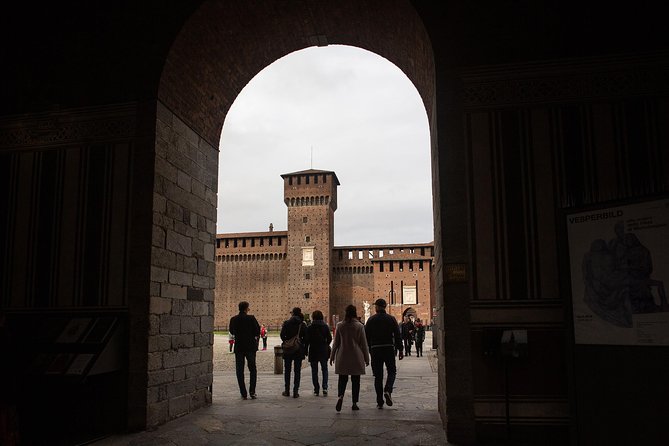
Castello Sforzesco is one of Milan’s essential stops. The 14th-century castle anchors a large central area and gives you an easy starting point for walking toward the Duomo. Get off here if you want a major landmark without beginning in the busiest cathedral square.
The stop is also useful for linking the red and green routes. If you are aiming for San Siro, Arco della Pace, or City Life later, Castello is one of the practical transfer points.
Cadorna and the Last Supper
Cadorna connects with Milan’s metro system and is near Santa Maria delle Grazie, where Leonardo da Vinci’s Last Supper is displayed. The bus stop for the church is listed at Via Caradosso, a short ride beyond Cadorna.
The bus does not replace a reservation for the fresco. The supplied information only covers transportation to the area, not admission. If seeing the painting is a priority, arrange that separately and use the bus to reduce the walking between it and the central sights.
Same streets, a different ride:
- Milan: City Sightseeing Hop-On Hop-Off Bus with Audio Guide
★ 4.0 · 6,256 reviews - City Sightseeing Rome Hop-On Hop-Off Bus Tour
★ 3.5 · 5,446 reviews - Naples: Hop-on Hop-off Bus Tour 24-Hour Ticket
★ 4.3 · 5,157 reviews - Rome: Hop-on Hop-off Sightseeing Bus Tour with Audioguide
★ 4.1 · 4,801 reviews
Duomo
The Duomo stop is the tour’s busiest and most useful. From here, you can see Milan’s cathedral, the Galleria, and the surrounding central streets. It is also the place to pause for lunch before joining another route.
Do not expect the bus to stop beside every entrance or explain every detail in depth. The audio narration gives a basic introduction, while the real value is your position in the center of the city. Get off, walk, and use the bus later when your feet need a rest.
Monte Napoleone, Manin, and Moscova
The red line also reaches Milan’s polished shopping district around Via Monte Napoleone. You do not need to shop to enjoy the area. It gives you a look at the city’s fashion identity and contrasts with the castle and cathedral.
Manin and Moscova are useful for reaching the northern side of the center. They are less important as single sightseeing stops than as links between the Duomo, Brera, and the green route.
Blue Line: central Milan, Porta Venezia, and Palazzo Lombardia
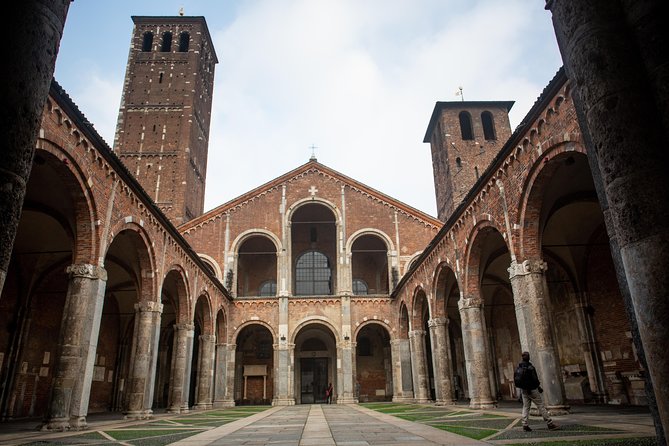
The blue route starts at the Duomo and runs through Monte Napoleone, Manin, Piazza della Repubblica, Palazzo Lombardia, Central Station, Buenos Aires, Porta Venezia, and San Babila.
Palazzo Lombardia and Central Station
Palazzo Lombardia gives the route a modern city view. It is a useful contrast to Milan’s Gothic cathedral and old churches. The nearby Central Station stop is convenient in theory, but it can be difficult to locate in practice. Allow extra time to find the exact pickup point rather than assuming it will be obvious outside the station.
Central Station is also one of the better places to connect your sightseeing with public transportation. If you arrive in Milan by train, you might find this route useful, but check the bus position in the app before walking around the station looking for the stop.
Buenos Aires and Porta Venezia
Corso Buenos Aires is one of Milan’s major shopping corridors. Porta Venezia, one of the city’s historic gates, gives the route more architectural and neighborhood interest than a simple ride through the center.
This section is a good reason to choose the bus over a single Duomo loop. You see more of everyday Milan, though the recorded commentary may not explain every street clearly. Keep your route map open and watch for your stop.
San Babila
San Babila brings you back toward the cathedral and the central shopping streets. This makes the blue route easy to combine with the red or yellow lines. You could ride blue in the morning, get off for the Duomo, then continue toward Brera or Navigli later.
Green Line: San Siro, City Life, and the Monumental Cemetery
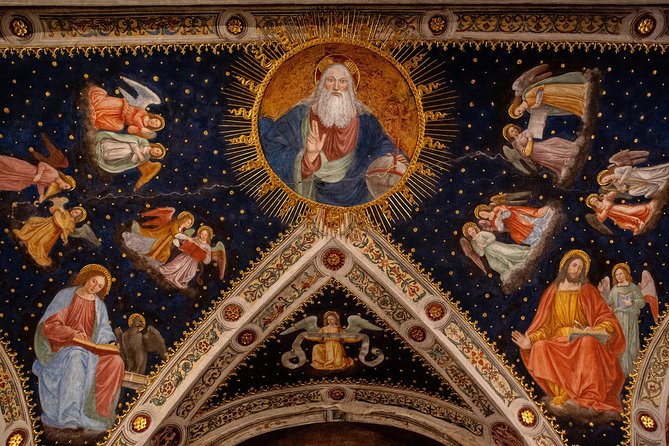
The green route is the widest-ranging option. It begins at Castello and travels through Arco della Pace, City Life, Casa Milan, Mico and Fieramilanocity, Lotto, Lido, Ippodromo, San Siro Stadium, Buonarroti, Pagano, Conciliazione, and Sempione.
Arco della Pace and City Life
Arco della Pace sits near the park beyond Castello. This is a pleasant place to leave the bus and walk, especially if you want an open stretch after central Milan’s crowded streets.
City Life shows off newer Milan. The route then reaches Casa Milan, a stop aimed at football fans and the club’s headquarters. These stops make the green line feel different from the red and yellow lines, which focus more heavily on central historic sights.
San Siro Stadium
San Siro is the green route’s main draw. The stadium stop is listed near Gate 8, and the route passes several sports-related stops, including Ippodromo and Lido.
If you care about football, plan this section carefully. The bus provides transportation and an outside view of the district, but the tour information does not include a stadium entry or guided stadium visit. You should treat San Siro as a stop to explore on your own, not as an included stadium tour.
Conciliazione and Sempione
The route returns through Conciliazione and Sempione before looping back to Castello. These stops can help you reach the western side of central Milan without crossing the whole city on foot.
The green line may be less useful if you have only a few hours and want the Duomo, La Scala, and the Last Supper. It becomes much more worthwhile with a 48- or 72-hour pass, or if San Siro is high on your list.
Yellow Line: Navigli, Piazza XXIV Maggio, and Brera
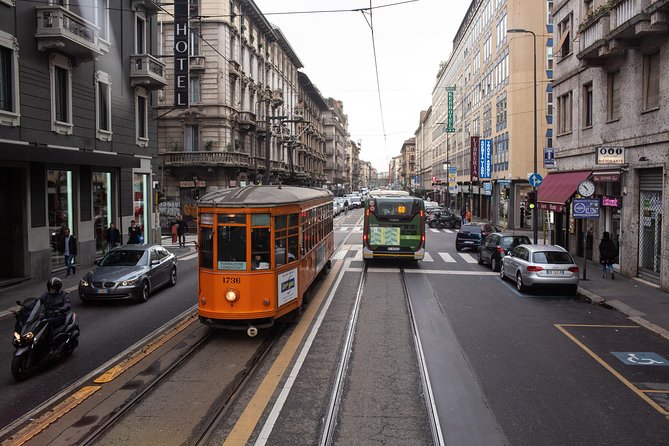
The yellow line is the most neighborhood-focused route. It starts at Castello, passes Cadorna and the Last Supper, then heads to Navigli, Piazza XXIV Maggio, the Duomo, Monte Napoleone, and Brera.
Navigli
Navigli is the yellow line’s strongest reason to exist. Milan’s canal district feels different from the formal center, with waterside streets and a more relaxed evening setting. Get off here if you want a break from grand monuments and shopping avenues.
The route also makes Navigli easier to combine with the Duomo. Without the bus, you would need to organize separate public transportation or a fairly long walk between these districts.
Piazza XXIV Maggio
Piazza XXIV Maggio is another useful stop near the canals. It can work better than Navigli if you want to explore the area from a different angle or continue toward the center.
The yellow line is especially good for a full-day plan: Castello in the morning, the Last Supper near Cadorna, Navigli for lunch or an afternoon stroll, then Brera or the Duomo.
Brera
Brera is one of Milan’s most appealing central neighborhoods, with narrow streets and an artsy feel. The stop at Via Fatebenefratelli puts you near the district, though you will still need to walk around once you get off.
This is a good final stop before returning to the Duomo or Monte Napoleone. The line makes it easy to see three different sides of Milan in one outing: historic monuments, canal-side streets, and fashionable central neighborhoods.
How the audio guide and app affect the experience
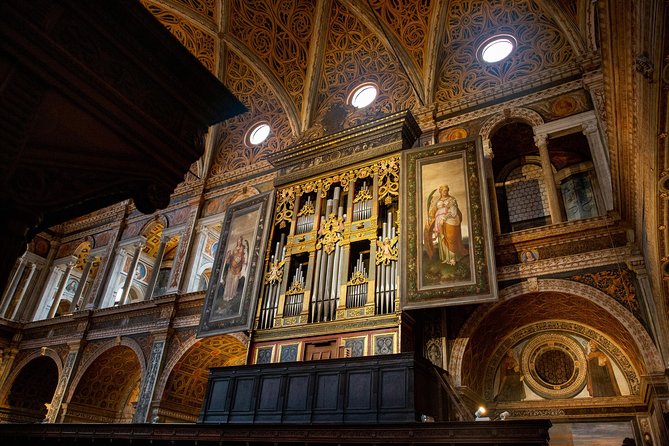
The onboard audio guide is available in 10 languages, including English. It is meant to explain the main sights and neighborhoods as you ride, but you should keep your expectations modest.
The narration can be out of sync with the view. You may hear an explanation just before reaching a building or after it has passed. Some seats have headphone jacks that do not work, and one recorded device may switch languages or fail to switch back. If your audio cuts out, move seats before assuming the whole system is broken.
The commentary also tends to be brief and recorded rather than lively. I would use it as background information, not as a substitute for a walking guide or museum visit. Keep your eyes up, watch the route map, and listen for stop announcements. Driver announcements can be difficult to hear.
The free Sightseeing Experience app is more important than the commentary. It is designed to show the buses in real time, which helps when departures are spaced roughly 30 minutes apart. The app may close while you are checking the map, so take a screenshot of your route and stop list before boarding.
Timing, comfort, and the price question
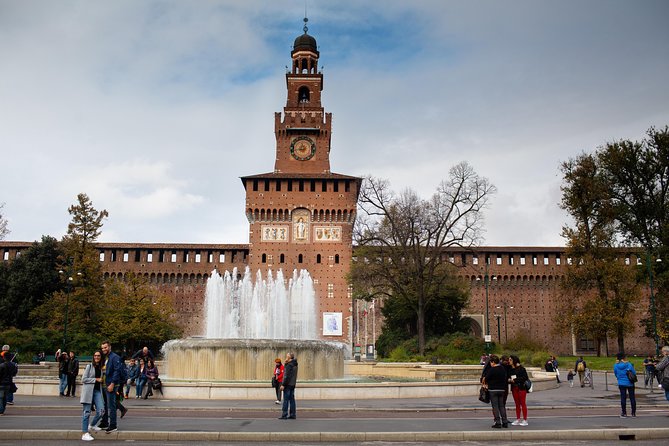
At $27.01 per person, the 24-hour ticket can be fair value if you make several rides and stops. One short loop is not enough to justify the cost when Milan’s metro and trams can handle many journeys. The bus becomes more useful when you want sightseeing from your seat, simple transfers between distant landmarks, and a break from walking.
A 48-hour ticket suits a slower visit. You can handle the Duomo, La Scala, Castello, and the Last Supper on one day, then use the green and yellow routes for San Siro, Navigli, Brera, and City Life on the next.
The 72-hour option makes the most sense if you want a relaxed schedule or plan to revisit neighborhoods. From June through September, a 72-hour ticket valid for Saturday and Sunday includes the Milan Night Tour. That bonus can improve the value, but it applies to the stated weekend period, not every 72-hour booking.
Buses may stop running shortly after 6 p.m., apart from the separately arranged night tour. Do not buy a pass expecting regular evening service every night. Also note that there are no public washrooms on the buses or at the Milan Visitor Center.
Who should book this and who should skip it
I would choose this tour if you are visiting Milan for the first time, want a broad look at the city, dislike long walks, or plan to visit sights spread across several districts. It is also useful for families and for anyone who wants a simple way to reach San Siro or Navigli.
I would skip it if you have only one or two specific destinations, prefer precise public transportation, or want detailed live storytelling. The routes are broad, but the stops can be confusing, service may feel slow, and the audio system is not always dependable.
Buy the 24-hour option for a focused first look. Choose 48 or 72 hours only if you will make repeated stops. Start around 10 a.m., ride one full loop if possible, then build your day around the stops that matter most to you. That small amount of planning makes this ordinary city bus far more useful.
Free cancellation is available up to 24 hours before the local start time. The booking information lists a 10 a.m. start, mobile tickets, and public transportation nearby.
FAQ
How long does the Milan hop-on hop-off bus tour take?
A full route loop takes about 1 hour and 20 minutes to 1 hour and 30 minutes, depending on the line and traffic.
How long is the ticket valid?
You can choose a 24-hour, 48-hour, or 72-hour ticket.
How many routes are included?
All four routes are included: red, blue, green, and yellow.
How many stops does the tour have?
The four routes together cover more than 30 stops.
Is the audio guide available in English?
Yes. The onboard audio guide is available in 10 languages, including English.
Does the bus have Wi-Fi?
Yes. Free Wi-Fi is available onboard.
Can I track the buses?
Yes. The free Sightseeing Experience app is designed to show bus locations in real time.
Does the 72-hour ticket include a night tour?
A 72-hour ticket valid for Saturday and Sunday includes the Milan Night Tour from June through September.
Is hotel pickup included?
No. Hotel pickup and drop-off are not included.
Can I cancel for a full refund?
Yes, if you cancel at least 24 hours before the experience start time. Cancellations made less than 24 hours in advance are not refunded.
Just joined the route map around Italy
- Rome: Tiber River Hop-On Hop-Off Boat Tour Ticket★ 3.7 · 238 reviews
- Rome Hop On Hop Off Tour from Civitavecchia by Train★ 3.2 · 22 reviews
- Rome: Nighttime Tour by Open-Top Bus★ 3.8 · 447 reviews
- Rome Squares and Fountains Tour & River Boat Hop On Hop Off★ 4.6 · 16 reviews
- Rome: Hop-on Hop-off Bus tour + Pantheon Priority Entry★ 5.0 · 4 reviews
- Rome: Hop-On Hop-Off Bus & Vatican Museums Guided Tour★ 3.4 · 7 reviews
- Rome: Hop-on-Hop-off Bus with Vatican and Sistine Chapel★ 4.5 · 6 reviews
- Rome: Hop-on Hop-off Bus and Colosseum, Ancient Rome Tour★ 4.0 · 9 reviews
Milan Bus Tours, side by side.
Milan: City Sightseeing Hop-On Hop-Off Bus with Audio Guide
Read our review →
Milan: Gray Line Milan Open Tour Hop-On Hop-Off Bus Tour
Read our review →
Milan: Best of Skip-the-Line Duomo Rooftops Guided Tour
Read our review →
Milan Duomo Rooftops Tour + Optional Hop-on-Hop-off ticket
Read our review →
Skip-the-Line Duomo & La Scala Museum Tour + Hop On Hop Off
Read our review →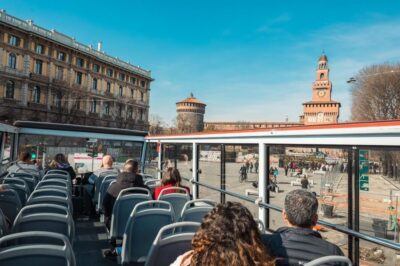
Milan: Skip-the-Line Duomo Guided Tour & Hop-on Hop-off Bus
Read our review →
Other lists with this bus tour