
Review · FLORENCE
Florence: Hop-on Hop-off Bus Tour: 24, 48 or 72-Hour Ticket
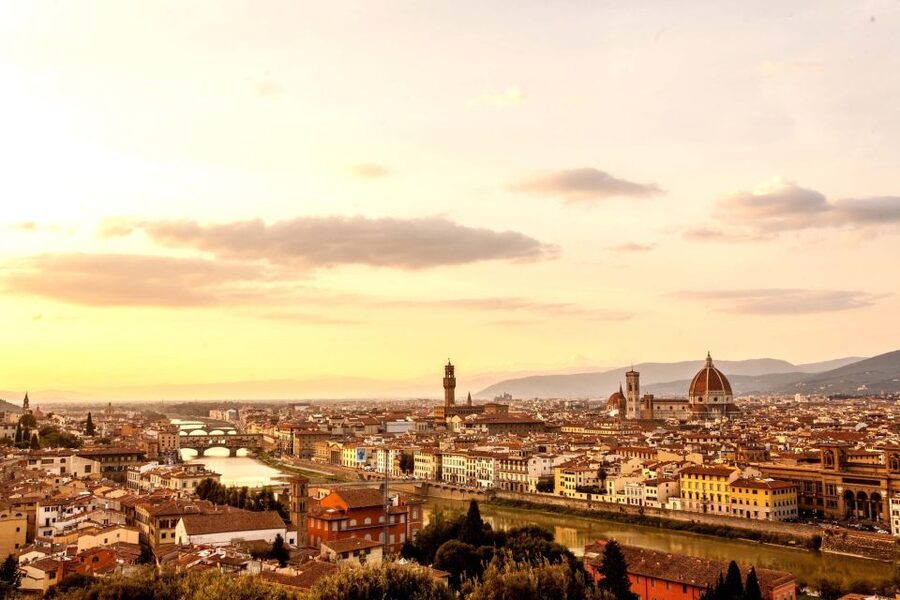
Florence’s best feature on this bus tour is the climb to Piazzale Michelangelo, where the city spreads below you in a grand sweep of red roofs, towers, and the Arno. The ride also reaches Fiesole, an old hill town with fine views, so you see more than the compact center most people visit on foot.
I like the easy overview and the useful transport. You can listen to commentary while passing Santa Croce, Porta Romana, the Boboli Gardens area, and the river, then get off when something catches your eye. The main drawback is waiting time, especially on Line B, where buses may come only every two hours in the winter timetable.
Key points to know before you ride
- Piazzale Michelangelo is the essential stop: Get off for the broadest view of Florence and the surrounding hills.
- Two routes cover different sides of the city: Line A takes about one hour through central Florence, while Line B takes about two hours and reaches Fiesole.
- The bus is useful beyond sightseeing: It saves uphill walking and links several outlying viewpoints with the pedestrian center.
- The audio guide is available in eight languages: Choose English, Spanish, French, German, Italian, Japanese, Russian, or Portuguese.
- The app helps with confusing stops: Sightseeing Experience provides route information and real-time bus locations.
- The schedule matters: Line B runs less often, and from November 3, 2025, to March 31, 2026, it is suspended Monday through Friday except for limited holiday service from December 20 to January 6.
What this Florence bus tour actually covers
This is not a guided walking tour of the Duomo, Uffizi, or Palazzo Vecchio. It is a moving introduction to Florence, with unlimited rides for one, two, or three days.
You can stay on board for a full circuit, use the bus as a sightseeing ride, or get off at a stop and return later. That flexibility matters in Florence, where the central streets are easy to walk but the best viewpoints and hillside neighborhoods require effort.
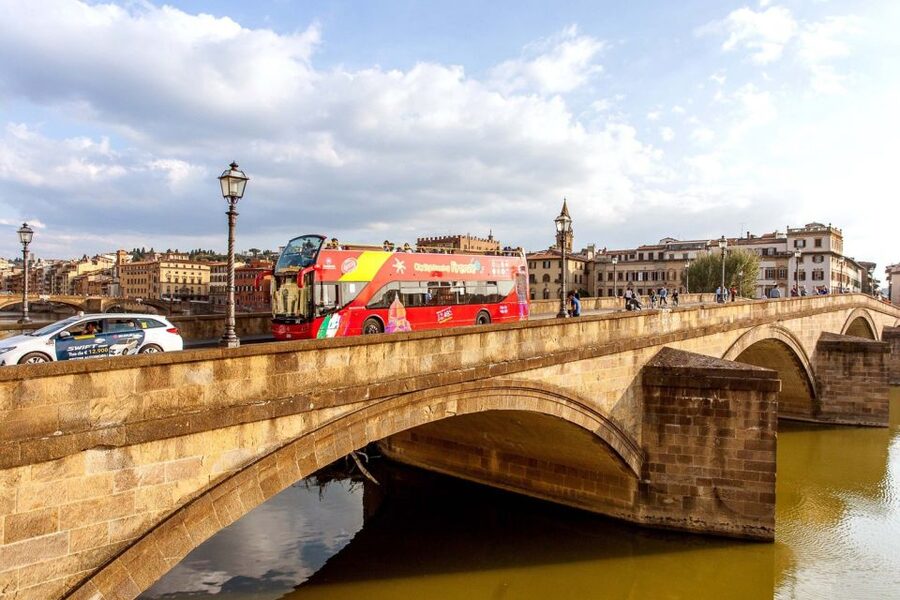
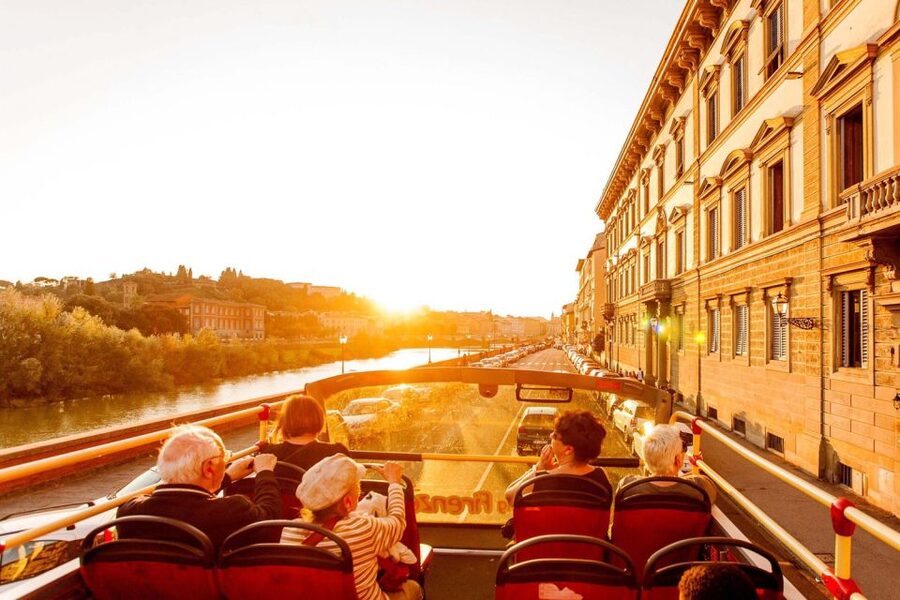
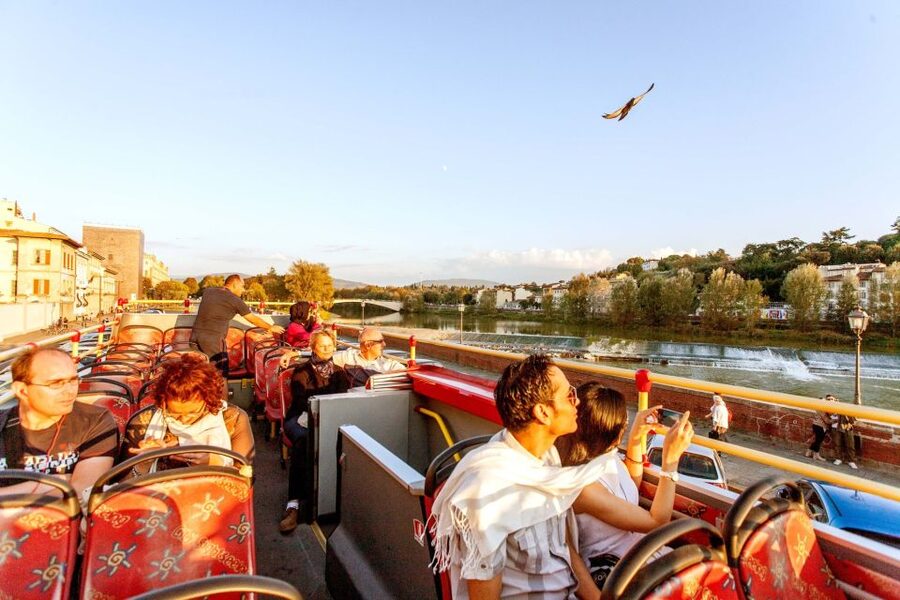
The open top gives you a better view than a normal city bus, especially along the Arno and on the roads climbing toward Piazzale Michelangelo. On a sunny day, you get the full view and plenty of photo chances. On a rainy or very hot day, the upper deck becomes less appealing, so keep the lower level in mind.
The ticket costs about $24 per person. It is good value if you use the bus several times, ride both routes, or need help reaching the hills. It is less convincing if you only sit through one one-hour loop and spend the rest of your day walking around the historic center.
More Hop-On Hop-Off Bus Tours in Italy
- Rome: City Sightseeing Hop-on Hop-off Bus with Audioguide
★ 4.0 · 16,045 reviews - Rome: Big Bus Hop-on, Hop-off Open-Top Sightseeing Tour
★ 4.1 · 9,537 reviews - Milan: City Sightseeing Hop-On Hop-Off Bus with Audio Guide
★ 4.0 · 6,256 reviews
Line A: a one-hour circuit through Florence
Line A is the shorter city route. The complete loop takes about one hour, though traffic and waiting can affect the actual time. It is the route to choose when you want a quick first look at Florence or a simple way to connect the station, riverfront, viewpoints, and southern edge of the center.
Santa Maria Novella Train Station
Stop 7, at Largo Alinari, is a practical starting point. The station is one of the easiest places to reach after arriving in Florence, and the activity provider has a visitor center in the ticketing area there.
This is also a useful place to ask for help with the route map, ticket activation, and stop locations. Several stops can be hard to spot from the street, so checking the precise side of the road before you wait is worthwhile.
Libertà and Via Bernardo Segni
The route then moves toward the northern side of the center at Libertà and Via Bernardo Segni. These stops are useful for seeing Florence beyond the tight cluster of the Duomo and Ponte Vecchio.
Do not expect the bus to stop at every major sight directly. Florence’s historic center has many pedestrian-only streets, so you may still need to walk from a stop to the exact attraction you want.
Same streets, a different ride:
- City Sightseeing Rome Hop-On Hop-Off Bus Tour
★ 3.5 · 5,446 reviews - Naples: Hop-on Hop-off Bus Tour 24-Hour Ticket
★ 4.3 · 5,157 reviews - Rome: Hop-on Hop-off Sightseeing Bus Tour with Audioguide
★ 4.1 · 4,801 reviews - Stresa: 3 Borromean Islands Hop-On Hop-Off Boat Tour
★ 4.4 · 4,122 reviews
Santa Croce
Santa Croce is one of the more useful central stops. The basilica is known for its monumental interior and the tombs of important Florentine figures, though the entrance ticket is not included in this bus experience.
The stop also places you near the eastern side of the historic center. It can save you a long walk if you are moving between the station, Santa Croce, and the southern riverfront.
Lungarno Serristori and Piazza Ferrucci
The bus follows the Arno along Lungarno Serristori before reaching Piazza Ferrucci. This is where the ride becomes less about ticking off individual monuments and more about seeing how Florence fits together.
From the bus, you get changing views of the river, bridges, hills, and neighborhoods. Keep your camera ready, but also listen for the next stop. The audio commentary does not always line up perfectly with the view, according to several comments about the service.
Piazzale Michelangelo and Galileo
Piazzale Michelangelo is the star of the route. From the terrace, Florence appears almost like a map: the Duomo dome, Palazzo Vecchio, Santa Croce, and the Arno all sit in one broad view.
Give yourself time here if you can. The bus stop is valuable because it removes much of the uphill work, particularly for anyone with an injury, limited mobility, or little interest in climbing Florence’s steep streets.
Galileo is another useful viewpoint stop and also connects with Line B. If you plan to change routes, check the bus display and app carefully so you do not board the wrong direction.
Villa Cora, Porta Romana, and Piazza Tasso
Line A continues through the hills near Villa Cora and down to Porta Romana. This stretch gives you a look at Florence’s quieter southern edge, with grand homes, gardens, and roads outside the most crowded part of the center.
Porta Romana is a good stopping point for access toward the Boboli Gardens and the Oltrarno area, though the walk to any attraction depends on your destination. Admission to gardens and museums is separate.
Piazza Tasso brings you closer to the lively residential side of the Oltrarno. This part of Florence feels less like a checklist of famous buildings and more like a city where people live and work.
Leopolda and Piazza Indipendenza
The final stops include Leopolda, near the Parco della Musica, and Piazza Indipendenza. These are useful if you want to see more of Florence outside the classic postcard center.
Line A is the route most likely to suit a one-day visitor. You can make one complete circuit in the morning, choose a stop for lunch or sightseeing, then use the bus again later. Just remember that the last departures and frequency change by season.
Line B: the longer ride to Fiesole
Line B takes about two hours for the full route and gives the ticket its strongest reason for existing. It combines several Florence viewpoints with a trip into the hills toward Fiesole, an old settlement with Etruscan roots and broad views over the city.
This route is sometimes described in blue and red route language in practical directions, while the formal information uses Line A and Line B. Confirm the route on the bus display or app before boarding.
Galileo, Piazzale Michelangelo, and Lungarno Serristori
Line B begins at Galileo and heads toward Piazzale Michelangelo, then down to Lungarno Serristori. If you have not yet seen the city from above, this is the first section to prioritize.
The route gives you two very different views in a short time. From Piazzale Michelangelo, Florence lies below. Along the river, you return to street level and see the city from its working waterway.
Grazie and Lungo l’Affrico
At Grazie and Lungo l’Affrico, the bus moves through less central parts of Florence. These stops are not as obvious as Santa Croce or Piazzale Michelangelo, but they help you understand the shape of the city beyond its famous core.
This is a good time to stay on board and listen. The value here is the moving view, not a single major attraction.
Museo del Calcio
The Museo del Calcio stop serves Florence’s football museum. The attraction itself requires its own admission, and the bus ticket does not include entry.
If football is not part of your plan, you can simply remain on board. The route continues toward San Domenico and Fiesole.
San Domenico and Fiesole
San Domenico marks the approach to the hills. Then comes Fiesole, the major destination on Line B.
Fiesole is worth more than a quick photograph if your schedule allows. You can visit the hill town, seek out the Etruscan and Roman remains, and enjoy the view back toward Florence. One useful plan is to get off here, take your time, and catch a later bus, but the long interval between buses means you must check the timetable first.
The ride to Fiesole is especially useful if you have already seen the central monuments. It adds a different side of Tuscany without requiring a separate day trip. You get hills, open views, and a change from Florence’s stone streets.
Porta al Prato, Viale Vasco Pratolini, and Porta Romana
After Fiesole, Line B returns toward the city through Viale Fratelli Rosselli and Porta al Prato, then Viale Vasco Pratolini and Porta Romana.
Some sections overlap with Line A. That is both a benefit and a weakness. The overlap makes it easier to reach familiar stops, but it means the two routes do not provide two completely separate tours of Florence.
Audio commentary, Wi-Fi, and the bus app
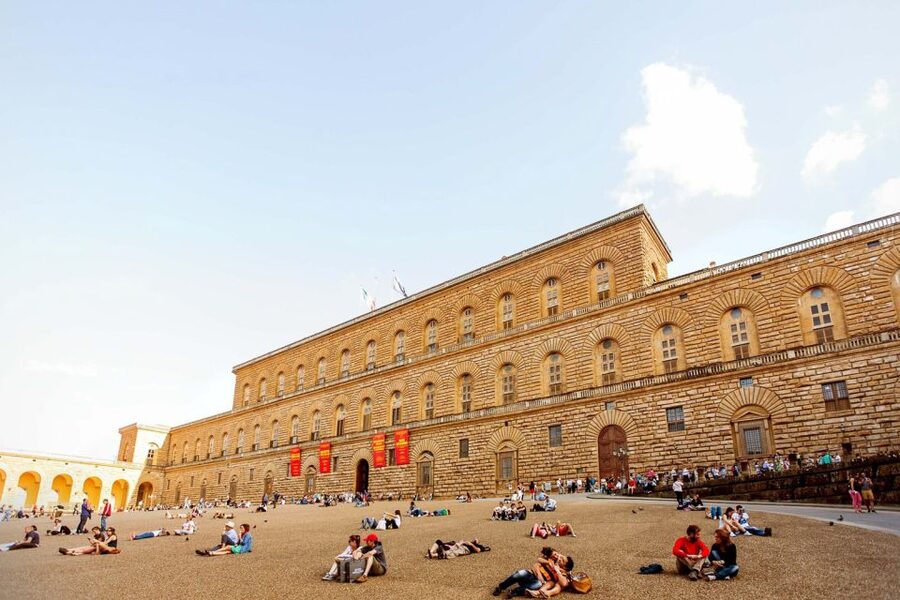
The onboard audio guide is offered in English, Spanish, French, German, Italian, Japanese, Russian, and Portuguese. It gives you context as you pass churches, streets, viewpoints, and historic neighborhoods.
The commentary is helpful for a first orientation, but do not expect a live guide beside you. Timing can be imperfect, and some sections have less narration than others. A few passengers also found the music more noticeable than the information, while others wanted more historical detail.
Bring or use the supplied headphones and keep the route map nearby. A few headphone ports may not work, and you do not want to miss your stop while trying to follow the commentary.
The free Sightseeing Experience app is one of the more useful parts of the package. It can show the stops and real-time bus position, which helps when you are unsure which side of the street to use or how long the next bus may take.
Free Wi-Fi is included on the bus. Treat it as a helpful extra rather than the main reason to buy the ticket.
Timing, frequency, and the best way to plan your day
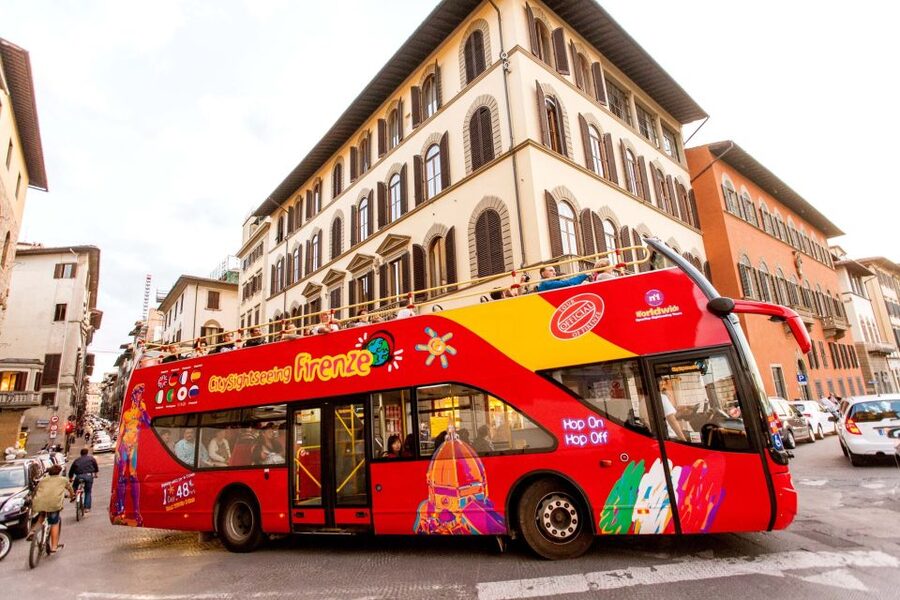
The published winter schedule is especially important. From November 3, 2025, to March 27, 2026, Line A has a first departure from Stop 6 at 9:20 a.m. and a last departure at 4:40 p.m. Service runs about every 40 minutes on weekends and every 75 minutes on weekdays.
During the same period, Line B starts at Stop 1 at 11:15 a.m. and ends at 3:15 p.m., with buses about every 120 minutes. From November 3, 2025, to March 31, 2026, Line B is suspended Monday through Friday, apart from limited daily service between December 20 and January 6.
That schedule can make a 72-hour ticket less useful in winter if you are counting on Line B. Always check the current times before building your day around Fiesole.
In warmer months, a good plan is to take Line A first for orientation, get off at Piazzale Michelangelo, and then ride Line B to Fiesole later. If you only have one day, do not spend the whole day on the bus. Use the ride to identify places you want to visit, then get off and explore on foot.
Is the $24 price good value?
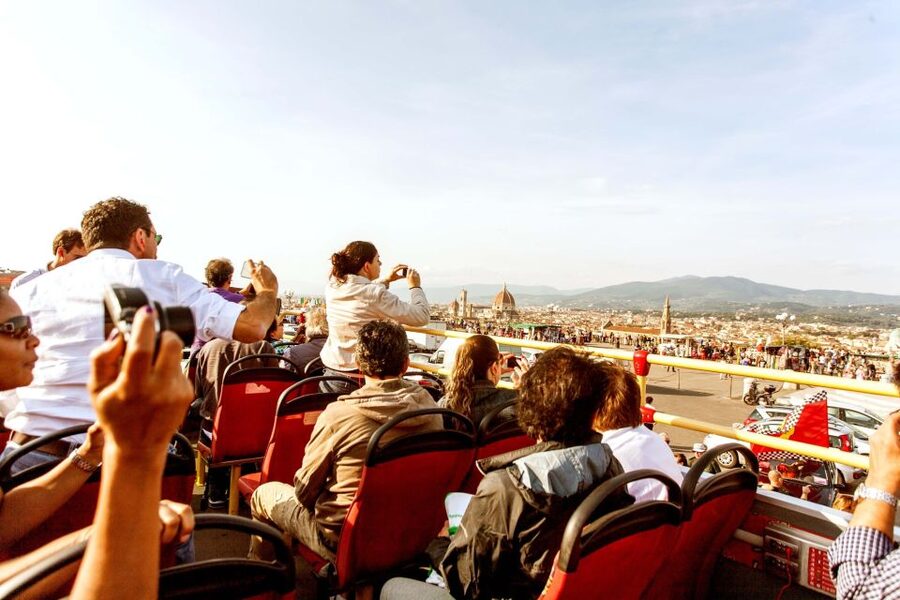
At $24, the 24-hour ticket can pay off quickly if you use it as transport as well as sightseeing. A ride to Piazzale Michelangelo, a return toward the center, and a longer trip toward Fiesole can make the cost reasonable, especially when you want to avoid steep walking.
The 48-hour ticket suits a slower visit. You can use one day for the city route and another for Fiesole, without trying to fit every viewpoint into a single afternoon. The 72-hour option makes the most sense if you plan to return to the bus several times or want a low-effort way to move around Florence.
The value drops if you only complete one loop. Florence’s central sights are close enough to explore on foot, and this ticket does not include entry to museums, churches, gardens, or the football museum.
Who will get the most from this bus tour?
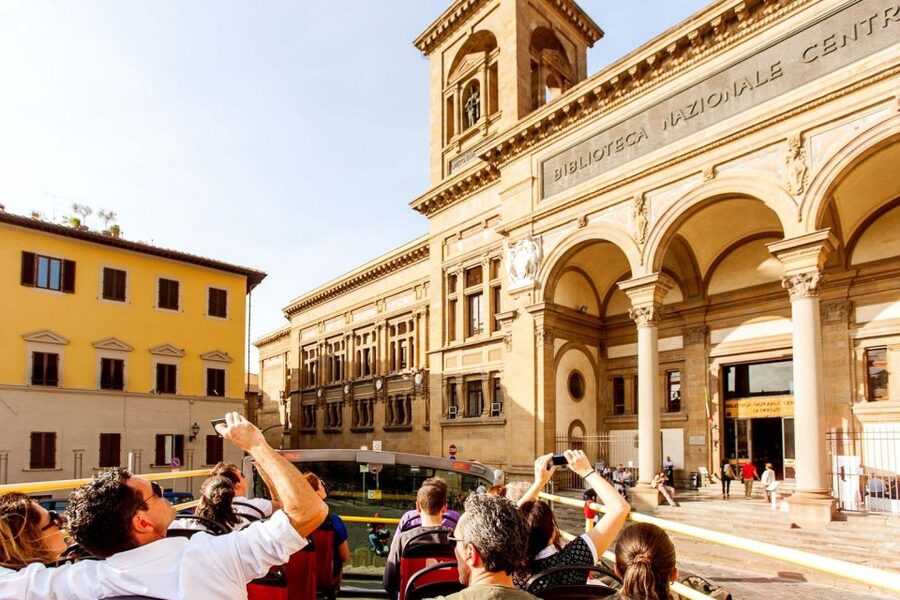
I would choose this for a first visit, a short stay, families with young children, and anyone who wants a calm overview before choosing where to spend time. Children under five can ride free.
It is also a practical choice if walking uphill is difficult. The bus reaches the high viewpoints and provides a place to rest while still seeing the city.
You should be comfortable with a slower pace and some uncertainty in the timetable. Buses can fill quickly, stops are not always clearly marked, and Line B may require a long wait. This is not the right product if you want a private guide, museum entry, or a tightly timed route from one attraction to the next.
The buses are wheelchair accessible, and help is available at the provider’s visitor center near Santa Maria Novella. If you need a particular stop or route, ask there before setting out.
Should you book it?
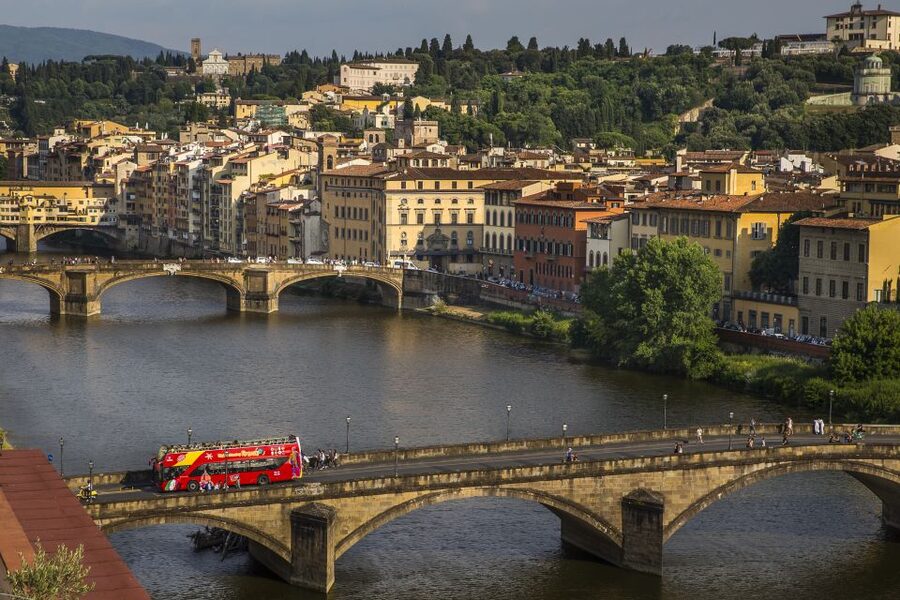
Book this Florence hop-on hop-off tour if you want big city views with little uphill effort, or if you like using a bus to get your bearings before exploring on foot. Make Piazzale Michelangelo a priority, and add Fiesole when Line B is running at a time that suits you.
Skip it if your plans stay entirely within the walkable historic center. For most people, the best value comes from the 48-hour ticket in good weather, or the 24-hour ticket used with a clear plan: one full circuit, one major viewpoint, and at least one ride to a part of Florence you would not easily reach on foot.
FAQ
How long are the two Florence bus routes?
Line A takes approximately one hour for the full route. Line B takes approximately two hours and includes Fiesole.
What languages are available on the audio guide?
The audio commentary is available in English, Spanish, French, German, Italian, Japanese, Russian, and Portuguese.
Does the ticket include admission to Florence attractions?
No. The ticket includes bus travel, audio commentary, Wi-Fi, and access to the mobile app. Attraction tickets are separate.
Can children ride the bus for free?
Children under five years of age can participate for free.
Is the bus wheelchair accessible?
Yes, the buses are wheelchair accessible.
Does Line B run every day?
Not throughout the winter schedule. From November 3, 2025, to March 31, 2026, Line B is suspended Monday through Friday. It operates every day with limited service from December 20 to January 6. Check the current timetable before planning a Fiesole visit.
Just joined the route map around Italy
- Rome: Tiber River Hop-On Hop-Off Boat Tour Ticket★ 3.7 · 238 reviews
- Rome Hop On Hop Off Tour from Civitavecchia by Train★ 3.2 · 22 reviews
- Rome: Nighttime Tour by Open-Top Bus★ 3.8 · 447 reviews
- Rome Squares and Fountains Tour & River Boat Hop On Hop Off★ 4.6 · 16 reviews
- Rome: Hop-on Hop-off Bus tour + Pantheon Priority Entry★ 5.0 · 4 reviews
- Rome: Hop-On Hop-Off Bus & Vatican Museums Guided Tour★ 3.4 · 7 reviews
- Rome: Hop-on-Hop-off Bus with Vatican and Sistine Chapel★ 4.5 · 6 reviews
- Rome: Hop-on Hop-off Bus and Colosseum, Ancient Rome Tour★ 4.0 · 9 reviews
Florence Bus Tours, side by side.
City Sightseeing Florence Hop-On Hop-Off Bus Tour
Read our review →
From Livorno: Guided Day Trip to Florence and Pisa by Bus
Read our review →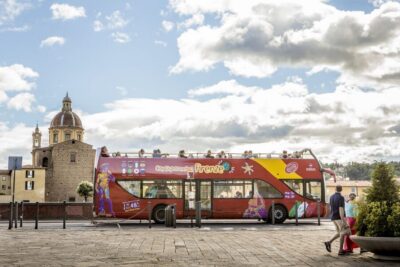
Other lists with this bus tour