
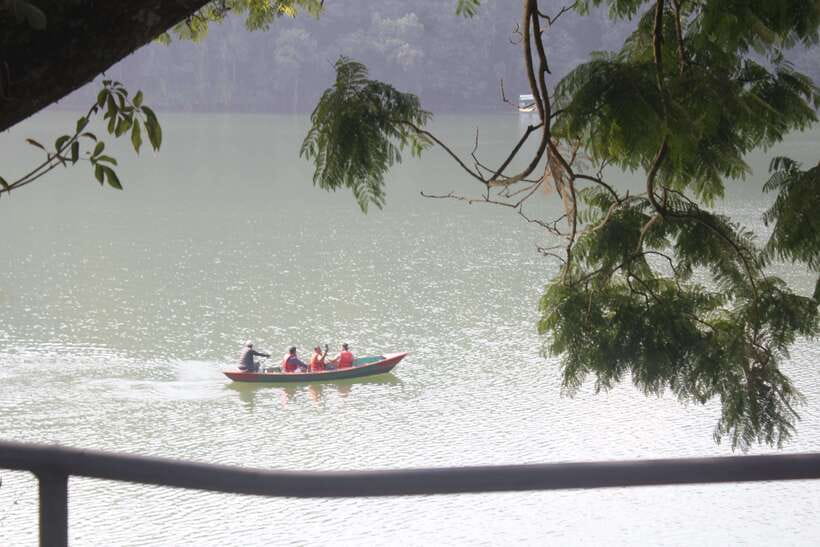
Review · POKHARA
Pokhara: Full-Day Sharing Bus Tour on 7 Iconic Destination
Pokhara’s best sightseeing is scattered across the city, and this $12 shared bus tour ties the major stops together in one long day. You’ll see caves, shrines, waterfalls, river scenery, and mountain views without hiring a taxi or arranging several rides.
I like the excellent value and the easy hotel pickup in Lakeside. I also like the local feel: you share the bus with Nepali, Indian, and international visitors, rather than moving through town in a sealed private vehicle. The catch is important: this is mainly transport with a schedule, not a fully guided tour, and the advertised six hours can stretch closer to eight.
Key points to know before booking
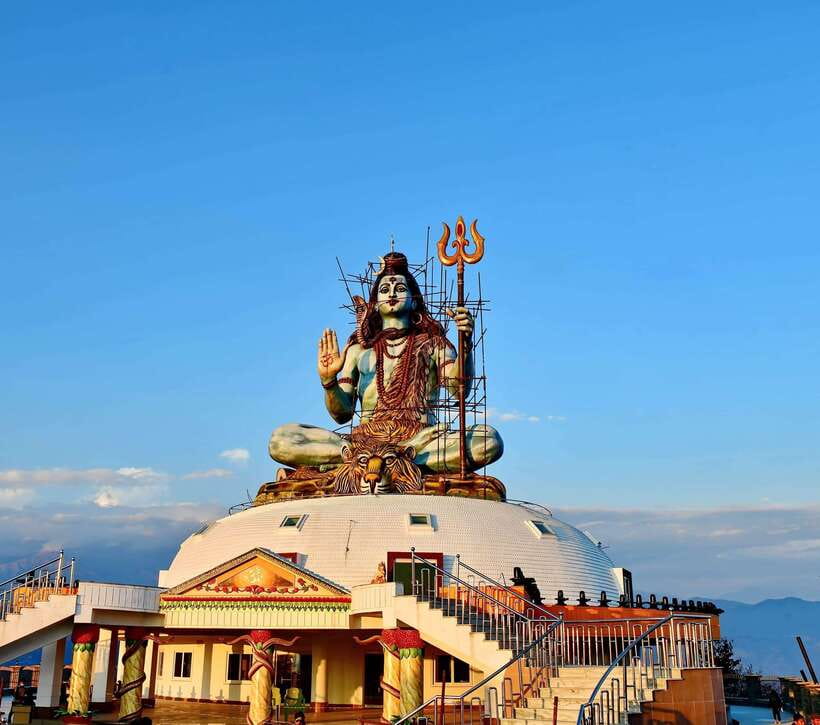
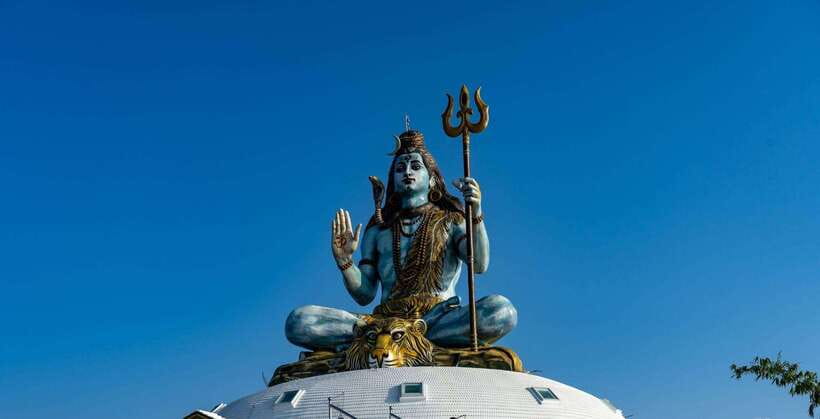
- Pumdikot Shiva Idol comes first, with wide views toward the Annapurna range when the weather is clear.
- The caves are real highlights, but Gupteswor, Mahendra, and Bat Cave involve uneven ground, darkness, and tight spaces.
- You explore independently at each stop, then return to the bus at the agreed time.
- The tour covers a lot for the price, including World Peace Stupa, Devi’s Fall, the Seti River, and Bindabasini Temple.
- Entry fees are extra, totaling about $4 according to the tour information.
- The bus may be basic and non-air-conditioned, though an air-conditioned vehicle has sometimes been provided in hot weather.
One bus, many sides of Pokhara
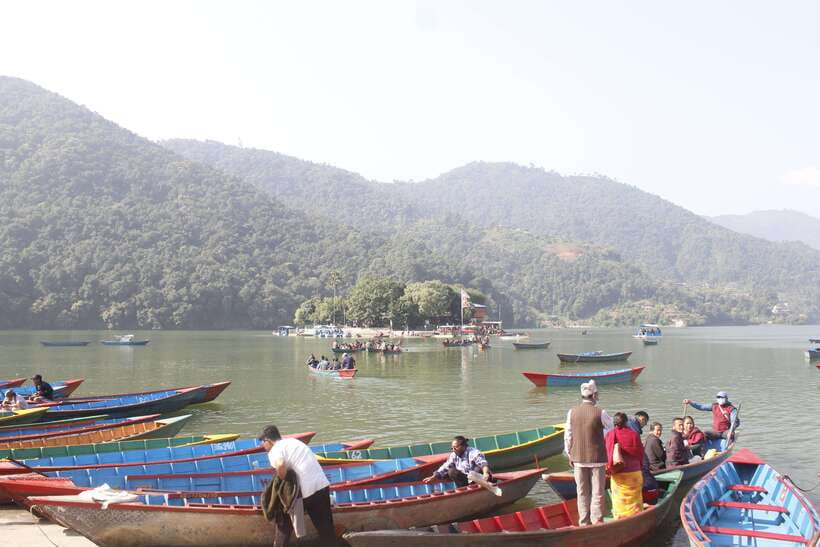
This outing is best understood as a sightseeing circuit rather than a traditional guided excursion. You get picked up at your Lakeside hotel with a name card, join a shared bus, and spend the day moving between Pokhara’s major sights.
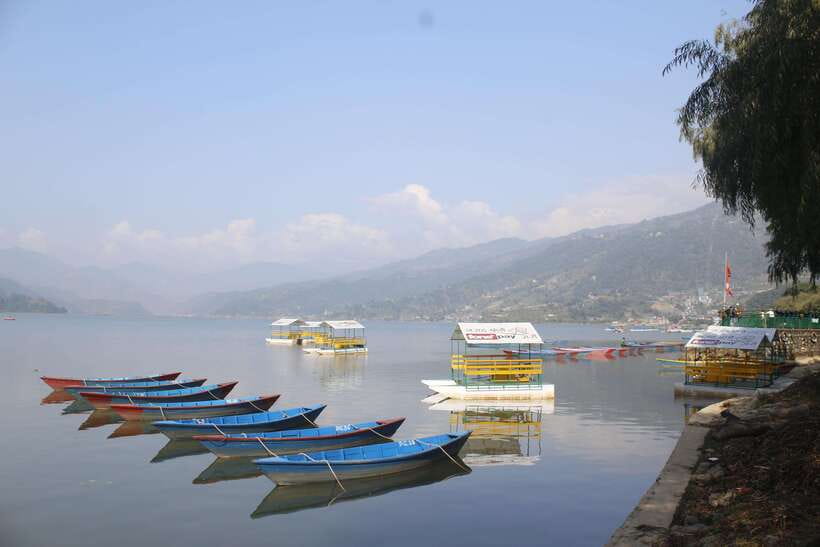
That setup solves a real problem. Pokhara is easy to enjoy around Fewa Lake, but its caves, temples, waterfall, museum area, and hilltop viewpoints are spread well beyond walking distance. A taxi can cost much more once you add several stops. Here, the transport is organized for you, and the low price leaves room in your budget for meals, entrance tickets, or another activity.
The schedule is the tradeoff. You cannot linger wherever you wish, and you need to watch the clock. At many stops, the driver or coordinator gives you a meeting time, then you walk around on your own. For me, that is a strength if you like freedom and already know what you want to see. If you want a guide beside you explaining every shrine, rock formation, and local story, this is not the right format.
The bus itself may be a simple local-style tourist bus. One useful point from recent departures is that transport has occasionally been upgraded to air conditioning during especially hot weather, but you should not count on that every time. Carry water, wear light clothing, and expect a social ride with a mix of languages and nationalities.
More full days on board around Nepal:
- Kathmandu : City Highlights Bus Tour Full Day
★ 5.0 · 2 reviews - Water Taxi All Day hop-on hop-off Venice of America Boat Tour
★ 4.5 · 3,932 reviews - Thessaloniki: Full-Day Bus Trip to Meteora
★ 4.8 · 3,471 reviews
Pumdikot Shiva Idol and the first mountain views
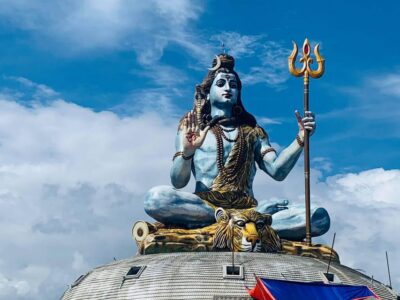
The first major stop is the large Shiva statue at Pumdikot. This hilltop site gives you a strong opening view of Pokhara, and on a clear day the Annapurna mountains are visible beyond the city. The statue and temple area also offer a calm place to pause before the bus route gets busier.
The view is weather-dependent. Pokhara can be cloudy, rainy, or hazy, and the mountains may disappear completely. Even without the peaks, Pumdikot gives you a useful sense of the city’s setting, with hills, rooftops, and open country spread below.
Allow time for steps and walking around the religious site. Modest clothing and respectful behavior are sensible at every temple on this tour. This is one of the stops where a little advance reading helps, since the shared bus usually does not provide a long explanation on site.
World Peace Stupa above Fewa Lake
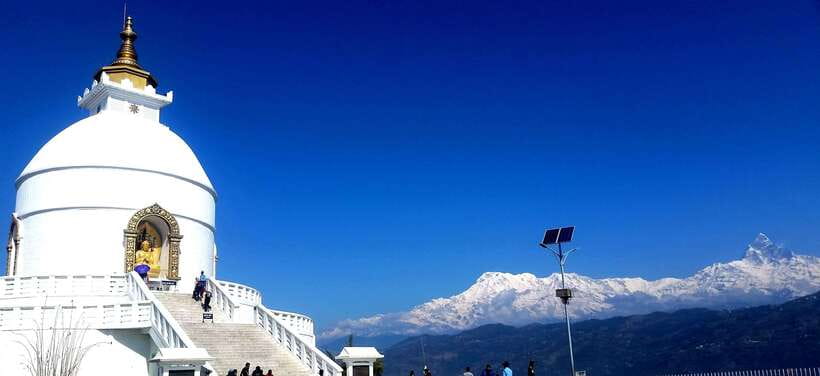
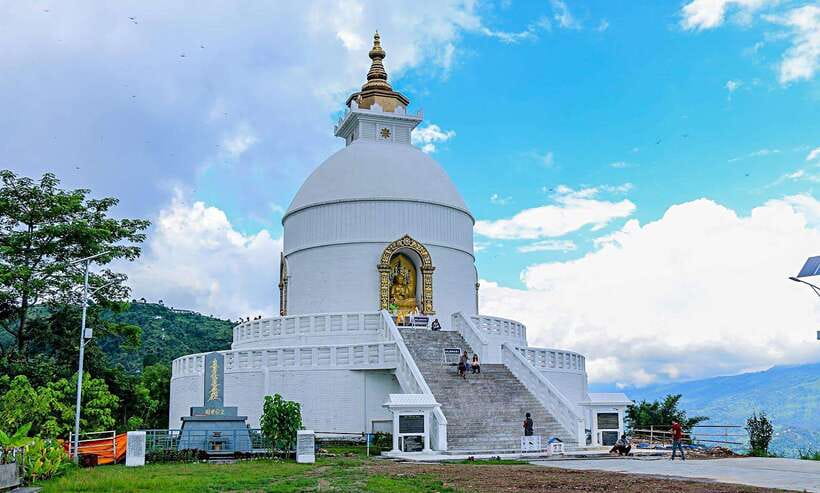
The World Peace Stupa brings you to one of Pokhara’s most familiar viewpoints. The white monument sits above the southern side of Fewa Lake, with broad views across the water and toward the surrounding hills. On a clear day, this is one of the best places on the circuit for photographs.
The atmosphere is quieter than the city streets below. You can walk around the stupa, take in the view, and enjoy a short pause from the bus. The stop also gives you a different angle on Pokhara than the lakeside promenade.
Do not expect a long meditation session. Since several destinations are packed into one day, your time here is set by the group schedule. Keep track of the bus meeting point and return promptly. Missing the bus would turn a bargain excursion into a costly taxi search.
Devi’s Fall and Gupteswor Mahadev Cave
Devi’s Fall is one of Pokhara’s most popular natural sights. Water rushes through a narrow channel and drops into a deep opening, creating a dramatic view during the wet season. After heavy rain, the flow can be especially forceful. In drier periods, it may look less impressive.
The nearby Gupteswor Mahadev Cave adds a spiritual and underground element to the stop. The cave is associated with Shiva, and the route leads below ground through dark, enclosed passages. You may see rock formations and religious features inside, but the experience is as much about the atmosphere as the geology.
This section requires care. The ground can be damp or uneven, and the cave is not suitable for people with claustrophobia. Comfortable shoes matter here, as do patience and a steady pace. The tour information notes that people with back problems and wheelchair users may find the outing unsuitable overall.
The waterfalls have not always been open on every departure, so conditions can affect what you see. That is not a flaw unique to this tour, but it is worth keeping in mind when you book around a particular attraction.
More bus tours around Nepal:
- Pokhara: City Sightseeing Group Bus Tour
★ 4.1 · 37 reviews - Kathmandu City Sightseeing Bus tour (5 Sights)
★ 4.2 · 15 reviews - Pokhara: Sightseeing tour (Unguided) in Sharing Bus
★ 4.5 · 10 reviews - Pokhara: Visit Best Seven Tourist Destination by Sharing Bus
★ 3.4 · 10 reviews
Mahendra Cave and the Bat Cave
Mahendra Cave is the most atmospheric stop for many people. Inside, stalactites and stalagmites create an irregular underground world, and the darkness makes the cave feel far removed from sunny Pokhara outside. You will want your camera, though low light can make photography difficult.
The nearby Bat Cave adds another layer to the underground visit. Its name comes from the bats that may live inside, but sightings are not guaranteed. You might find the cave fascinating for its narrow passages and natural rock, or you might feel it is a quick stop if the bats are not active.
Both caves call for sensible footwear. Avoid rushing over wet or uneven surfaces, and be careful with your head in low sections. The dark, enclosed setting is not a good match for anyone uncomfortable in tight spaces.
These visits also show why the self-guided format matters. You can read about the caves before the trip and then use your allotted time well. Without that preparation, you may see the rock formations without understanding much about their geology or religious importance.
The Seti River inside the city
The Seti River stop gives the tour a useful change of pace. Instead of another temple or cave, you see the river cutting through Pokhara in a deep channel. Its pale water and steep banks show how much force water can exert over time.
This is a short sightseeing pause, not a riverside hike. You will have time to look, take photographs, and watch the flow before continuing. The stop helps connect Pokhara’s natural character with its urban life, since the river passes through the city rather than sitting far outside it.
The river can look different depending on season and rain. After wet weather, the water may be stronger and cloudier. The viewpoint can also be less exciting if you are expecting a long walk or a major attraction. I see it as a worthwhile breather between the more crowded stops.
Bindabasini Temple and a quieter finish
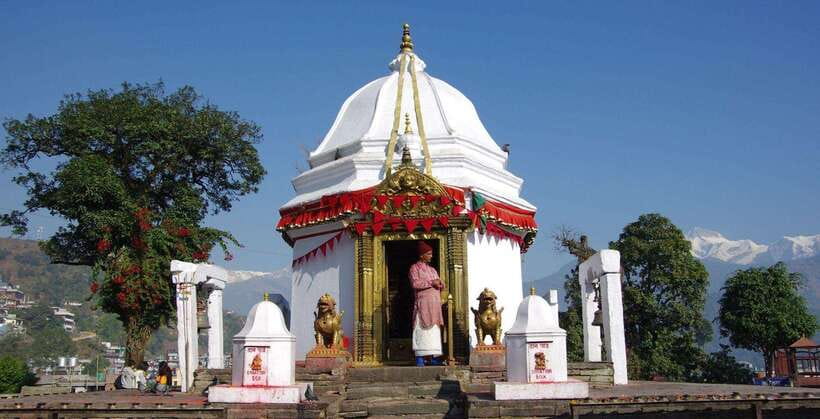
Bindabasini Temple provides the day’s clearest religious stop. The temple complex is dedicated to the Hindu goddess Bhagwati, and local worshippers give the place a lived-in character that a purely sightseeing site cannot offer. You can observe the architecture, watch devotional activity, and enjoy a quieter pause.
The grounds are more manageable than the caves, but this is still an active holy place, not a museum. Dress respectfully and follow local customs. The tour gives you time to look around independently, so do not expect a long talk about the temple’s background.
This is a good late-day stop because it slows the rhythm. After several viewpoints and underground sites, a temple courtyard offers a calmer way to finish the sightseeing portion.
What the $12 price really gets you
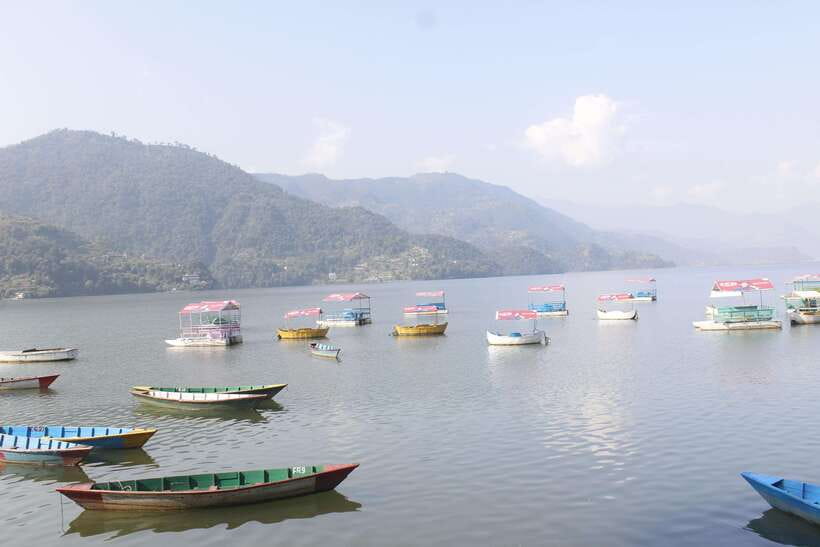
At $12 per person, this is one of the cheapest practical ways to cover Pokhara’s scattered attractions in a single day. The price includes pickup and drop-off within the Lakeside area and sightseeing by shared bus. It does not include monument entry fees, which are listed at approximately $4, or food and drinks.
That makes the likely basic cost about $16 before lunch, snacks, and water. You should also allow for changes in entrance charges, since the stated fee is an approximation. Bring some cash so a small ticket does not slow you down.
The value is strongest if you are short on time, do not ride a scooter, or want to avoid negotiating with taxi drivers. Solo visitors also benefit because you pay one low seat price rather than carrying the cost of a private vehicle.
The value is weaker if you dislike fixed schedules, crowded transport, or self-guided sightseeing. A private car gives you more control and a private guide gives you more explanation, but either option will cost more. This bus tour is not trying to be luxurious. It is trying to get you around.
Six hours on paper, often longer in practice
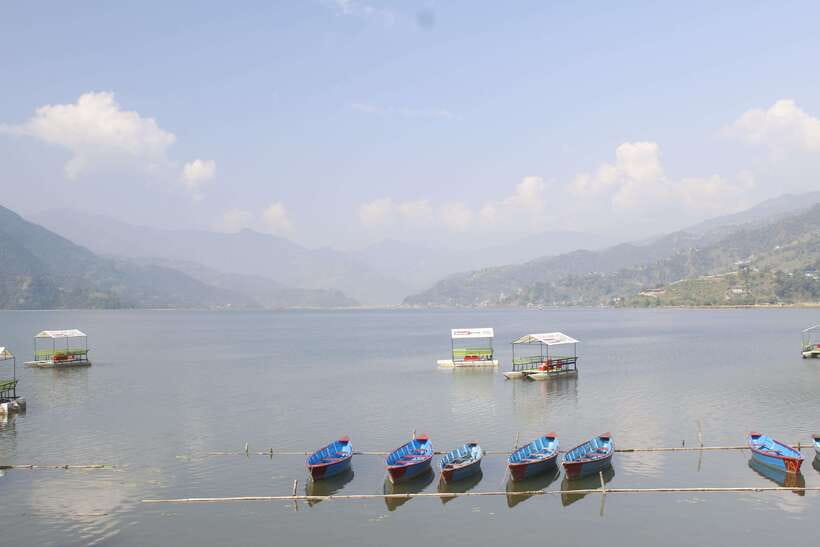
The official duration is six hours, but actual departures have run closer to eight hours. Traffic, weather, loading passengers, and time spent at popular sights can all stretch the day. If you have a flight, trek departure, or booked activity later, leave a generous buffer.
Pickup is offered from hotels within the Lakeside area. The tour uses a name card, but one departure had a delayed pickup that required a phone call to the company. Confirm the pickup time in advance, preferably by WhatsApp, and keep the provider’s contact number available.
The return point is Fewa Lake. You can get off there and explore the lakeside area on your own, which is useful if your hotel is nearby and you want dinner or a walk by the water. You may also ride back to your hotel on the same bus.
Food is not included. Some departures have included a restaurant stop, but you should not treat lunch as part of the guaranteed package. Bring water, sunscreen, and a snack, then buy a meal if the schedule allows.
Who should book this Pokhara circuit?
I would choose this tour if you have one free day and want to see a broad sample of Pokhara without spending heavily. It suits solo visitors, couples, families who can manage a full day, and anyone without a motorbike or private car.
It also suits people who enjoy meeting fellow passengers. The bus has included local and regional visitors as well as international passengers, and that mix gives the day a more everyday Nepali feel. It is less polished than a private excursion, but it can be more social.
Families should think about the caves and the length of the day. One family with children aged three and seven managed the route, but young children may tire during the walking and waiting. Keep water and sun protection close.
I would skip it if you have back problems, use a wheelchair, or feel anxious in dark, confined spaces. I would also skip it if your main goal is detailed cultural interpretation. The sightseeing is largely independent, and the set schedule leaves little room for a slow, thoughtful visit.
Free cancellation up to 24 hours before departure and reserve-now, pay-later booking make it easier to fit into changing plans. Still, the practical decision is simple: book this for coverage and value, not luxury or detailed guiding.
Should you book this $12 bus tour?
Book it if you want Pokhara’s big sights in one efficient circuit and you are happy to explore independently. The caves, Pumdikot statue, World Peace Stupa, river, waterfall, and temples give you a broad introduction to the city for very little money.
Do not book it expecting a personal guide, a quiet vehicle, or exact six-hour timing. Confirm pickup, bring cash for about $4 in entry fees, wear proper shoes, and keep your schedule open for closer to eight hours. If those conditions suit you, this is a practical and unusually affordable way to get your bearings around Pokhara.
FAQ
Where does the tour pick me up?
Pickup is included from hotels within the Lakeside area of Pokhara. You should be ready for the coordinator with your name card.
How long does the tour last?
The stated duration is six hours, but some departures have lasted about eight hours. Plan extra time, especially if you have another booking later in the day.
Is this a private or shared tour?
It is a shared bus tour. The tour information also describes a private trip in one place, but the included transport and title identify it as a shared sightseeing bus experience.
Is a guide included?
You have a coordinator or tour staff member and a set schedule, but this is not a fully guided visit at every attraction. You generally explore each place on your own and return to the bus at the assigned time.
Are entrance fees included?
No. Monument entry fees are separate and are estimated at about $4.
Is food included?
No. Food and drinks are not included. Bring water and plan to pay separately for any meal.
Does the bus have air conditioning?
Not always. The bus may be a basic non-air-conditioned local-style vehicle, although air conditioning has been provided as an upgrade during hot weather.
What should I bring?
Bring comfortable shoes, a camera, sunscreen, and water. Cash is also useful for entry fees and personal purchases.
Is the tour suitable for people with claustrophobia or mobility problems?
No. The experience is not recommended for people with claustrophobia, back problems, or wheelchair users because it includes cave visits and a full day of sightseeing.
Just joined the route map around Nepal
- Pokhara: City Sightseeing Group Budget Bus Tour★ 4.7 · 6 reviews
- Pokhara Sightseeing By Bus: Day Trip★ 4.6 · 7 reviews
- Pokhara Sightseeing By Bus – Day Trip★ 3.2 · 8 reviews
- Kathmandu : City Highlights Bus Tour Full Day★ 5.0 · 2 reviews
- Kathmandu City Sightseeing Bus tour (5 Sights)★ 4.2 · 15 reviews
- Pokhara Day Bus Sightseeing 8 points★ 3.5 · 9 reviews
- Pokhara: City Sightseeing Group Bus Tour★ 4.1 · 37 reviews
- Pokhara: Visit Best Seven Tourist Destination by Sharing Bus★ 3.4 · 10 reviews
Pokhara Bus Tours, side by side.
Pokhara: Visit Best Seven Tourist Destination by Sharing Bus
Read our review →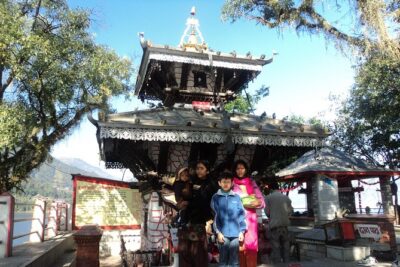
Pokhara: Sightseeing tour (Unguided) in Sharing Bus
Read our review →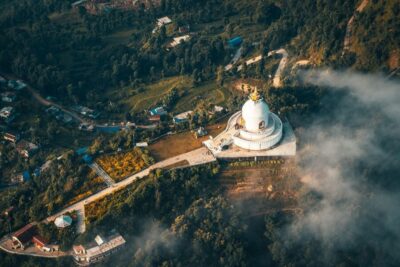
Other lists with this bus tour