

Review · SEVILLE
Tourist bus tour of Seville
Seville is spread wide enough that a tourist bus can save your feet, especially on a first visit. This route links the riverfront, Plaza de España, Triana, the old center, Isla Mágica, and several less central stops in one broad circuit.
I like the 48-hour validity, which lets you ride without cramming every sight into one afternoon. I also like the free walking tours of Santa Cruz and Triana, plus the separate evening ride, since Seville looks entirely different after dark.
The main drawback is waiting time. Buses may arrive only every 25 minutes, and some stops are poorly marked. The audio system can also be patchy, so this works best as a flexible city overview rather than a tightly timed sightseeing plan.
Key points to know before you ride

- Start at the Torre del Oro: Paseo de Cristóbal Colón is a practical first stop, with one of Seville’s most recognizable monuments nearby.
- Use the pass over two days: The extra time makes the ticket far more useful than a single loop.
- Plaza de España is the essential stop: Allow time to get off, walk through the gardens, and enjoy the buildings and ponds.
- Two walking tours are included: Santa Cruz and Triana add the street-level detail the bus commentary cannot provide.
- Expect uneven service: Waiting times, stop signs, headphone sockets, and driver helpfulness can vary.
- The value depends on your plans: Discounts and included tours help, but public transport or walking may cost less if you only need one short ride.
What this Seville bus tour actually gives you

At $32.58 per person, this is not simply a 75-minute ride. The initial sightseeing circuit takes about 1 hour and 15 minutes, but the ticket remains valid for 48 hours. You also get access to two bus experiences: Monumental Seville during the day and illuminated Romantic Seville in the evening.
That distinction matters. If you ride once and get off, the price is fairly high compared with local public transport. If you use the bus over two days, join both walking tours, take the night ride, and use a discount or two, the cost becomes easier to justify.
The bus has WiFi, free headphones, a city map, and an audio guide in nine languages. I would still treat the commentary as background help rather than a full history lesson. Some parts are detailed, while other stretches include music and long quiet gaps.
The overall rating is 4.4 from 530 ratings, which fits the experience well. The bus can be an easy, pleasant way to get your bearings, but it is not always smooth enough for a strict schedule.
More bus tours around Spain:
- Barcelona: 24 or 48-Hour Hop-On Hop-Off Bus Tour
★ 4.4 · 20,872 reviews - Barcelona: City Sightseeing Hop-On Hop-Off Bus Tour
★ 4.4 · 10,061 reviews - From Madrid: Guided Day Trip to Toledo by Bus
★ 4.1 · 5,280 reviews
Starting beside the Torre del Oro
The main starting area is on Paseo de Cristóbal Colón, along the Guadalquivir River. I would begin here if possible. The Torre del Oro is close by, and its compact, striking shape makes an excellent first photograph.
This stop also gives you a quick sense of Seville’s geography. The river separates the central districts from Triana, and the route uses that divide to connect several major areas. If you are still learning the city, the ride helps you see how the riverfront, old center, southern park district, and western attractions relate to one another.
The practical tip is simple: find the stop clearly before planning your day. Several people have had trouble identifying the correct green bus stop, and the signs do not always make the route or stop number obvious. Starting at stop one reduces that confusion.
Aquarium, Plaza América, and the southern sights
The Seville Aquarium is the second stop. You can get off here for the marine exhibits and the shark display, then use the bus again later. The included 10 percent discount makes this stop more appealing if the aquarium is already on your list.
Plaza América sits within María Luisa Park. It is surrounded by the Museum of Popular Arts and Customs, the Archaeological Museum, and the Royal Pavilion. The stop is useful even if you do not enter a museum, since the area gives you a chance to walk among gardens and open spaces rather than spending the whole day beside traffic.
The bus route is most useful here for reducing walking between separate attractions. Seville can feel compact on a map, but warm weather changes the calculation. A short ride between areas may be welcome, particularly in the middle of the day.
Why Plaza de España deserves a proper stop
Plaza de España is the highlight of this route. Do not treat it as a quick photo stop if you have time. Get off and walk around the curved building, the ponds, the tiled details, and the surrounding gardens.
The bus can show you where the square is, but it cannot replace being on foot. The architecture rewards slow looking, and the scale is easier to appreciate from the plaza itself. I would set aside at least a relaxed stretch of your day here, although the exact time you need depends on whether you enter nearby museums or simply walk through the grounds.
The University of Seville comes next. The building began as a tobacco factory, and when the factory moved in the mid-20th century, the structure gradually became part of the university. It is a good example of how Seville’s grand buildings have changed use over time.
You may not be able to enter every place along the route, so this stop works mainly as an exterior view and a convenient point for exploring the nearby area on foot.
Same streets, a different ride:
- City Sightseeing Barcelona Hop-On Hop-Off Bus Tour: 24 or 48-Hour
★ 4.0 · 5,250 reviews - Seville: City Sightseeing Hop-On Hop-Off Bus Tour
★ 4.0 · 4,633 reviews - Palma de Mallorca: City Sightseeing Hop-On Hop-Off Bus Tour
★ 4.1 · 4,450 reviews - Granada City Train 1 or 2-Day Hop-On Hop-Off Ticket
★ 3.5 · 3,128 reviews
Crossing toward Triana and the riverfront
Plaza de Cuba places you near the Triana side of the river. The included Triana walking tour is particularly useful here because a bus can only skim the neighborhood. If you want ceramic shops, narrow streets, local squares, and the feel of the district, get off and walk.
Calle San Jacinto continues through Triana and gives you another practical place to leave the bus. The route then reaches Puente del Cristo de la Expiración, a bridge that takes the bus toward the western side of the city.
These stops are less about a single grand monument and more about connecting districts. I would use them as part of a wider plan rather than getting off at every one. The bus is at its best when it saves you from long backtracking.
Monastery Santa Maria de las Cuevas and Isla Mágica
The Monastery Santa Maria de las Cuevas is one of the more unusual stops because it sits away from the standard central sightseeing path. The bus makes it easier to include without arranging a separate journey.
Isla Mágica follows. This theme park has rides, roller coasters, a water park, and a large lake, and it sits near the Expo 92 complex. Families with children may find the 35 percent discount useful, especially if the park is already part of their plans.
I would not choose the bus only to reach Isla Mágica unless the discount matters to you. The stop is valuable because it extends the tour beyond the classic center, but you need to allow much more time if you plan to visit the park itself. A 75-minute loop will not give you enough time for both a full theme park visit and detailed sightseeing.
Macarena, Alameda, and the old center

The Macarena stop brings the route back toward the historic center. The stop name is useful for planning, but the bus commentary may not give you all the street-level detail you want. This is another place where the included walking options can fill in the gaps.
La Alameda is one of Seville’s oldest public gardens, dating from 1574. It is described as the oldest public garden in Spain and Europe, and it remains an important public space in the historic center. I like this stop because it offers a change of pace from monument-hopping. You can get off, rest, and explore the area on foot.
Plaza del Duque de la Victoria is closer to the city’s shopping and central streets. The square was known from the 16th century as the Duke of Medina-Sidonia’s square because his palace stood there. It makes a practical stop if you want to combine the bus with shops, cafés, or a walk through the central districts.
Plaza de Armas is the final listed stop. It is a useful transport point and a sensible place to finish the loop or connect with other plans. The route has done its main job by then: it has shown you how the river, southern monuments, western attractions, and historic center fit together.
The two included walking tours matter
The free walking tours of Santa Cruz and Triana are among the strongest reasons to buy this pass instead of a simple sightseeing loop. A bus gives you distance and orientation. Walking gives you texture, turns, courtyards, and the chance to understand how a neighborhood feels.
Santa Cruz is the obvious match for the city’s central monuments. Triana is best paired with the riverfront stops at Plaza de Cuba or Calle San Jacinto. I would not try to replace both walks with bus commentary. The bus can point out an area, but it cannot take you down its smaller streets.
The exact guide can vary. A guide named Daniel received particularly strong praise for making the tour enjoyable and informative, so if he is leading your departure, you may get a more personal experience than the standard recorded narration. Keep in mind that the tour may include mixed-language conversation, and one departure had extended Spanish discussion that some passengers could not follow.
Day route, night route, and the best way to use 48 hours
The daytime Monumental Seville route is the practical sightseeing circuit. Use it first to decide where you want to return. I would ride a full circuit early, then get off at Plaza de España, the Torre del Oro, or Triana on the second pass.
The illuminated Romantic Seville tour gives you a different view of the city. Seville’s squares, bridges, and monuments change after sunset, and the evening route is a good low-effort activity after a day of walking.
A smart two-day plan could look like this:
- Ride the full route on the first morning.
- Get off at Plaza de España and explore María Luisa Park.
- Use the bus to reach Triana, then join the walking tour.
- Take the evening Romantic Seville ride.
- Use the second day for Santa Cruz, the aquarium, or Isla Mágica.
- Apply discounts where they fit your plans.
The schedule may change by time of day, and the evening and daytime routes are not identical. Check the departure details when you activate the ticket.
Audio, seating, and service issues to plan around
The bus supplies headphones and an audio guide in nine languages. That is useful, but check the socket before settling into your seat. Several audio sockets may not work, and static can make the narration hard to follow.
I would also carry your own earbuds as a backup only if the bus accepts the connection, since the supplied equipment is not always reliable. More importantly, do not depend on the commentary for every stop. Download or carry a simple map, and use the ride to see the city rather than expecting a continuous lecture.
The upper deck gives you a better view, but conditions are not always ideal. Wet seats can remain after rain, and some riders have found the view blocked or the bus moving too quickly for good photographs. If you want pictures, keep your phone ready and do not assume every passing view will wait for you.
Service frequency is the biggest practical weakness. Waiting around 25 minutes is possible, and one account describes a wait of nearly an hour. That makes the pass a poor choice for appointments, timed entries, or a day planned down to the minute.
Discounts and extras that affect the price
The ticket includes several small extras:
- 35 percent off Isla Mágica
- 20 percent off the Real Maestranza Bullring
- 10 percent off Seville Aquarium
- 20 percent off Paddle Surf Seville
- 10 percent off bicycle rental
- A free bottle of water at the Intursafe tourist information store
- Free toilets at Torrons Vicens for ticket holders
- Discounts at selected cafés, restaurants, and museums
These benefits do not automatically make the ticket a bargain. They matter only if you were already planning to visit the aquarium, bullring, theme park, or other participating businesses.
The free water and restroom access are handy, but they are minor bonuses. The real value comes from using the bus over two days, taking both route types, and joining the walking tours.
Who should book this bus
I would recommend it most to first-time visitors who want a broad look at Seville without walking between every district. It also suits families, older visitors, and anyone who likes the freedom to get off when something catches the eye.
It is less suitable for a tightly organized day. If you need to reach a timed museum entry or appointment, the irregular bus service can create stress. A walker who is staying near the historic center may get more from local buses, ordinary public transport, or dedicated walking tours.
The service accepts mobile tickets, allows service animals, and is near public transportation. Hotel transfers are not included, so you must reach the starting point yourself.
Should you book the Seville tourist bus?
Book it if you can use the 48-hour pass as intended. Ride the full loop, visit Plaza de España, take at least one walking tour, and consider the evening route. That turns a basic bus ride into a flexible orientation tool with several useful extras.
Skip it if you only want a fast trip between two central sights, need reliable departure times, or prefer detailed history at every stop. In that case, walking tours and public transport may serve you better.
My call: this is a good two-day overview of Seville, not a perfect transport service. Start at the Torre del Oro, keep your schedule loose, confirm the stop signs, and think of the audio as a bonus rather than the main event.
FAQ
How long does the Seville tourist bus tour take?
The sightseeing circuit takes approximately 1 hour and 15 minutes. The ticket itself is valid for 48 hours, so you can get off and reboard during that period.
How much does the tour cost?
The listed price is $32.58 per person. The final value depends on how often you use the bus, the walking tours, the evening ride, and the included discounts.
Is the ticket valid for two days?
Yes. The hop-on hop-off ticket is valid for 48 hours.
What languages are available for the audio guide?
The audio guide is available in nine languages. Headphones are provided.
Are walking tours included?
Yes. Two free guided walking tours are included, covering Santa Cruz and Triana.
Does the ticket include an evening tour?
Yes. The service includes both the Monumental Seville route and the illuminated Romantic Seville route.
Does the tour include hotel pickup?
No. Round-trip hotel transfer is not included.
Can I cancel for a full refund?
Yes, if you cancel at least 24 hours before the experience start time. Cancellations made less than 24 hours before the start time are not refunded.
Which major sights are on the route?
Stops include the Torre del Oro area, Seville Aquarium, Plaza América, Plaza de España, the University of Seville, Plaza de Cuba, Calle San Jacinto, Monastery Santa Maria de las Cuevas, Isla Mágica, Macarena, La Alameda, Plaza del Duque de la Victoria, and Plaza de Armas.
Just joined the route map around Spain
- Santander: City Sightseeing Hop-On Hop-Off Bus Tour & Train★ 4.3 · 170 reviews
- Mallorca Island Tour with Boat, Train, Tram and Bus★ 4.5 · 109 reviews
- Mallorca: 3-hour bus tour around Calvià with 2 stops★ 4.3 · 3 reviews
- Mallorca: Fashion Outlet Shopping Excursion by Bus★ 4.6 · 5 reviews
- Madrid: Guided Tour to Toledo★ 3.7 · 29 reviews
- Madrid: 4-Hour Bus Tour with Royal Palace Admission★ 3.9 · 52 reviews
- Lanzarote: Return Ferry to La Graciosa with Bus Pickup★ 4.6 · 329 reviews
- Lanzarote: Full Day Bus Tour with Scenic Views★ 4.5 · 620 reviews
Seville Bus Tours, side by side.
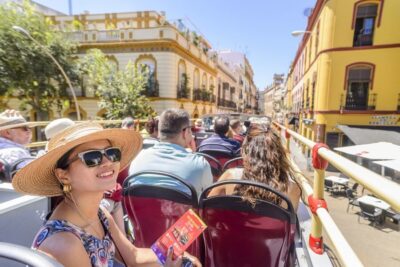
Seville: City Sightseeing Hop-On Hop-Off Bus Tour
Read our review →
Seville: Panoramic Cruise, Hop-On-Hop-Off Bus & Walking Tour
Read our review →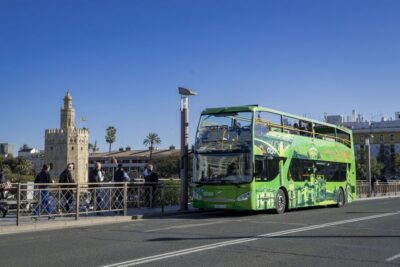
Combo: Hop on hop off + Flamenco Show & Walking tours
Read our review →Other lists with this bus tour