
Review · BUS TOURS
Montevideo: Sightseeing Hop-On Hop-Off Bus Tour
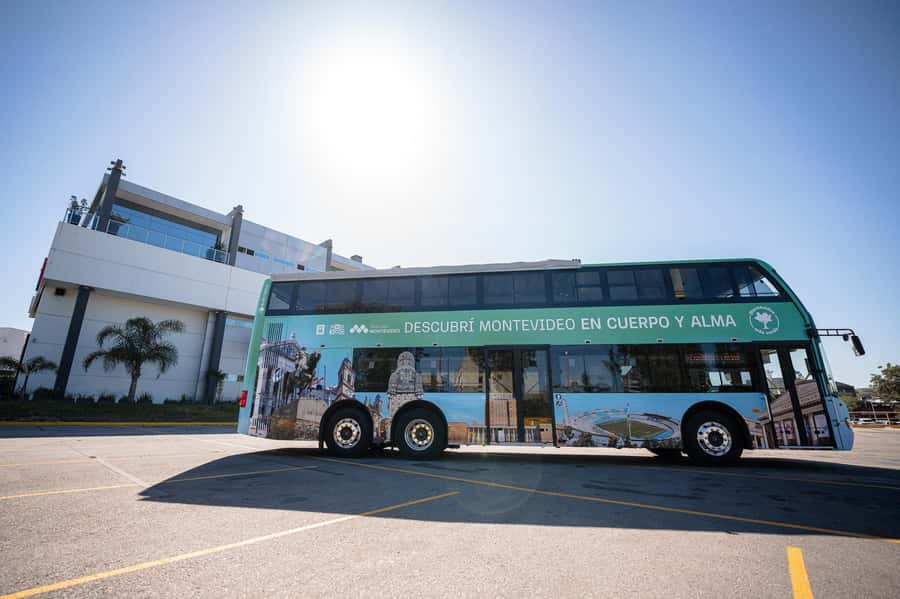
Montevideo spreads its best sights across a wide sweep of city streets and waterfront roads, so this double-decker bus does more than provide a sightseeing perch. It links the port, central neighborhoods, markets, parks, stadium, shopping districts, and the long Rambla in one easy day.
I like the two distinct routes and the clear six-language audio, which help you get your bearings quickly. I also like the freedom of a true 24-hour ticket, counted from your first boarding rather than ending at the close of the calendar day. The main caution is frequency: the central circuit runs more often, while the coastal circuit can run about hourly, so a missed bus can cost you time.
Key points to know before you board
- The port stop is easy to find: Look for the marked totem across from Montevideo Port.
- The central circuit covers the city’s main sights: Expect markets, civic buildings, parks, shopping centers, and Centenario Stadium.
- The Rambla circuit is a separate outing: It is best for coastal views, beaches, Carrasco, and Punta Carretas.
- Your ticket lasts 24 hours from activation: You are not limited to the end of the first day.
- Audio is available in six languages: Spanish, English, Portuguese, Italian, French, and German.
- The bus is useful when time is short: It is especially practical for a cruise stop or a first day in Montevideo.
Why this bus makes sense in spread-out Montevideo
Montevideo is pleasant to walk in, but its attractions are not packed into one small center. The port and Plaza Independencia are far from Prado Park, the Agricultural Market, Centenario Stadium, and the eastern beaches. Public buses can get you around, but they take more planning, especially if you want a quick first look at the city.
This tour gives you a simple framework. Ride the full circuit first, note the places you want to revisit, then use the same ticket to get off and explore. The audio guide fills in the story while you ride, and the open upper deck gives you a better view of buildings, statues, street corners, and the Rio de la Plata.
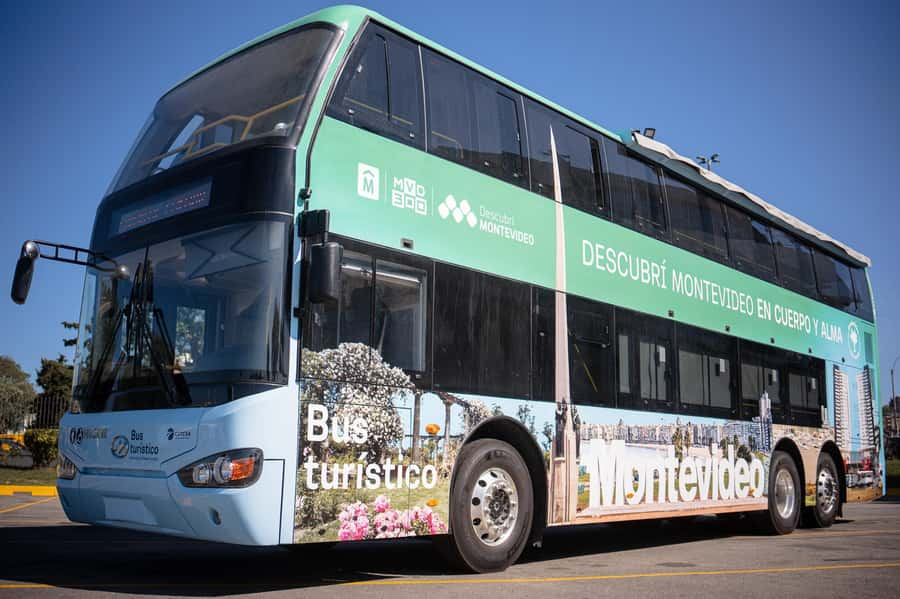
The service is provided by CUTCSA, and the buses are described as clean and modern. Some recent departures used new electric vehicles, though you should not assume every bus will be electric. WiFi has also been available on some buses, but the core value is the route network and the ability to get off and on.
The price is $25 per person for one day. That is fair if you use the bus to reach several parts of the city. It is less attractive if you plan to stay around the port and old central streets, where you can cover much of the area on foot.
More Hop-On Hop-Off Bus Tours in the world:
- Barcelona: 24 or 48-Hour Hop-On Hop-Off Bus Tour
★ 4.4 · 20,872 reviews - Rome: City Sightseeing Hop-on Hop-off Bus with Audioguide
★ 4.0 · 16,045 reviews - Paris: Tootbus Hop-on Hop-off (Optional River Cruise)
★ 4.3 · 15,279 reviews
Starting across from the port
The departure point is in front of Montevideo Port, marked by a totem. This is particularly useful if you arrive by cruise ship. You do not need to arrange a separate transfer just to reach the sightseeing bus.
Look for the green bus and the clearly marked stop. Staff provide a printed map and schedule, which makes planning the day easier. Recent service has included English-speaking attendants, and staff members have helped passengers switch between routes and understand the timetable.
The first ride is a good time to stay on board. You can see how far apart the main sights are and decide where a stop is worth your time. If you are sitting on the upper deck, staff may come up to explain the route or answer questions, as happened with attendant Matias, who was praised for his detailed help and friendly manner.
The open top is best for views, but take account of the weather. Some waiting stops have little or no shelter from sun, wind, or rain. Bring water and sun protection in warm weather, and do not count on every stop having a comfortable place to wait.
The central circuit, from the port to Parque Rodó
The central route is the practical choice for a first visit. It covers civic landmarks, food markets, parks, shopping areas, and the stadium. A full loop can take about two hours, depending on traffic and the exact service pattern, so allow extra time if you plan to get off several times.
Port Market
The Port Market is a natural first stop. It puts you near the old port area and Uruguay’s famous parrilla tradition, where meat is cooked over a large grill. The smell alone may change your schedule.
This is a good place for lunch if you want to try classic grilled meats and local wine. Prices and crowds can vary, so use the stop for a meal only if you have enough time left on your ticket.
More Sightseeing Bus Tours in the world:
- Barcelona: City Sightseeing Hop-On Hop-Off Bus Tour
★ 4.4 · 10,061 reviews - Rome: Big Bus Hop-on, Hop-off Open-Top Sightseeing Tour
★ 4.1 · 9,537 reviews - City Sightseeing London Hop-On Hop-Off Bus & Bookable Extras
★ 4.4 · 7,374 reviews - Hamburg: Line A Sightseeing Hop-On Hop-Off Bus Tour
★ 4.6 · 6,958 reviews
Plaza Independencia
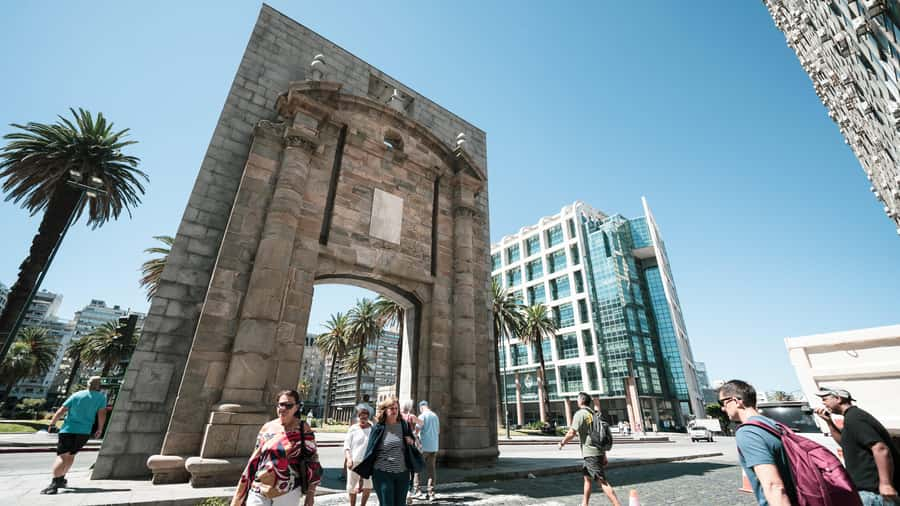
Plaza Independencia is one of Montevideo’s key public spaces and a useful transition between the older central area and the newer city. Get off here if you want to explore the square and nearby streets on foot.
The stop also works well as a reference point. If you are unsure where to begin, Plaza Independencia gives you a central base before you continue by bus or walk toward other sights.
Municipal Palace and the panoramic viewpoint
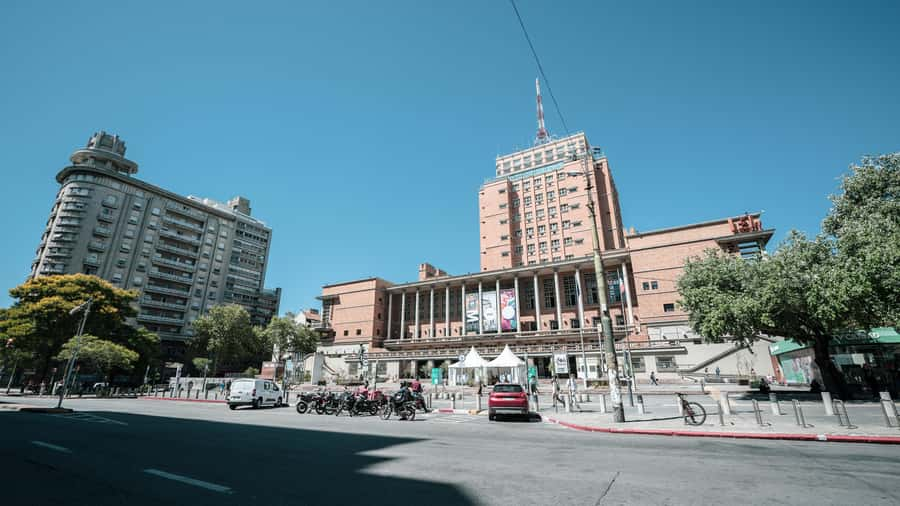
The Municipal Palace stop brings you to the city government area and the Mirador Panorámico de la Intendencia de Montevideo. The viewpoint is one of the better reasons to leave the bus because it gives you a broad look over the city.
This stop is more useful in clear weather. If the sky is hazy, the view may be less rewarding, but the building and civic district still help explain how Montevideo is laid out.
National Library
The National Library is a short sightseeing stop rather than a major half-day visit. It fits well into a first loop, especially if you enjoy civic buildings and the city’s quieter central neighborhoods.
The route also passes through Tres Cruces and La Aguada, areas with distinct housing styles and everyday city life. These stretches remind you that Montevideo is not only a collection of monuments. Much of the pleasure comes from seeing how the city’s neighborhoods fit together.
Mercado Agrícola de Montevideo
Mercado Agrícola is one of the most useful stops for anyone who wants food and local atmosphere without committing to a formal restaurant. Expect market stalls, produce, prepared food, and the chance to pause indoors.
This is a smart place to get off because it combines a clear attraction with a practical break. You can eat, look around, and rejoin the bus without spending half the day on a side trip.
Palacio Legislativo
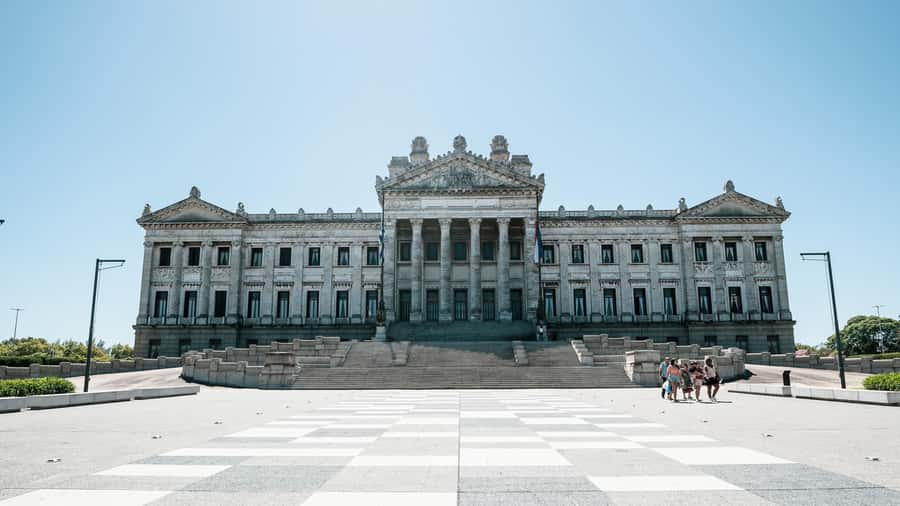
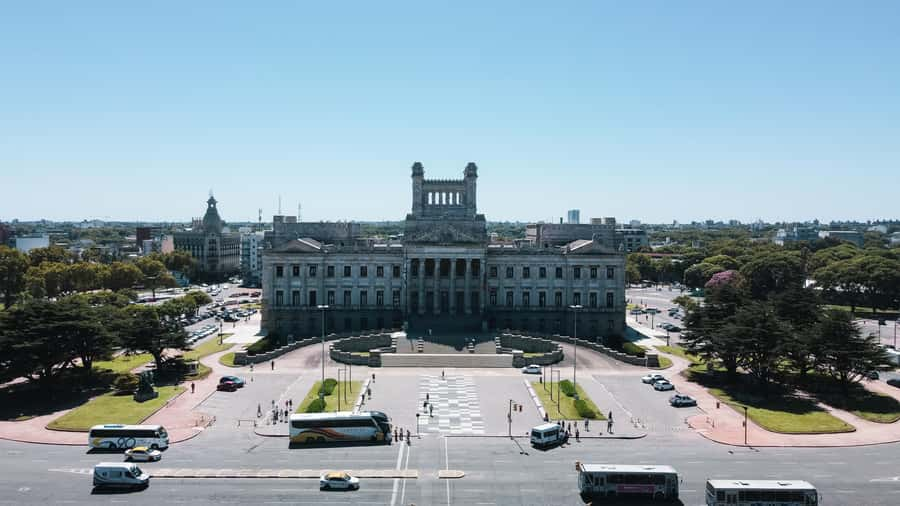
The Legislative Palace is among the route’s most impressive buildings. The scale and formal design make it easy to spot from the bus, but getting off gives you time to appreciate the details.
You may prefer to view it from outside unless you have plenty of time. The value here is the building itself and the surrounding civic district, not a quick photo through a bus window.
Prado Park and the Botanical Garden
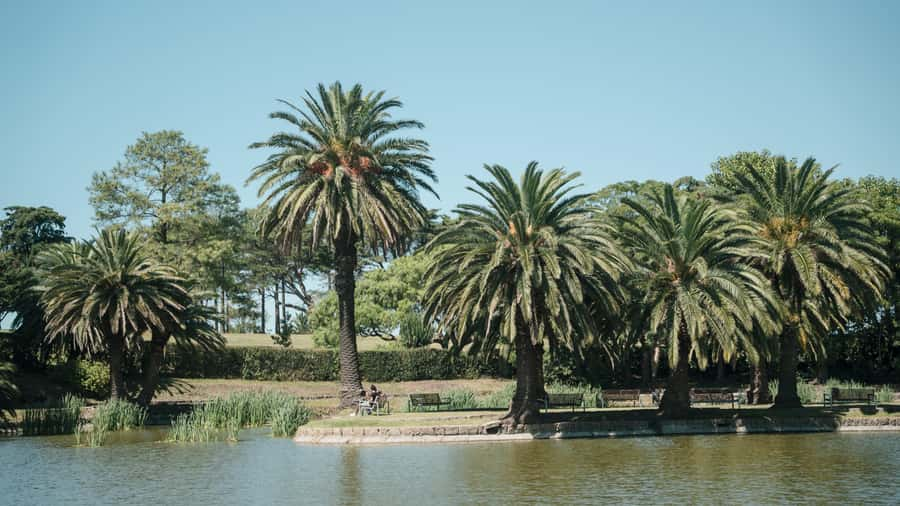
Prado brings you into a greener part of the city. The park and nearby Botanical Garden offer a change from the central streets and provide a slower stop if you want space to walk.
This is one of the places where the hop-on system earns its $25 price. Reaching Prado independently takes extra planning, while the bus connects it directly with the port, markets, and central squares.
Nuevocentro Shopping and Tres Cruces Shopping
These stops are practical, but they are not essential for every visitor. Nuevocentro and Tres Cruces offer food, restrooms, and shopping, which can help if you need a break or want supplies.
Still, if your time is limited, I would give priority to the markets, civic buildings, parks, and waterfront. Shopping centers are useful links in the route, but they are not the reason most people come to Montevideo.
Centenario Stadium
Centenario Stadium is a worthwhile stop for football fans and anyone interested in Uruguay’s sporting identity. The bus makes it easy to reach without figuring out a separate local route.
If you are not interested in stadiums, you may simply enjoy seeing a major part of the city that sits beyond the central district. The audio guide helps place it in the wider story of Montevideo.
Parque Rodó
Parque Rodó connects the central circuit with the coastal route. It is also a pleasant place to get off, especially if you want to stretch your legs before continuing along the Rambla.
Pay attention here if you plan to change routes. The central and Rambla circuits are best treated as separate outings. Their schedules do not always match closely, and the coastal bus can be less frequent.
The Rambla circuit, beaches, and Carrasco
The second route follows Montevideo’s waterfront and reaches the eastern side of the city. It is a different experience from the central circuit, not simply an extension of it.
The coastal route is best for open views, beaches, residential districts, and the long road beside the Rio de la Plata. It is less useful if your main goal is colonial architecture, markets, or civic buildings.
The Montevideo sign and Malvín Beach
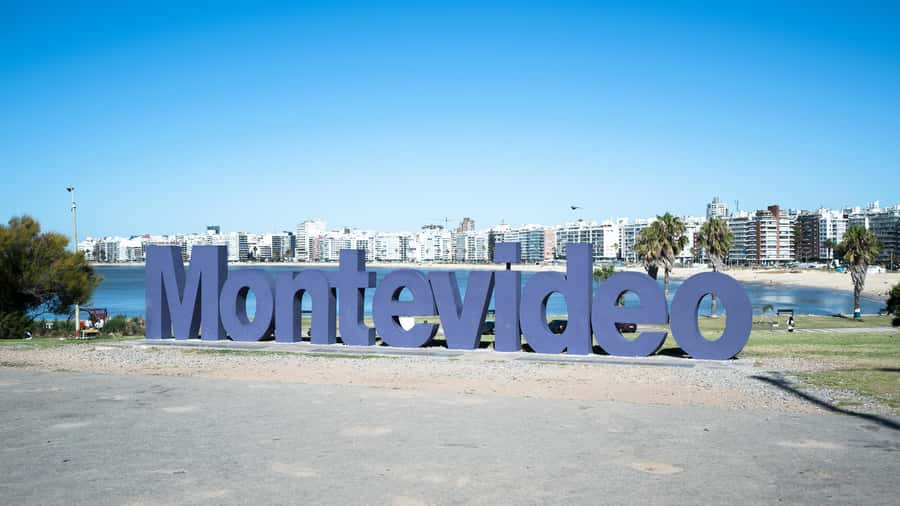
The Montevideo sign makes a simple photo stop and gives you a clear sense of the city’s waterfront identity. Malvín Beach adds a quieter coastal setting and a look at one of the eastern neighborhoods.
The bus ride itself is part of the attraction here. You see the city spread along the shore rather than moving from one tightly grouped monument to another.
Carrasco Casino Hotel
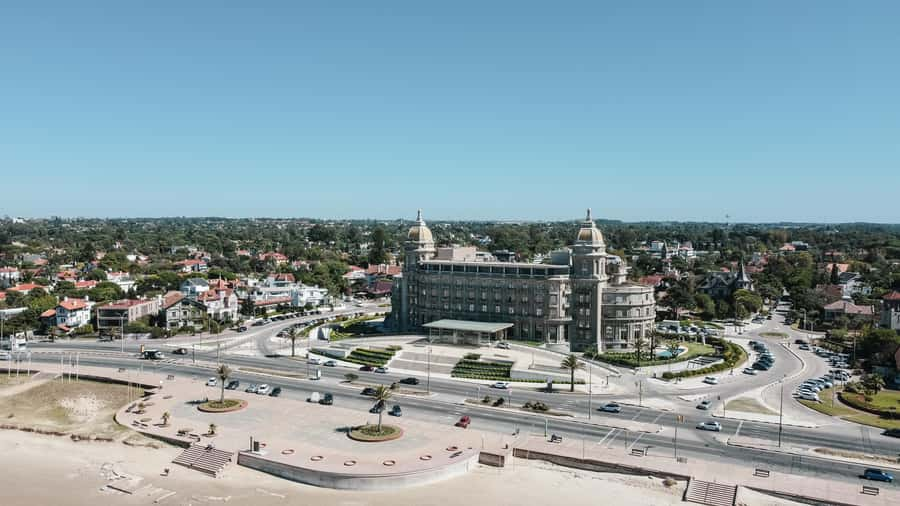
The Carrasco Casino Hotel is one of the route’s major architectural sights. Its grand exterior gives the coastal circuit a strong destination, especially for anyone interested in historic hotels and formal design.
This is a good example of why you should not judge the Rambla route only by its number of stops. Several stops are about the setting and architecture between the attractions, not just the attraction named on the map.
Tango and Turf Museum
The Tango and Turf Museum adds cultural context to the eastern route. It connects two parts of Uruguayan identity, music and horse racing, in one stop.
Check the available time before getting off, since the coastal circuit may not return as often as the central one. The safest plan is to keep the printed schedule with you and avoid assuming another bus will arrive soon.
Montevideo Shopping and Punta Carretas Shopping
These stops are useful for food, restrooms, and a break from the bus. They are also the least distinctive part of the coastal route for a short visit.
If you have a full day, they can fill gaps between beaches and the Carrasco area. If you have only a few hours, stay with the waterfront and the architectural stops.
Timing, frequency, and the real meaning of 24 hours
The ticket is valid for 24 hours from the moment you first activate it. That detail matters. If you board at 2 p.m., your ticket should remain valid until 2 p.m. the next day, rather than expiring when the service ends that evening.
The central circuit is the more dependable choice for a short schedule. It generally runs more often, with service described as about every 30 minutes. The Rambla route can be about hourly, and it may not line up neatly with the central bus at Parque Rodó.
Schedules can shift. Recent service has usually been close to the posted time, but one bus was reported to run about 45 minutes late after a scheduled trip was used for a private group. The sensible approach is to build in spare time, especially if you have a ship departure or fixed reservation.
You should also allow time at each stop. The short stop times shown in the route outline describe the bus schedule, not the amount of time you need to explore. If you get off at Mercado Agrícola, Prado, or Palacio Legislativo, plan around the next listed bus rather than assuming you can return immediately.
Audio, staff, and comfort on board
The audio guide is available in Spanish, English, Portuguese, Italian, French, and German. Headphones are included, and the audio has generally been clear and easy to follow.
I would use the audio as background rather than as a replacement for exploring on foot. It gives you context about Montevideo’s history, architecture, neighborhoods, and anecdotes, but the strongest parts of the day come when you leave the bus at a market, park, viewpoint, or civic building.
Staff service has been one of the most praised parts of the experience. English-speaking attendants have helped with route changes, timetables, and practical questions. Matias received special mention for taking time to explain the system and offer tips.
The buses are clean, and several departures have been modern. Headsets have worked well, and some buses have offered fast WiFi. Customer service is not perfectly uniform, so do not be surprised if one crew is warmer or more attentive than another.
The bus is wheelchair accessible. At stops, however, shelter is limited, so accessibility and comfort are not quite the same thing. Plan for sun, wind, or rain while waiting.
Who should book this tour?
I would choose this bus if you have one day in Montevideo, arrive by cruise ship, or want a quick sense of the city before choosing where to spend more time. It is also a good fit if walking long distances is difficult or if you want to reach Prado, the stadium, and the eastern coast without arranging several local rides.
I would be more selective if you have several days in the city and enjoy exploring slowly on foot. In that case, the central route may still be useful on your first morning, but you may not need to ride both circuits.
Should you book the Montevideo bus?
Book it if you want to cover a lot of ground, especially the central sights and the Rambla, without spending time working out local transport. The strongest value comes from using both routes and getting off at two or three meaningful stops.
For a short cruise visit, I consider it a practical choice. Start with the central circuit, visit one market or civic site, then take the coastal route if the timetable leaves enough room. Skip it only if you plan to remain near the port and Plaza Independencia, where walking may be simpler and more personal.
FAQ
How long is the ticket valid?
The ticket is valid for 24 hours from the time you first activate it.
Where does the bus depart?
The meeting point is in front of Montevideo Port, at a location marked by an identifying totem.
How many routes are included?
Your ticket includes two routes: the Central Circuit and the Rambla Circuit.
Which languages are available for the audio guide?
The audio guide is available in Spanish, English, Portuguese, Italian, French, and German.
Are headphones included?
Yes. Headphones and a printed city map are included.
Is the bus wheelchair accessible?
Yes, the tour is wheelchair accessible.
Does the Central Circuit visit Mercado Agrícola?
Yes. Mercado Agrícola de Montevideo is one of the Central Circuit stops.
Can I cancel the booking?
You can cancel up to 24 hours in advance for a full refund. A reserve-now, pay-later option is also available.
Just joined the route map around the world
- San Pedro de Atacama: Vallecito + Magic Bus★ 5.0 · 4 reviews
- Santander: City Sightseeing Hop-On Hop-Off Bus Tour & Train★ 4.3 · 170 reviews
- Santiago: 1-Day Hop-On Hop-Off Bus and Cable Car Ticket★ 4.3 · 332 reviews
- San Francisco: Movie Filming Locations Bus Tour★ 4.9 · 368 reviews
- San Fransisco: Vintage VW Bus Wine Country Tour Small Group★ 5.0 · 5 reviews
- San Francisco: Sightseeing Sunset Tour by Open-Top Bus★ 4.4 · 105 reviews
- SF: Napa & Sonoma Wine Tour & Hop-on Hop-off Tour (Save 15%)★ 4.5 · 2 reviews
- San Francisco: Hop-On Hop-Off Tour with Optional Night Tour★ 4.5 · 94 reviews