
Review · SPAIN
La Palma: Island Highlights Guided Bus Tour
La Palma’s biggest reward is its height, and this tour takes you right to it. At Roque de Los Muchachos, the island opens below you in every direction, with the Caldera de Taburiente at your feet and, on a clear day, El Hierro, La Gomera, and Tenerife on the horizon. You also get a useful look at the island’s volcanic past, local produce, mountain roads, and religious traditions in one long day.
I like the broad route and the strong mix of scenery and local life. Puntagorda’s farmers market gives the day a human touch, while the well-used viewpoints explain La Palma better than a string of photo stops would. I also like the guides, including Pauline and Norberto, who have been praised for making the long coach rides interesting.
The main drawback is the pace and the road. This is a 7.5 to 9-hour bus day with winding mountain climbs, short walks, and several early pickup points. A slow start has also caused confusion on some departures, so arrive early and expect a full, tiring outing.
Key points to know before booking
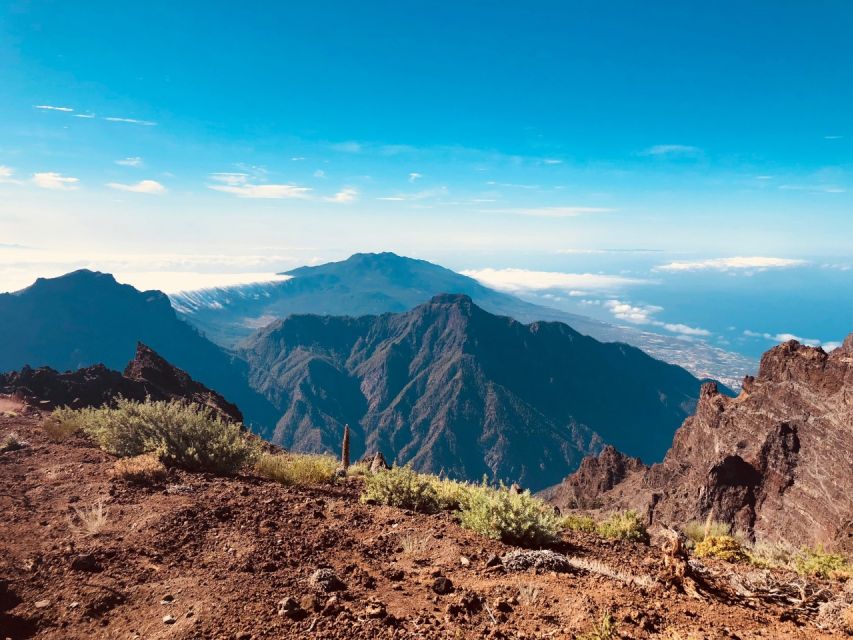
- Roque de Los Muchachos is the star of the day: Reach La Palma’s highest point for views of the Caldera de Taburiente, the observatories, and nearby islands when the sky is clear.
- The route crosses the island: You ascend on the western side and return down the east, giving you very different views and vegetation zones.
- Tajuya shows La Palma’s recent volcanic story: The square became a viewing point for the eruption in Cumbre Vieja.
- Puntagorda adds local flavor: You have time to browse food, farm goods, handmade items, and pastries at the weekly market.
- You need to bring your own refreshments: Food and drinks are not included, and the day is too long to leave water and snacks to chance.
- The bus is comfortable but the roads are not gentle: A skilled driver matters on the steep, narrow, winding climb to the summit.
Why this route gives you a useful first look at La Palma
La Palma is not an island you understand from one resort town. Its character changes with altitude, weather, vegetation, and geology. This trip deals with that problem in one sweeping loop, starting with the western side, rising into the high mountains, then coming down through the east.
You meet the bus early at a selected pickup point. The listed times begin at 8:00 a.m. in Fuencaliente, followed by Santa Cruz de La Palma at 8:50, Los Cancajos Tourist Information Office at 9:00, and the Los Cancajos pharmacy stop at 9:10. Check your exact stop carefully, and be there ahead of time.
The air-conditioned bus matters here. La Palma’s roads climb sharply, and the route includes long stretches between stops. You can watch the island change outside the window instead of worrying about directions, parking, or a steep descent. The tradeoff is that you follow the group’s timetable, not your own.
The guiding is available in English, German, and Spanish. Guides such as Pauline and Norberto have been singled out for clear explanations, humor, and the ability to keep the coach rides engaging. That is important on a route where some of the best views arrive between formal stops.
More guided rides around Spain:
- From Madrid: Guided Day Trip to Toledo by Bus
★ 4.1 · 5,280 reviews - Madrid: Panoramic Open-Top Bus Day or Night Tour with Guide
★ 4.2 · 916 reviews - Madrid: Open-Top Big Bus Sightseeing Tour with Live Guide
★ 4.2 · 838 reviews
Tajuya and the view of Cumbre Vieja’s eruption
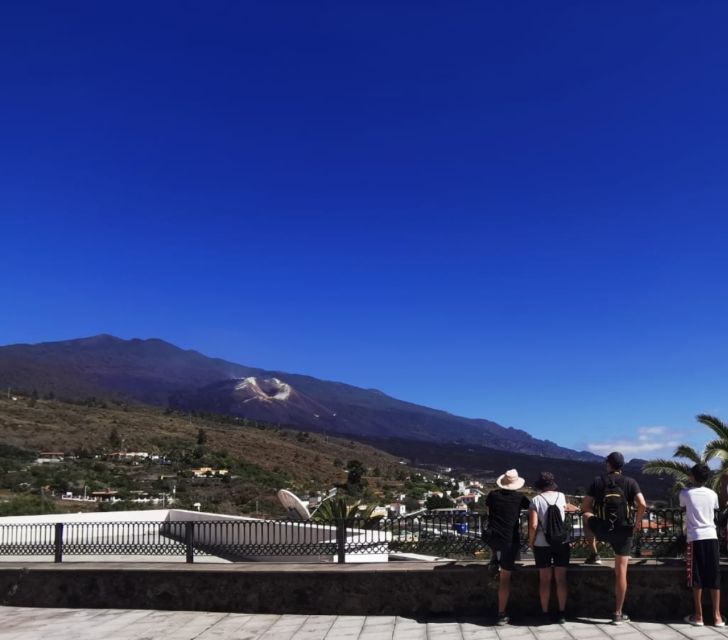
The first major stop is Plaza de Tajuya, which became an improvised viewpoint during the recent volcanic eruption in Cumbre Vieja. This is not just a standard village square. Its value comes from the connection between an ordinary public place and a dramatic event that reshaped part of the island.
You can expect a short stop rather than a long walk. The guide helps place the eruption in context, while the square offers a practical point from which to look toward the volcanic area. Light can affect the view. If the sun is in front of you, photographs may be less successful, especially when you are trying to capture the new volcano and lava flow.
That is a useful thing to know before you arrive. Tajuya is strongest as a viewing and orientation stop, not as a lengthy attraction with many things to do. Keep your camera ready, but also listen to the explanation. The story of why this place became important is part of the experience.
El Time above the Aridane Valley
The bus then reaches the Mirador de El Time, about 594 meters above sea level. From here, you look across the Aridane Valley toward the Caldera de Taburiente National Park. The height gives you a broad, clean view of the valley and a sense of how steeply La Palma rises from the coast.
I like this stop because it helps you read the island. Instead of seeing isolated cliffs and roads, you see how the valley, ridges, and high interior fit together. It is also a good contrast with Roque de Los Muchachos later in the day. El Time gives you a mid-level view across inhabited terrain, while the summit reveals the island from above the tree line and ridges.
Bring sunglasses and a hat. The viewpoints are exposed, and the day can feel quite different from one elevation to the next. A windbreaker is useful too, especially once the route climbs higher.
Puntagorda’s farmers market and the island’s everyday side
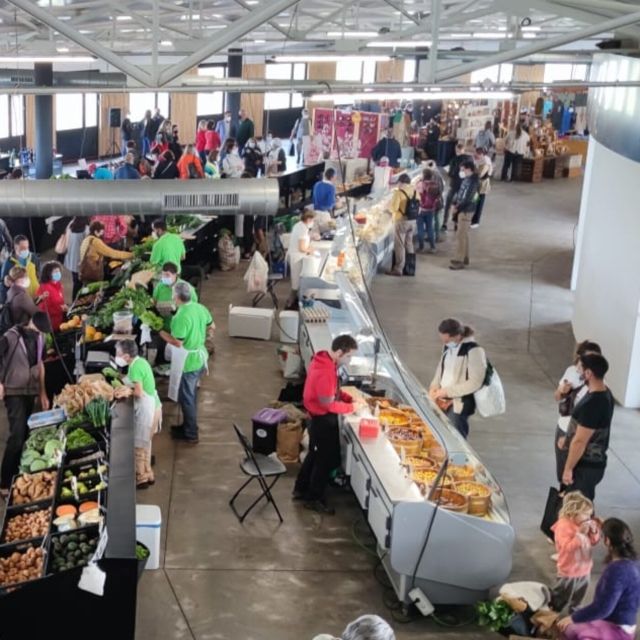
Puntagorda’s weekly farmers market is one of the most appealing parts of the day. Farmers, artisans, and pastry makers bring local goods to a shared meeting place. The stop gives you time to look at produce, baked items, and handmade products rather than simply taking another photograph from a roadside viewpoint.
The market also makes the trip feel connected to daily life. La Palma is more than volcanoes and big vistas, and this is your chance to see what local growers and makers put forward. If you want something to eat, this may be the most practical place to find it, but do not rely on that alone. Food and drinks are not included, and availability at the market can vary.
The stop has been described as a long one, which is welcome on a day otherwise shaped by bus schedules and mountain roads. Use the time to browse without rushing, but keep track of the meeting point and return time. You do not want to turn a pleasant market visit into a search for your coach.
More bus tours around Spain:
- Barcelona: 24 or 48-Hour Hop-On Hop-Off Bus Tour
★ 4.4 · 20,872 reviews - Barcelona: City Sightseeing Hop-On Hop-Off Bus Tour
★ 4.4 · 10,061 reviews - City Sightseeing Barcelona Hop-On Hop-Off Bus Tour: 24 or 48-Hour
★ 4.0 · 5,250 reviews - Seville: City Sightseeing Hop-On Hop-Off Bus Tour
★ 4.0 · 4,633 reviews
Roque de Los Muchachos, La Palma’s high point
The road to Roque de Los Muchachos is part of the experience. It is steep, narrow, and winding, so the driver’s skill matters. On a clear day, the climb reveals changing vegetation and increasingly open views. If you are prone to motion sickness, sit where you normally feel most comfortable and keep water close.
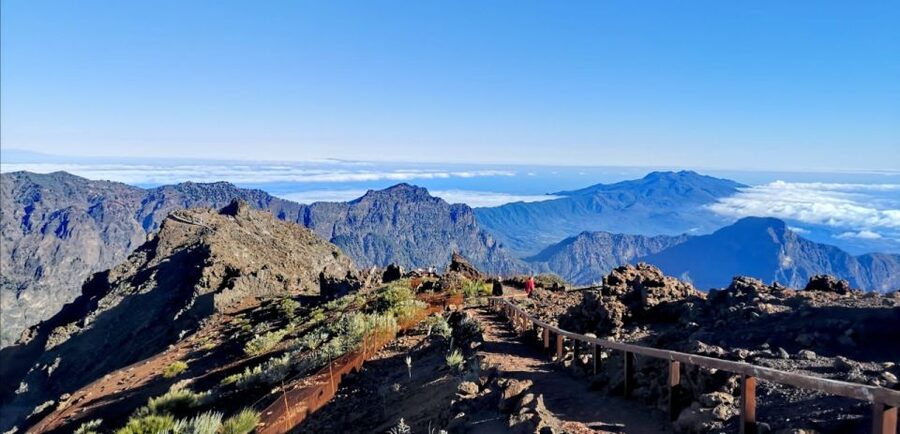
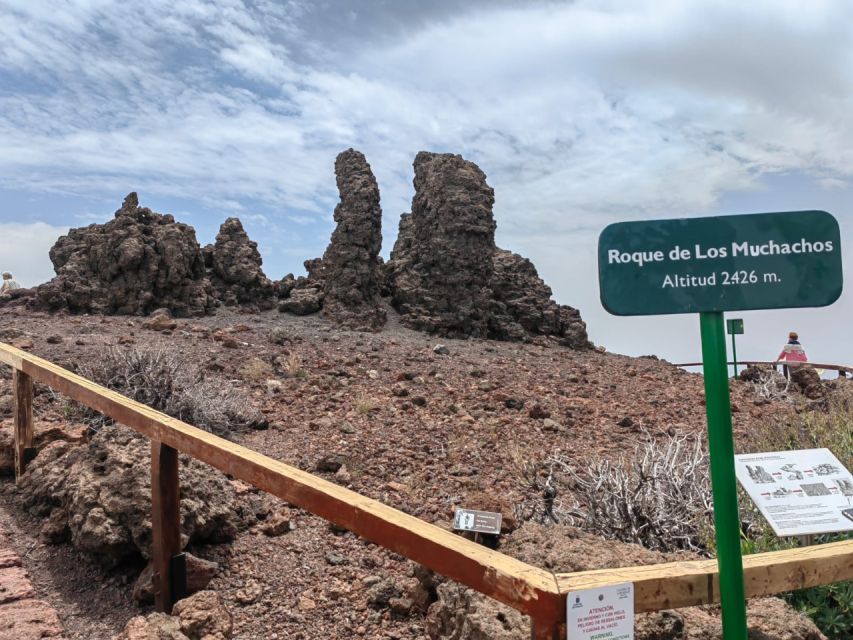
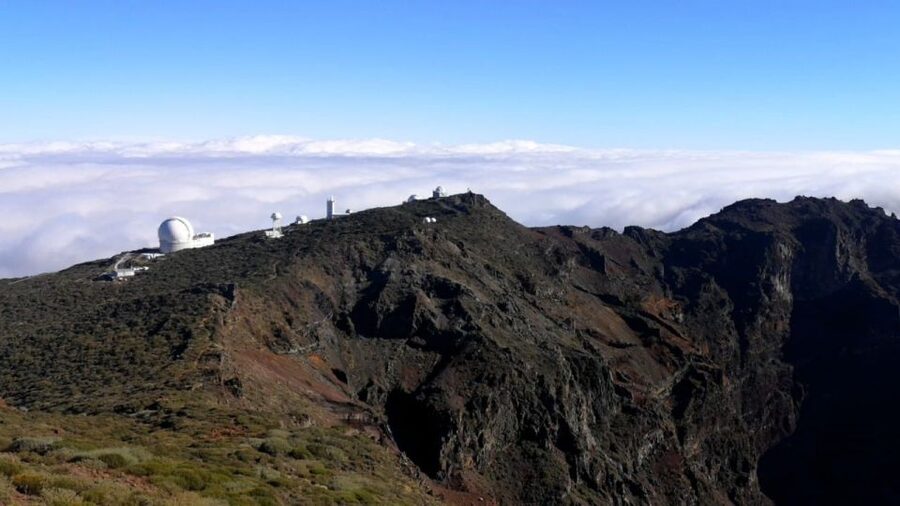
At the summit, the reward is immediate. Roque de Los Muchachos is the highest point on La Palma and one of the world’s important locations for astronomical observation. The quality of the sky has led to the placement of internationally recognized telescopes here. You can see the observatories and take in the unusual sight of serious scientific equipment sharing space with a vast natural setting.
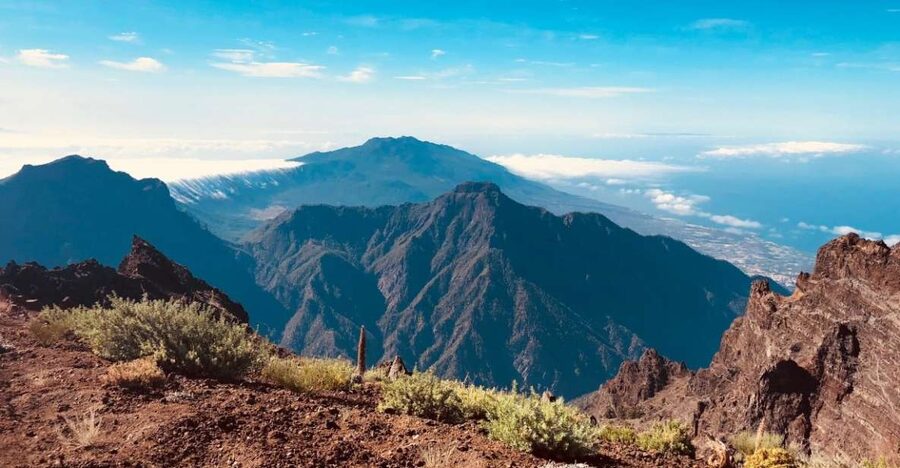
Allow yourself time to look in more than one direction. The Caldera de Taburiente sits below, a huge erosion crater and one of the island’s defining geological features. The ridges extend outward to a series of viewpoints, and the scale is difficult to appreciate from lower elevations.
On clear days, the silhouettes of El Hierro, La Gomera, and Tenerife may appear offshore. Visibility is never something to count on, but the summit remains worthwhile even when distant islands are hidden. The caldera, ridges, observatories, and altitude provide plenty to see.
This is the highlight for many people, and I understand why. It is not merely the highest point on a checklist. It shows how geology, weather, science, and island geography meet in one place. The stop also gives you time to view the observatories and enjoy the caldera rather than being hurried through a quick photo break.
Los Andenes and the descent through changing vegetation
After the summit, the route returns along the eastern side of La Palma. At the Mirador de Los Andenes, you can see almost the full bed of the Barranco de Las Angustias. The scale of the ravine becomes clearer from this angle, and the stop continues the day’s theme of looking into deep cuts and broad volcanic formations.
The return route also reveals different vegetation levels. In spring, flowering plants add another layer of color. The changes are easy to miss when you stay in one coastal town, but they become obvious when you cross the island from low ground to summit and back down again.
This part of the day is quieter than Roque de Los Muchachos. You may be tired by now, yet the coach window remains useful. Keep watching the route. The east-side descent shows a different face of La Palma from the western climb, which is one reason this tour is more useful than a simple out-and-back drive.
The Royal Sanctuary and La Concepción viewpoint
The Royal Sanctuary of Our Lady of the Snows brings a cultural stop into the itinerary. The image of the island’s patron saint is kept here, giving the site religious importance for La Palma. It is a change of mood after the open mountain viewpoints and volcanic story.
The visit is not presented as a long guided museum experience, so keep your expectations focused. You are seeing an important sanctuary and its setting as part of a wider island tour. The stop is valuable because it shows that La Palma’s identity is built from more than scenery and geology.
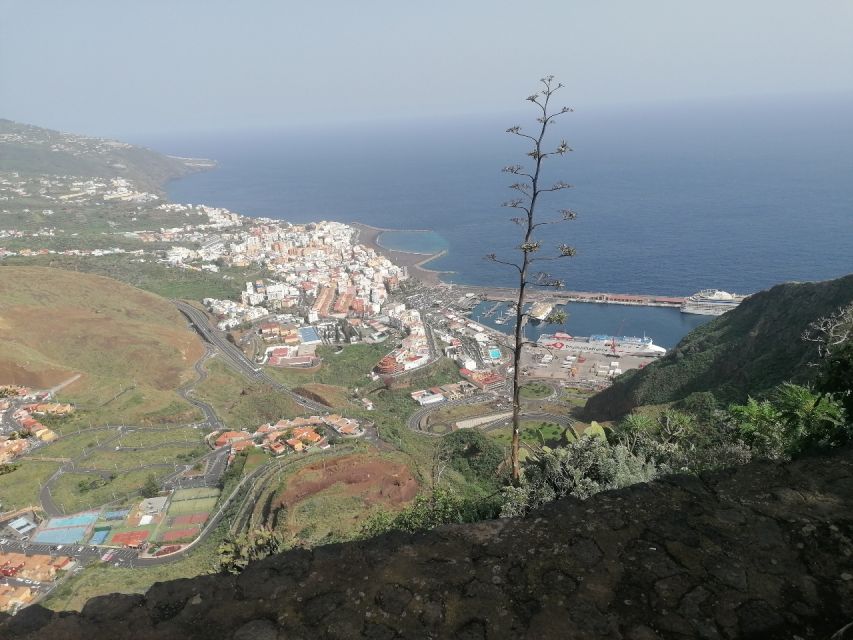
The final viewpoint is Mirador de La Concepción. From here, you look over Santa Cruz de La Palma, Las Breñas, and the eastern coast. It is a fitting last stop because the day ends with a view toward settled coastal areas after the remote high country.
By this point, you will likely be ready for the return to your drop-off point. The tour can last up to nine hours, depending on the schedule and conditions. The long day is part of the value, but it also means this is not the right choice if you want a relaxed morning or a flexible afternoon.
What the $50 price really covers
At $50 per person, the tour is priced as a practical overview rather than a luxury outing. Your fee covers pickup from selected areas, an air-conditioned bus, and a live guide. You are also paying for the driving skill needed on mountain roads and for a route that would take planning, fuel, and confidence to reproduce alone.
You still need to pay for or bring food and drinks. That lowers the all-in cost, but it also means you should prepare properly. Pack water, snacks or lunch, sunscreen, a hat, sunglasses, and a windbreaker. Comfortable shoes and clothes are important because the day includes stops and short walks.
The value is strongest if you have limited time on La Palma or want a clear first look at several parts of the island. If you already have a rental car and plan to spend several days exploring slowly, you may prefer choosing fewer stops and lingering longer. This bus trip gives you breadth, not complete freedom.
Who should book this full-day bus trip
I would choose this for a first visit, a cruise stop with enough time, or anyone who wants the island’s major viewpoints without driving. It suits people who value explanations from a live guide and do not mind spending much of the day on the road.
It is also a good fit for photographers, with one warning: weather and sun position can affect what you get. Tajuya may be backlit, while Roque de Los Muchachos can have shifting visibility. The views are the point, but no mountain tour can guarantee clear horizons.
You should think twice if you dislike winding roads, long coach rides, or fixed schedules. The tour is not suitable for people in wheelchairs or with reduced mobility. Folding wheelchairs may be taken on the bus only when requested in advance, and at times they may need to remain onboard.
Practical tips for a smoother day
Arrive early at your pickup point. The listed morning schedule includes several stops, and early departures have occasionally involved confusion over language groups and bus assignments. A prompt arrival gives you more time to sort out the correct coach.
Keep essential items in a small day bag rather than in the luggage area. You will want quick access to water, sunscreen, sunglasses, a charged smartphone, and a windbreaker. Comfortable shoes are enough for the short walks described, but avoid footwear that makes uneven viewpoints awkward.
Do not plan a demanding evening after the tour. The route is long, and the combination of early pickup, mountain roads, walking, and constant scenery can leave you tired. That is not a fault, but it is part of the bargain.
Cancellation is free up to 24 hours before the tour, and you can reserve now and pay later. The duration is listed as 7.5 to 9 hours, so check the available start time when booking.
Should you book it?
Book this tour if you want one well-planned day covering La Palma’s high point, volcanic viewpoint, farmers market, ravines, sanctuary, and east-coast views. The strongest parts are Roque de Los Muchachos, the route across changing elevations, and the guides who bring useful context to the long drives.
Skip it if you want slow travel, private stops, or a gentle day with little time on winding roads. For $50, the tour offers a lot of ground and saves you the work of navigating La Palma’s mountain roads. Just bring your own food and water, expect a full day, and treat the weather as part of the adventure rather than a guarantee.
FAQ
How long does the La Palma Island Highlights tour last?
The tour lasts approximately 7.5 to 9 hours. The exact duration can vary, so check the available start times when booking.
Where does the bus pick up passengers?
Pickup is available from selected areas. Listed times are 8:00 a.m. in Fuencaliente, 8:50 a.m. at the Santa Cruz de La Palma Bus Stop Line 500 south, 9:00 a.m. at the Los Cancajos Tourist Information Office bus stop, and 9:10 a.m. at the Los Cancajos pharmacy bus stop.
Which languages are available?
The live tour guide service is available in English, German, and Spanish.
Is food included?
No. Food and drinks are not included. You are advised to bring food and water for the trip.
What should I bring?
Bring comfortable shoes, a windbreaker, sunglasses, a hat, a camera, food, sunscreen, water, comfortable clothes, and a charged smartphone.
Is the tour suitable for people with reduced mobility?
The tour is not suitable for people in wheelchairs or with reduced mobility. A folding wheelchair may be taken on the bus if requested in advance, but it may need to remain onboard during some stops.
Can I cancel the booking?
You can cancel up to 24 hours in advance for a full refund. You can also reserve now and pay later.
Just joined the route map around Spain
- Santander: City Sightseeing Hop-On Hop-Off Bus Tour & Train★ 4.3 · 170 reviews
- Mallorca Island Tour with Boat, Train, Tram and Bus★ 4.5 · 109 reviews
- Mallorca: 3-hour bus tour around Calvià with 2 stops★ 4.3 · 3 reviews
- Mallorca: Fashion Outlet Shopping Excursion by Bus★ 4.6 · 5 reviews
- Madrid: Guided Tour to Toledo★ 3.7 · 29 reviews
- Madrid: 4-Hour Bus Tour with Royal Palace Admission★ 3.9 · 52 reviews
- Lanzarote: Return Ferry to La Graciosa with Bus Pickup★ 4.6 · 329 reviews
- Lanzarote: Full Day Bus Tour with Scenic Views★ 4.5 · 620 reviews
Spain Bus Tours, side by side.
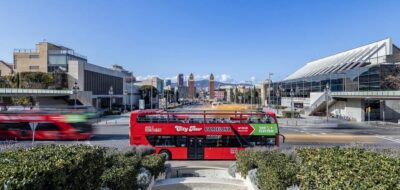
Barcelona: 24 or 48-Hour Hop-On Hop-Off Bus Tour
Read our review →
Barcelona: City Sightseeing Hop-On Hop-Off Bus Tour
Read our review →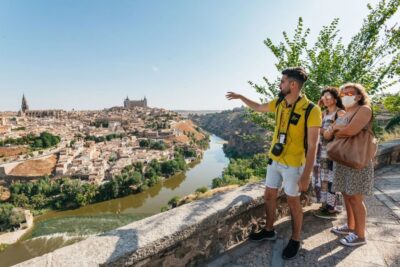
From Madrid: Guided Day Trip to Toledo by Bus
Read our review →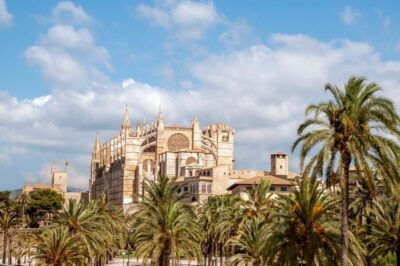
Palma de Mallorca: City Sightseeing Hop-On Hop-Off Bus Tour
Read our review →
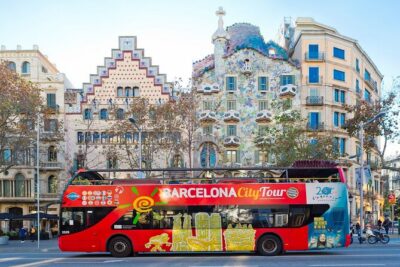
Barcelona City Tour Hop-On Hop-Off with Optional Boat
Read our review →
Madrid: Panoramic Open-Top Bus Day or Night Tour with Guide
Read our review →
Las Palmas: City Sightseeing Hop-On Hop-Off Bus Tour
Read our review →Other lists with this bus tour