
Review · BERLIN
Berlin: English Bus Tour to Sachsenhausen Concentration Camp
Sachsenhausen is not a casual sightseeing stop. It is a difficult, important place where the camp’s layout, surviving barracks, crematoria, punishment areas, and infirmaries show how Nazi persecution was organized. The two-hour guided visit gives you a clear route through a very large memorial site without leaving you to work out the meaning of each building alone.
I like two things here. First, the guide begins the history lesson on the coach, explaining the rise of Nazism and the camp system before you arrive. Second, the air-conditioned coach takes the stress out of reaching Oranienburg, with no train changes or ticket planning. The main drawback is time: two hours at the memorial is useful, but not enough to read every exhibit in detail.
Key points to know before you book
- The history starts before arrival: About 50 minutes of commentary on the coach helps explain Berlin, Nazi rule, and the camp system.
- You visit the most serious areas: The route includes Tower A, barracks, infirmaries, isolation cells, crematoria, the gas chamber area, punishment cells, and the execution trench.
- The site is larger than the schedule suggests: Two hours gives you a strong introduction, but you will need to choose between following the guide and reading every display.
- The guide makes a major difference: Hannah, Paul, Georgia, Klaus, Jamie G, Scott, Nikolai, and others have led tours, with emphasis on clarity, empathy, and context.
- The price covers the practical pieces: At $55, you get transport, a licensed English-speaking guide, entry, a map, and a €3 donation to the memorial.
- Come prepared for walking and weather: Wear comfortable shoes, bring a drink and light snack, and note that the tour is not wheelchair accessible.
Why Sachsenhausen needs a guided visit
Sachsenhausen was the first concentration camp designed and built from the ground up according to a planned model of control and expansion. That detail matters when you walk through it. The site was not simply a collection of prison buildings. Its layout, entrance, barracks, administrative areas, punishment spaces, and work zones were arranged to control people and make cruelty part of a daily system.
The memorial records that about 35,000 people were murdered or died from disease at the camp. The number is hard to grasp on its own. The physical remains help give it weight. You see spaces built for administration, imprisonment, forced labor, medical abuse, punishment, and killing, all connected within one controlled area.
I would not choose this outing for a light afternoon between shopping and dinner. It is emotionally heavy, and the guide’s job is not to make the visit comfortable. A good guide helps you understand what happened without turning suffering into spectacle. That is where this tour earns its price.
More bus tours around Berlin:
- Berlin: Hop-on Hop-off Bus Tour with Live Commentary
★ 4.3 · 8,579 reviews - Berlin: Big Bus Hop-On Hop-Off Sightseeing Tour & Currywurst
★ 4.4 · 4,638 reviews - Berlin: City Sightseeing Hop-On Hop-Off Bus Tour
★ 4.1 · 4,233 reviews
Meeting at Friedrichstraße and leaving Berlin
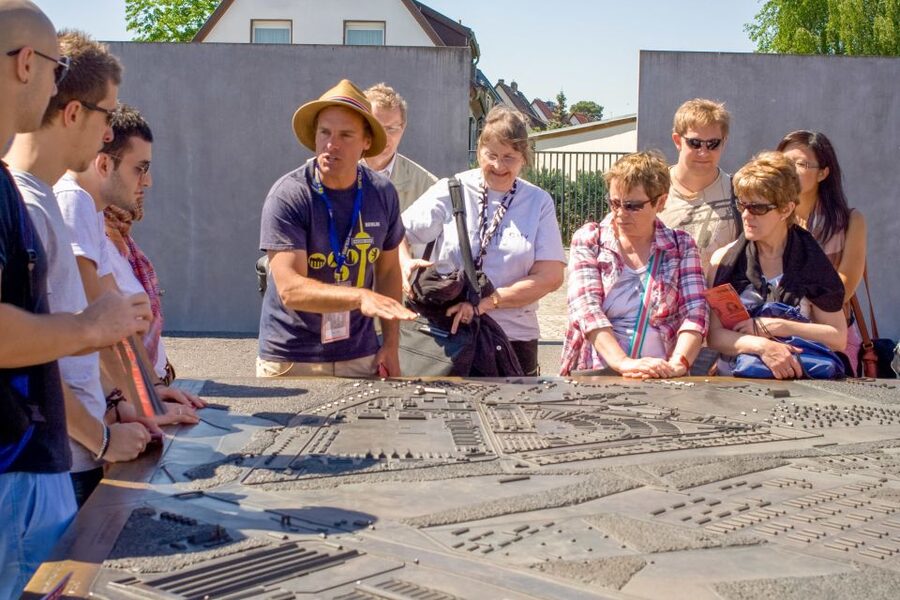
You meet outside Friedrichstraße train station, in the square between the station and the Tränenpalast, also called the Palace of Tears. Look for a guide wearing a blue lanyard and yellow name tag, usually with a yellow umbrella.
This is a useful central meeting point, but give yourself enough time to find the correct side of the station. The listed address is Reichstagufer 17, 10117 Berlin. Hotel pickup is not included, so you must make your own way there.
Once aboard, you have roughly 50 minutes to Oranienburg. That drive is not wasted time. The guide uses it to explain the political and social setting that allowed the camp system to develop, along with how concentration camps affected people beyond their fences. Several guides, including Hannah, Paul, Scott, Klaus, Jamie G, Georgia, and Nikolai, have been praised for making this background clear and easy to follow.
That opening talk is one of the strongest parts of the experience. You arrive with a framework instead of a pile of dates and names. You also pass through Oranienburg and learn about the surroundings where prisoners would have worked. The town is not treated as scenery alone. It helps you consider how a camp could exist near an ordinary population and become part of the local economy and daily life.
One practical note: a microphone problem was reported on one coach, which made some of the commentary hard to hear. That appears to be an occasional equipment issue rather than a feature of the tour, but it is worth knowing. If you cannot hear, tell the guide early rather than missing the background that gives the visit meaning.
Entering through Tower A and seeing the camp plan
At Sachsenhausen, the guide begins by placing the camp in its physical setting. The famous entrance is Tower A, with the words Arbeit Macht Frei above the gate. The phrase is part of the Nazi system of deception and intimidation. Seeing it in person can be unsettling, but the guide explains why the entrance was designed to send a message about authority, discipline, and supposed work.
From here, the layout becomes one of the main lessons. The open central area, barracks, perimeter, administrative buildings, and watch structures show how prisoners were watched and managed. You do not simply walk from one attraction to another. You learn how space itself was used as a weapon.
The former commandant’s house offers another disturbing contrast. It helps show the distance between those who directed the camp and those imprisoned inside it. The tour’s value comes partly from making that administrative chain visible. The camp did not function through one person alone. It relied on planning, orders, guards, records, buildings, and people carrying out instructions.
Your guide may pause to explain how the wider network of camps operated and how Sachsenhausen fitted into it. That wider context is important because the camp was not an isolated prison. It formed part of a system that affected many groups and many locations.
Barracks, infirmaries, and the daily reality of imprisonment
The barracks are among the most direct parts of the visit. Here you hear about the daily routines and harsh conditions imposed on prisoners. The surviving structures and displays help you understand that brutality was not limited to dramatic acts of violence. Hunger, disease, forced labor, overcrowding, fear, and arbitrary punishment shaped ordinary life.
The infirmary barracks are especially difficult. They were places of treatment in name, but experimentation also took place there during the war. Your guide explains the medical crimes and the way prisoners were denied dignity and control over their own bodies.
You should expect to move between buildings and open areas, often across uneven ground. Comfortable shoes matter. The site is extensive, and even a guided route involves a fair amount of walking. The tour is not suitable for wheelchair users or people with limited mobility, and the operator specifically advises against it for people with walking impairments.
The weather also matters. You are outside for part of the visit, so wear clothing suited to the forecast. Bring a drink and a small snack. The schedule does not include a meal, and the subject matter can make a short break useful.
Same streets, a different ride:
- Berlin: East and West Hop-On Hop-Off Bus Tour
★ 4.2 · 2,195 reviews - Sachsenhausen Concentration Camp Bus Tour in English from Berlin
★ 5.0 · 1,962 reviews - Berlin: 1.5-Hour Comedy Bus Tour in German
★ 4.5 · 1,165 reviews - Berlin City Hop-on Hop-off Tour with Optional Cruise
★ 3.5 · 1,155 reviews
Crematoria, gas chamber area, and the execution trench
The crematoria and gas chamber area are among the most solemn sections of the memorial. The guide explains what occurred there and how the camp’s killing process was organized. This is not presented as a quick photo stop. You are given the historical background needed to understand the purpose of the buildings and the people who were murdered there.
The execution trench provides another stark reminder of the camp’s violence. It is a space where individual killing took place, in contrast to the larger systems represented by the crematoria and gas chamber area. Seeing both helps show the range of methods used by the camp authorities.
You may find that the group moves at a steady pace. That is necessary if the guide is to cover the main areas within two hours, but it creates a choice for you. Listen closely to the explanation and keep moving with the group, or spend longer with a particular display and risk missing part of the route.
Several people have found the two hours enough for a first visit, especially when traveling with teenagers or family members. Others have wanted more time to read letters, documents, and exhibit panels. I think the schedule works best if you see this as a guided introduction, not a complete study visit.
Punishment cells and the machinery of control
The isolation cells and punishment areas reveal how the camp enforced obedience. These spaces help explain that imprisonment involved more than fences and guards. Rules were backed by confinement, physical abuse, deprivation, and the threat of unpredictable punishment.
The guide also explains the camp’s administrative ruthlessness. That phrase can sound abstract until you see the spaces where orders were carried out. The camp had procedures, ranks, records, and designated areas for punishment. The system was built to make cruelty repeatable.
This section is also where the guide’s tone matters most. Hannah has been particularly praised for explaining difficult material with care and allowing quiet moments. Other guides, including Paul, Georgia, Klaus, and Scott, have been singled out for combining historical detail with a calm, respectful approach. Your exact guide will vary, but the experience depends heavily on how clearly and responsibly that person handles the subject.
You should not expect theatrical storytelling. The best moments are usually the plainest ones: a clear explanation, a survivor account, a pause beside a building, or an answer to a difficult question.
The return coach and Germany’s approach to remembrance
After the memorial visit, you return to Berlin by coach, again for about 50 minutes. The ride back gives you time to process what you have seen. Guides may continue with historical explanation, personal reflections, and discussion of how Germany teaches and remembers the Nazi period today.
That final part adds value because Sachsenhausen is not only about what happened between the fences. It also raises questions about memory, responsibility, education, and what surrounding communities knew or could see. The tour connects the physical site with Germany’s modern effort to confront this past rather than hide it.
You finish at the same Friedrichstraße meeting point. The coach makes the day simpler than arranging the journey by public transport, especially if you are unfamiliar with the trip to Oranienburg. It also means you can keep listening to the guide instead of worrying about train connections.
The main limitation remains the fixed timetable. If the subject grips you and you want to examine every display, you will probably wish for a longer stay. If you prefer a clear route with expert explanation and enough time to absorb the main points, the schedule is more manageable.
Is $55 a fair price?
At $55 per person, the cost is reasonable for what is included. You receive a private air-conditioned vehicle with a driver, a licensed English-speaking guide, Sachsenhausen entry, a camp map, and a €3 donation to the memorial.
The main value is not the bus alone. You are paying for the guide’s preparation and interpretation. A self-arranged visit might give you more freedom to set your own pace, but it would not automatically give you the same historical framework on the way there or help you understand the camp’s structure once inside.
The tour is especially good value if you are short on time, uneasy about navigating to Oranienburg, or visiting Sachsenhausen for the first time. It is less ideal if you prefer several quiet hours with the exhibits or want to study every document without being tied to a group.
Free cancellation is available up to 24 hours before departure, and you can reserve now and pay later. Those terms help if your Berlin schedule is still changing, but the more important decision is emotional readiness. This is a serious half-day, not a standard sightseeing excursion.
Who should book this Sachsenhausen tour?
I would recommend it to adults, older teenagers, history-minded visitors, and anyone who wants a guided introduction to one of Berlin’s most important memorial sites. The coach setting, central meeting point, and English commentary make it practical for an international audience.
Families should think about the age and temperament of their children. The tour deals directly with murder, disease, punishment, medical experimentation, and mass persecution. The guides aim to handle this with care, but the material cannot be softened without losing its meaning.
I would also recommend it if you have visited other sites connected with Nazi persecution and want to understand how Sachsenhausen fits into the wider camp network. The visit is not identical to Auschwitz, Dachau, or a museum in Amsterdam. Its layout and surviving remains offer a different kind of understanding.
My verdict on the Berlin to Sachsenhausen tour
Book this tour if you want a well-organized, English-language introduction and value expert explanation more than complete freedom to wander. The strongest features are the long history briefing on the coach, the comfortable direct transport, and the guides’ careful handling of a painful subject.
Skip it, or choose a longer self-guided visit, if you need extensive time with written exhibits or have difficulty walking. Two hours at the camp is enough to see the key areas and understand the system, but it is not enough to absorb every document and building.
For $55, this is a practical and serious way to reach Sachsenhausen from Berlin. Come prepared for a quiet, upsetting day, listen carefully, and leave room afterward to think about what you have seen.
FAQ
Where does the Sachsenhausen tour meet?
The meeting point is outside Friedrichstraße train station, on the square between the station and the Tränenpalast, also called the Palace of Tears. The listed address is Reichstagufer 17, 10117 Berlin.
How long does the full tour last?
The activity lasts about four hours. The coach journey takes roughly 50 minutes each way, and the guided visit at Sachsenhausen lasts about two hours.
What is included in the $55 price?
The price includes a professional licensed guide, driver, transport in a private air-conditioned vehicle, entry to the Sachsenhausen Memorial, a €3 donation per person to the memorial, and a map of the former camp.
Is the tour conducted in English?
Yes. The tour has a live English-speaking guide. Guides have included Hannah, Paul, Georgia, Klaus, Jamie G, Scott, Nikolai, and others, but the assigned guide varies by departure.
What should I bring?
Bring comfortable walking shoes, weather-appropriate clothing, a light snack, and a drink. A camera is permitted, although you should use it with sensitivity at a memorial site.
Is the tour wheelchair accessible?
No. The tour is not wheelchair accessible and is not recommended for people with limited mobility or walking impairments.
Just joined the route map around Berlin
- Berlin: Hop-On Hop-Off City Tour by Bus and Boat★ 4.4 · 488 reviews
- Potsdam: 5-Hour-Tour “Parks & Palaces” from Berlin by VW-Bus★ 5.0 · 17 reviews
- City Sightseeing Berlin: HOHO Bus – All Lines & Icebar★ 4.3 · 6 reviews
- Christmas market lights tour bus through Berlin, free mulled wine (2.5 hours)★ 4.8 · 6 reviews
- Berlin: Live-Guided Evening Sightseeing Tour by Open-top Bus★ 4.1 · 783 reviews
- Berlin & Sachsenhausen: 5-Hour Tour “Third Reich” by VW-Bus★ 5.0 · 27 reviews
- Berlin: Private Sightseeing Tour in Iconic Oldtimer VW Bus★ 4.9 · 184 reviews
- Berlin: Hop-On-Hop-Off Bus with Boat Cruise Option★ 3.8 · 818 reviews
Berlin Bus Tours, side by side.
Berlin: Hop-on Hop-off Bus Tour with Live Commentary
Read our review →
Berlin: Big Bus Hop-On Hop-Off Sightseeing Tour & Currywurst
Read our review →
Berlin: City Sightseeing Hop-On Hop-Off Bus Tour
Read our review →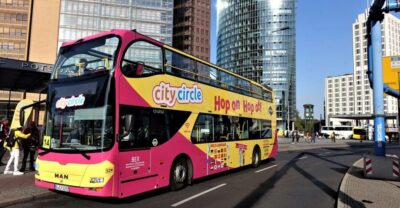
Berlin: East and West Hop-On Hop-Off Bus Tour
Read our review →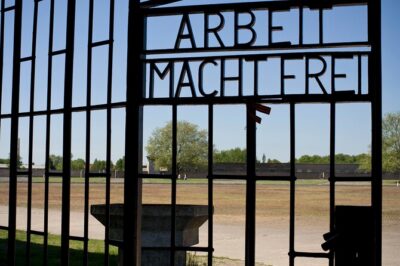
Sachsenhausen Concentration Camp Bus Tour in English from Berlin
Read our review →
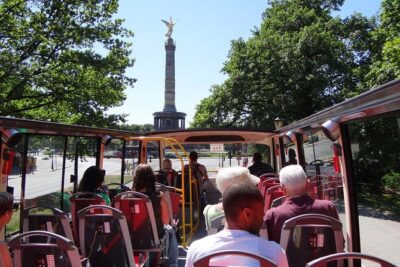
Berlin City Hop-on Hop-off Tour with Optional Cruise
Read our review →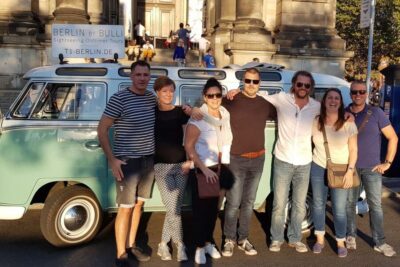
Berlin: Sightseeing Tour in Classic Volkswagen T1 Samba Bus
Read our review →Other lists with this bus tour