

Review · LA PAZ
From La Paz: Salar de Uyuni 3-D Tour+Entrance Tickets by Bus
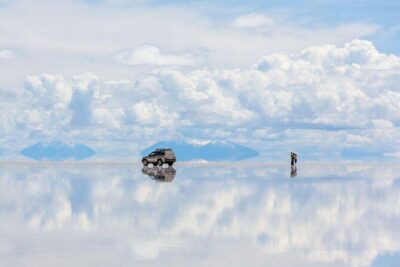
The best part of this trip is the change from a night bus to a 4×4 crossing of the Salar de Uyuni, where the white salt seems to run forever. You’ll also get the odd pleasure of making giant-looking photos by playing with distance and perspective.
I like the practical design: bus tickets, meals, Uyuni pickup, a driver, guide, and 4×4 transport are bundled together. I also like the sunset stop, which gives the day a calm finish after a long list of sights. The main drawback is the tight schedule and overnight bus ride, especially if you are sensitive to altitude or need frequent access to a bathroom.
Key points
- An overnight bus connects La Paz and Uyuni: Depart La Paz at 9:00pm and reach Uyuni at about 7:30am.
- The full salt-flat day begins at 10:30am: Expect the Train Cemetery, Colchani, salt sights, flags, the Dakar Monument, and lunch.
- Incahuasi Island adds a short hike: Giant cacti and petrified coral rock formations await, but the island is closed during the January to March rainy season.
- The sunset includes wine: You finish the salt-flat visit with a glass of wine before returning to Uyuni.
- Small groups keep the 4×4 manageable: The tour is limited to 15 people, with English and Spanish guiding.
- Budget for one extra fee: Incahuasi Island costs 30 BOB, listed as about $5, and drinks and snacks are also extra.
Why this La Paz to Uyuni plan works
Salar de Uyuni is not a quick side trip from La Paz. The two cities are connected by an overnight bus, so this tour uses the travel time instead of asking you to pay for a separate hotel night in Uyuni. You leave La Paz at 9:00pm, arrive around 7:30am, and begin the 4×4 outing at 10:30am.
That makes the trip efficient, but not restful in the usual sense. The bus includes dinner, breakfast, water, a hot drink, heating, toilets, a fleece blanket, Wi-Fi, and a first aid kit. Those comforts matter. Still, you should expect a long day after sleeping on a bus, followed by a return bus the same evening.
The return departure from Uyuni is at 9:00pm, with arrival in La Paz between 6:15 and 6:35am on Day 3. In practical terms, this is a compact way to see the salt flats without arranging hotels or separate transfers, but you give up the slower pace of a multi-day Uyuni circuit.
More bus tickets around the world:
- Florence: Hop-on Hop-off Bus Tour: 24, 48 or 72-Hour Ticket
★ 4.0 · 6,283 reviews - Naples: Hop-on Hop-off Bus Tour 24-Hour Ticket
★ 4.3 · 5,157 reviews - Kennedy Space Center: Entry Ticket with Explore Bus Tour
★ 4.7 · 4,670 reviews
What the $230 price covers
At $230 per person, the cost is not just for a drive across the salt. It includes the La Paz to Uyuni bus, the return bus, one bus dinner, one bus breakfast, pickup at the Uyuni bus terminal, 4×4 transport with a roof rack, a local driver, an English or Spanish guide, and one lunch.
That package has real value if you are starting and ending in La Paz. Buying the two bus journeys and a day tour separately would take more planning, and you would need to coordinate the morning connection in Uyuni yourself. Here, the local pickup and nearby office make the handoff easier.
The price does not cover the Incahuasi Island entrance fee, which is 30 BOB, listed as about $5. You also pay for drinks and snacks. Bring enough cash for those extras, and buy supplies during your free time in Uyuni after arrival. The schedule specifically allows time to purchase water, snacks, and other items before the salt-flat tour begins.
The group limit is 15 people. That is small enough to make the 4×4 portion more personal than a large coach outing, though the actual vehicle arrangement and seating may affect how much room you have.
The overnight bus from La Paz
You meet at the bus office at 8:30pm for check-in. The bus leaves at 9:00pm, so arrive ready rather than treating the first evening as casual waiting time.
Dinner and breakfast are included on board. A fleece blanket and heating help with the cold, while the toilet is useful on a long night journey. Wi-Fi is listed as available, but I would still treat it as a bonus rather than something to rely on for important plans.
The most important practical detail is the combination of high altitude, limited sleep, and a full sightseeing day. One passenger, Sharon from Hong Kong, needed to use a toilet often because of a urinary infection and high-altitude symptoms. After lunch, she told guide James that she needed to return early. Driver Ardo and James took her back toward the salt flats and then returned her to Uyuni, allowing her to leave three to four hours before the planned finish.
That response is worth noting because it shows the value of telling your guide quickly if you feel unwell. Do not wait until you are in serious trouble. The normal route is long, and the salt flats offer few private facilities once you are far from Uyuni.
Uyuni arrival and the morning handoff
You reach Uyuni at about 7:30am and have free time to buy supplies. This is not a full morning of sightseeing. Think of it as a useful buffer before the day tour.
The tour office is one block from the bus station. After shopping, head there for the 10:30am departure. That gap gives you time to organize water and snacks, use facilities, and adjust after the bus ride.
The timing also explains why the tour lasts three calendar days but contains only one main sightseeing day. Day 1 is the overnight trip from La Paz. Day 2 holds the Uyuni excursion and the return bus. Day 3 is the early arrival back in La Paz.
More bus tours around the world:
- Mt Fuji and Hakone 1-Day Bus Tour Return by Bullet Train
★ 5.0 · 26,383 reviews - Barcelona: 24 or 48-Hour Hop-On Hop-Off Bus Tour
★ 4.4 · 20,872 reviews - London: Warner Bros. Studio Harry Potter Tour & Branded Bus
★ 4.7 · 19,194 reviews - Rome: City Sightseeing Hop-on Hop-off Bus with Audioguide
★ 4.0 · 16,045 reviews
The Train Cemetery and Colchani

The first sightseeing stop is the Train Cemetery just outside Uyuni. Old locomotives sit exposed in the dry open air, creating one of the strangest scenes on the route. Rusted metal, empty windows, and discarded machinery make this a strong place for photographs, but the attraction is brief and visual rather than museum-like.
Afterward, you visit Colchani, a small settlement linked to the salt trade. You’ll find crafts made from salt and textile work using llama and alpaca wool. This stop gives the day some human context before the 4×4 heads onto the huge white salt surface.
Colchani is also a good place to consider what you are buying. A salt souvenir is easy to carry and tied directly to the region, while the wool textiles offer a more practical choice. You do not need to buy anything, but the stop helps connect the polished tour route with local craft production.
Crossing the white expanse

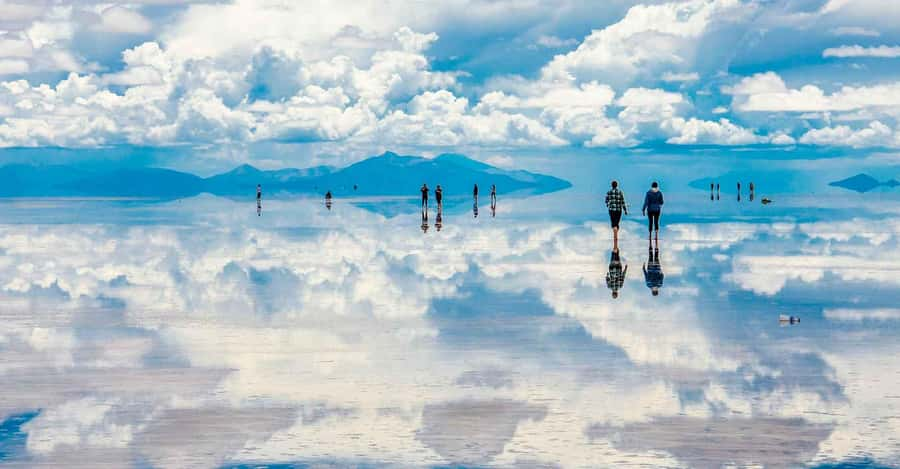
Once you leave the settlement, the visual scale changes quickly. The Salar de Uyuni is the reason to take this trip, and the 4×4 allows you to move across a broad section rather than seeing the flats from one fixed viewpoint.
You’ll stop for photographs and visit the Ojos de Agua Salada, or salty-water eyes. These openings interrupt the smooth white surface and show that the salt crust is not simply a flat, solid floor everywhere.
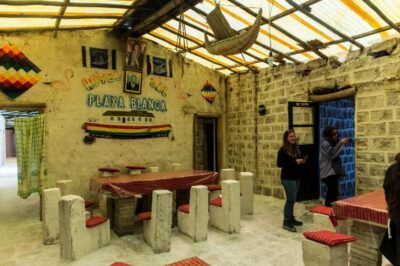
The route also includes a salt hotel now used as a museum and restaurant. It is made entirely of salt, so the stop offers both an unusual building and a place connected to the history of salt-flat tourism. Lunch is served along the way, which saves you from leaving the route to find a restaurant.
The white surface can be hard on your eyes. Sunglasses are a sensible item to pack, though the tour information does not list them as provided. Water is especially important because drinks and snacks are not included in the tour price.
World flags and the Dakar Monument

The Flags of the World stop is a simple but memorable part of the route. You can bring your own flag and place it there at no charge. If you want to add one, pack it before leaving La Paz or buy one in advance. The stop is more personal when you bring something connected to your home.
The Dakar Monument marks the salt flats’ link with the Dakar Rally. It gives you another clear photo point and breaks up the broad, nearly featureless surface. These stops are not lengthy historical visits, but they add variety to a day built around open space and optical tricks.
I would keep your expectations in line with the setting. The appeal is the contrast between a few human-made markers and the enormous white field around them. You are not visiting a large interpretive center or a formal museum complex.
Incahuasi Island and its giant cacti
Incahuasi Island is one of the most distinctive stops. You can hike to the top to see giant cacti and petrified coral rock formations. The climb gives you a higher view over the salt flats, changing the way you read the huge white area below.
The entrance fee is separate, at 30 BOB, or about $5. Carry local currency if possible, since the supplied details do not promise card payment.
The important seasonal warning is clear: Incahuasi Island is not accessible during the rainy season from January through March. If you book for those months, you should expect the route to omit this stop rather than assume the fee or hike will still apply.
Even outside the rainy season, this is the part of the day that calls for sensible pacing. You have already spent the night on a bus and several hours in a 4×4. Take the hike at your own speed, and tell the guide if you are feeling the altitude.
Optical photos and the sunset finish
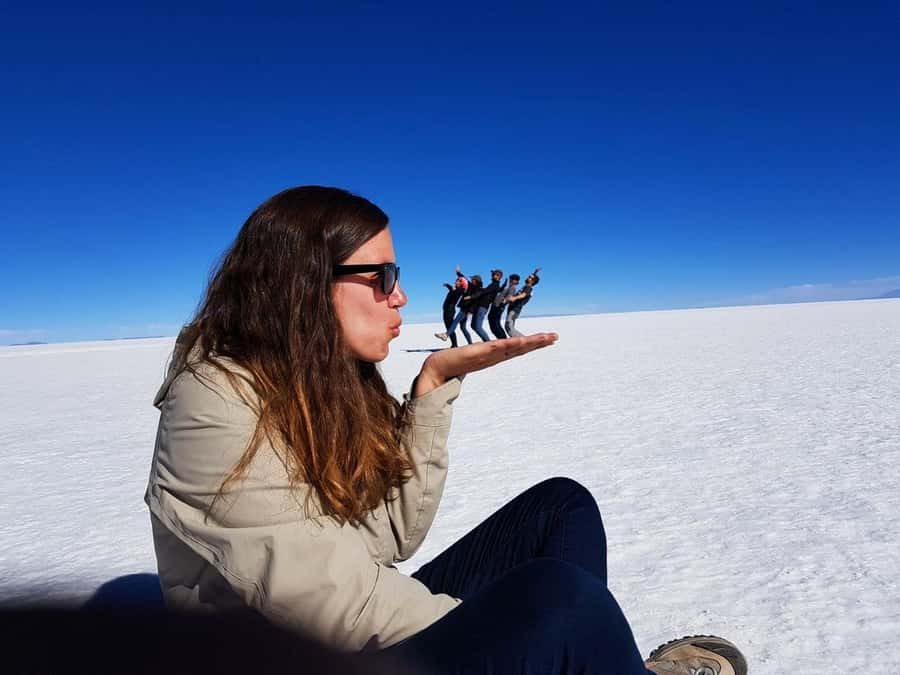
After Incahuasi Island, the group has time to arrange perspective photos. By placing people and objects at carefully chosen distances, you can make someone appear huge, tiny, or close enough to hold in one hand.
This is one of the most playful parts of the outing, but it works best when everyone cooperates. The guide and driver can help with positioning, while your group can take turns creating and photographing the scenes. Bring patience. A clever picture often takes several tries.
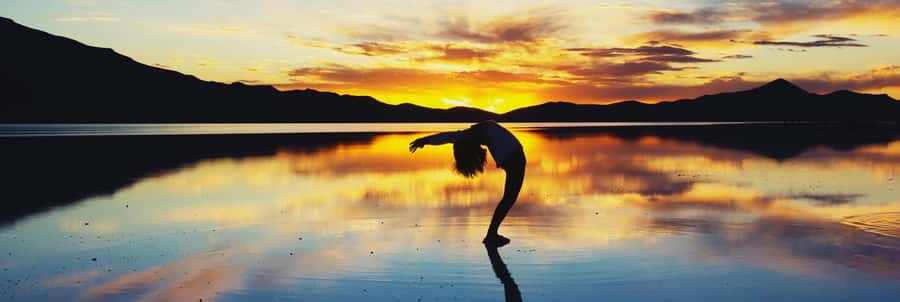
The final stop is a spacious area for sunset. The salt reflects the changing colors, and the tour includes a glass of wine while you watch. After a day of bright white surfaces, the softer evening light gives the outing a quieter finish.
The sunset is also why the schedule runs late. You return to the Uyuni office between 7:15 and 7:45pm, then make your own way to the bus office at 8:30pm for the 9:00pm return to La Paz. Keep your belongings together and allow enough time for that short transfer.
Guide support and comfort on a demanding day

The tour offers English and Spanish guiding, with a local driver and a maximum group size of 15. The supplied details identify the English-speaking guide as James and the driver as Ardo in one account. If you need help, use their names and speak up early, particularly about illness, cold, fatigue, or the need to return.
The response to an early departure is a useful sign of practical support. James listened when Sharon needed to stop, and Ardo drove her back rather than forcing her to continue the full route. That does not remove the physical demands of the trip, but it shows why a responsive guide matters on a remote salt-flat outing.
Facilities are strongest on the buses and in Uyuni. Once the 4×4 moves out across the flats, your options become more limited. Use the morning free time well, carry water, and do not assume every stop will have a toilet.
Who should book this tour
This tour suits you if you have limited time in Bolivia, want the major Uyuni sights, and prefer a package that starts and ends in La Paz. It is especially useful if you do not want to arrange bus tickets, terminal pickup, and a separate day tour on your own.
It also works for people who want a broad first look at the Salar de Uyuni: unusual trains, a salt-producing settlement, salt architecture, water openings, flags, a rally monument, cacti, optical photos, and sunset. You get many distinct stops in one long day.
I would hesitate if you need a proper night of sleep, dislike overnight buses, or want a relaxed schedule. The plan leaves little spare time. It also loses Incahuasi Island from January through March because of the rainy season, so that seasonal detail should affect your decision.
Free cancellation up to 24 hours before departure and the option to reserve now and pay later make planning less rigid. Those terms are useful, but they do not change the physical pace of the trip.
Should you book the La Paz to Uyuni 3-day tour?
Book it if efficiency matters more than comfort. For $230, you receive the round-trip bus travel, the Uyuni transfer, a full 4×4 day, meals, and bilingual guiding, which is a solid package for a short visit.
Choose it with realistic expectations. You will spend two nights on buses, one day moving through a packed sequence of salt-flat stops, and extra money on the Incahuasi entrance, snacks, and drinks. If you can handle that, the sunset, giant cacti, strange locomotives, and vast white salt can make this a memorable use of three calendar days.
FAQ
How long does the tour last?
The tour covers three calendar days. You leave La Paz on the first evening, explore the Salar de Uyuni on the second day, return to La Paz overnight, and arrive early on the third day.
What time does the bus leave La Paz?
You meet at the bus office at 8:30pm for check-in. The bus departs at 9:00pm.
What time do you arrive in Uyuni?
Arrival in Uyuni is scheduled for about 7:30am.
Is pickup from the Uyuni bus station included?
Yes. Pickup at the Uyuni bus terminal is included. The tour office is one block from the bus station.
What languages are available?
The tour provides live guiding in English and Spanish.
Is Incahuasi Island included in the price?
Transport to the stop is part of the tour when the route can visit it, but the entrance fee is not included. The fee is 30 BOB, listed as about $5. Incahuasi Island is not accessible from January through March because of the rainy season.
Are meals included?
One dinner and one breakfast are included on the bus, along with one lunch during the salt-flat tour. Drinks and snacks are not included.
How large is the group?
The tour is described as a small-group experience limited to 15 participants.
Just joined the route map around the world
- San Pedro de Atacama: Vallecito + Magic Bus★ 5.0 · 4 reviews
- Santander: City Sightseeing Hop-On Hop-Off Bus Tour & Train★ 4.3 · 170 reviews
- Santiago: 1-Day Hop-On Hop-Off Bus and Cable Car Ticket★ 4.3 · 332 reviews
- San Francisco: Sightseeing Sunset Tour by Open-Top Bus★ 4.4 · 105 reviews
- San Francisco: Movie Filming Locations Bus Tour★ 4.9 · 368 reviews
- San Fransisco: Vintage VW Bus Wine Country Tour Small Group★ 5.0 · 5 reviews
- SF: Napa & Sonoma Wine Tour & Hop-on Hop-off Tour (Save 15%)★ 4.5 · 2 reviews
- San Francisco: Hop-On Hop-Off Tour with Optional Night Tour★ 4.5 · 94 reviews
La Paz Bus Tours, side by side.
From La Paz: Uyuni Salt Flat Tour & Overnight Roundtrip Bus
Read our review →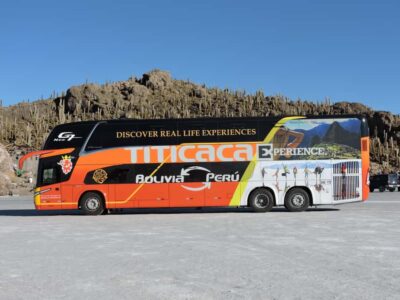

Visit to Uyuni Salt Flats from La Paz Bolivia by Bus
Read our review →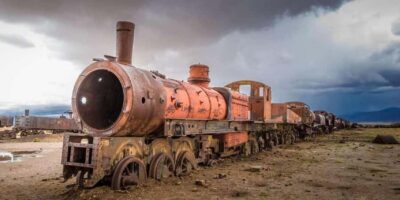
From La Paz: Uyuni Salt Flats Excursion + Round Trip Bus
Read our review →
Titicaca Lake: Highlights Tour from La Paz by Bus
Read our review →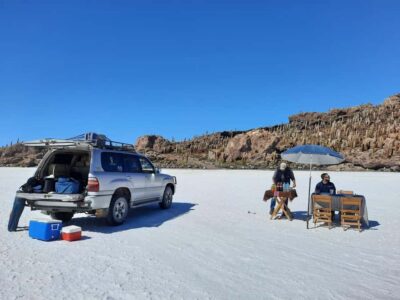
La Paz: Uyuni tour ending in Atacama Chile by bus.
Read our review →Other lists with this bus tour