
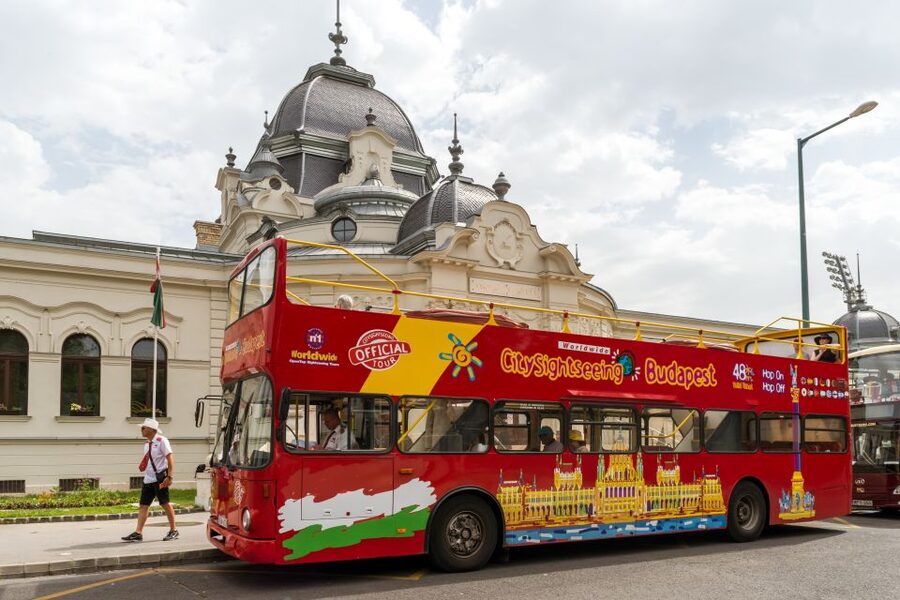
Review · BUS TOURS
Budapest: City Sightseeing Hop-On Hop-Off Bus Tour & Extras
Budapest makes good use of a sightseeing bus. The route crosses both Buda and Pest, then swings past the Parliament, Chain Bridge, Heroes’ Square, the Opera House, Gellert Square, and Castle Garden. I especially like the frequent buses and the freedom to ride the full loop first, then return to the stops that catch your eye. The included walking tour is another strong point, especially with guides such as Claudia and Joan, who have led lively, informative walks.
The main catch is timing. The red route runs from 9am to 5pm, and the full circuit takes about 90 minutes, so you cannot treat the bus like an all-night city shuttle. The route also gives you less help around Fisherman’s Bastion and the upper Castle Hill area, and some buses have scratched side panels, covered roofs, weak microphones, or little air conditioning.
Key points to know before you book

- The 48-hour pass is often the sweet spot: It gives you one day for sightseeing and another for transport, for only a small increase over the one-day option.
- The 11am walking tour fills in the gaps: An English-speaking guide covers St Stephen’s Basilica, Parliament, the Shoes on the Danube Bank, Vaci Street, and the Danube Promenade.
- The red route covers the classic first visit: You can see both sides of the Danube, Andrassy Avenue, Heroes’ Square, the synagogue, Buda Castle, and Margaret Bridge.
- The pass is not a full Castle Hill solution: You still need to handle the hills around Fisherman’s Bastion yourself.
- The audio guide comes in 15 languages: English, Spanish, Turkish, Chinese, Finnish, French, German, Greek, Hebrew, Hungarian, Italian, Japanese, Arabic, Polish, Portuguese, and Russian are available.
- Check the boat terms before booking: The Danube cruise is no longer included for bookings made from December 10 onward, though a reduced HUF 3,500 fare is available with the bus ticket.
A smart first look at Budapest

Budapest is split by the Danube, with flat Pest on one bank and hilly Buda on the other. That makes a bus tour more useful here than in a compact city where you can walk from one sight to the next.
I suggest riding most or all of the red route early in your first day. Keep the map open, note the stops you want, and resist the temptation to get off at every major building. The bus gives you a useful sense of scale. You see how Andrassy Avenue leads toward Heroes’ Square, how the Danube separates the two halves of the city, and how Parliament sits on the Pest riverbank facing Buda.
The service begins at Stop 1, St Stephen’s Basilica, at 9am. The last departure from that stop is at 5pm, and buses generally arrive every 10 to 20 minutes. In practice, some people report intervals closer to 25 minutes, so I would not plan a tight connection to a timed museum entry.
The full red route takes around 90 minutes, though some riders have found the complete circuit closer to an hour and 20 minutes. Traffic can slow things down, especially in central Budapest. That is not entirely bad. A traffic jam gives you extra time to look at the grand façades, but it also means the bus works best as a flexible sightseeing tool, not a precise public transport timetable.
More Hop-On Hop-Off Bus Tours in the world:
- Barcelona: 24 or 48-Hour Hop-On Hop-Off Bus Tour
★ 4.4 · 20,872 reviews - Rome: City Sightseeing Hop-on Hop-off Bus with Audioguide
★ 4.0 · 16,045 reviews - Paris: Tootbus Hop-on Hop-off (Optional River Cruise)
★ 4.3 · 15,279 reviews
The red route, stop by stop
St Stephen’s Basilica and the central Pest streets
Stop 1 at St Stephen’s Basilica is a practical starting point. The basilica is one of central Budapest’s most recognizable buildings, and the surrounding square puts you close to cafes, pedestrian streets, and the walking tour meeting point.
The guided walk starts here every day at 11am, at Szent Istvan ter 1. It lasts about one hour and is conducted in English only. The route covers places the bus cannot explain well from the road, including the basilica, Parliament, the Shoes on the Danube Bank, Vaci Fashion Street, and the Danube Promenade.
The walking guides vary, but Claudia, Joan, Rebecca, and Souvar have all received especially strong praise for their humor, energy, and clear explanations. This is the part of the package that feels most personal. The bus commentary tells you what you are seeing. The walking guide can point out how the sights connect.
Chain Bridge, the Danube, and the Jewish Quarter
Stop 2 is Chain Bridge on the Pest side. The bridge gives you one of the clearest views toward Buda Castle and the hills beyond the river. It is also a useful place to get off if you want to cross the Danube on foot.
Stop 3 at Jozsef Attila Street brings you back into central Pest. Stop 4, Dohany Street Synagogue, is near the Jewish Quarter and the impressive synagogue complex. The Jewish Museum, synagogue, and memorial are among the most important historic sights along the route, but admission is not included in the bus pass.
Astoria appears twice on the route, at Stops 5 and 12, but it is temporarily closed according to the supplied information. Check the current operating status before relying on either stop. The Parisi Passage Cafe at Stop 13 gives you another central point for exploring Pest on foot.
More Sightseeing Bus Tours in the world:
- Barcelona: City Sightseeing Hop-On Hop-Off Bus Tour
★ 4.4 · 10,061 reviews - Rome: Big Bus Hop-on, Hop-off Open-Top Sightseeing Tour
★ 4.1 · 9,537 reviews - City Sightseeing London Hop-On Hop-Off Bus & Bookable Extras
★ 4.4 · 7,374 reviews - Hamburg: Line A Sightseeing Hop-On Hop-Off Bus Tour
★ 4.6 · 6,958 reviews
Andrassy Avenue, the Opera House, and Heroes’ Square
Stops 6 through 9 take you along Andrassy Avenue, past the Hungarian State Opera House and Liszt Ferenc Square, then toward Heroes’ Square. This is one of the most rewarding stretches to view from the upper deck because the broad avenue gives you a better sense of Budapest’s grand urban design.
Stop 7 at the Opera House suits visitors interested in music, architecture, and the polished central streets. Stop 8 at Liszt Ferenc Square is better for a pause among restaurants and cafes. Stop 9 at Heroes’ Square is the obvious place to get off for one of Budapest’s major public spaces.
Give Heroes’ Square time if you want to walk through the nearby City Park area. The bus stop is useful, but the sight itself deserves more than a quick photograph from the vehicle. The route also reaches Keleti Railway Station at Stop 10, a grand transport hub and a handy stop if your accommodation is near the station.
New York Palace and the eastern side of Pest
Stop 11 is New York Palace, another striking building on the Pest side. You can use this part of the route to see how the city’s late 19th-century architecture continues beyond the immediate riverfront.
The bus then returns toward Astoria and Parisi Passage Cafe. Since Astoria is temporarily closed, plan your exit and re-entry around the other nearby stops. The paper map can be useful, but the supplied map and online map have not always matched perfectly. I would check the route on the day rather than assuming every marked stop is operating.
Gellert Square and the Buda riverbank
Stop 14 at Gellert Square brings you to the Buda side. This is a good place to see the river from a different angle and to reach the area around Gellert Hill and its famous thermal bath. The bus gets you close to the lower part of the hill, but it does not replace the climb if you want higher views.
Stop 15 at Castle Garden is one of the better Buda stops. The garden and riverfront setting give you an attractive approach to the castle district. Stop 16 at the Funicular is more directly connected with the climb toward Buda Castle, though the bus pass does not include attraction tickets or necessarily remove the need to queue.
A useful warning: the bus does not cover the upper hills around Fisherman’s Bastion particularly well. You will need to plan your own way around that area. One practical suggestion from the supplied experience is to use the Castle Hill blue car or minibus instead of relying only on the funicular, since the castle district covers a wide area.
Batthyany Square and the northern stops
Stop 17 at Batthyany Square is on the Buda bank and offers a memorable view across the river toward Parliament. This is one of the best places to understand how the city’s two halves face each other.
Stop 18 is Margaret Bridge on the Buda side. It is useful for reaching Margaret Island and for crossing between the two banks, though the exact stop arrangement can change. Stop 19 at WestEnd Shopping Centre is practical if you need shops or a transport connection, but it is less rewarding as a sightseeing stop.
Stop 20 is Parliament. The building’s Gothic Revival façade is one of Budapest’s signature sights, and seeing it from the riverfront gives you a strong reason to get off here. The bus route and the walking tour both serve Parliament, but the walking route is the better choice for the Shoes on the Danube Bank memorial and the promenade.
Why the walking tour matters
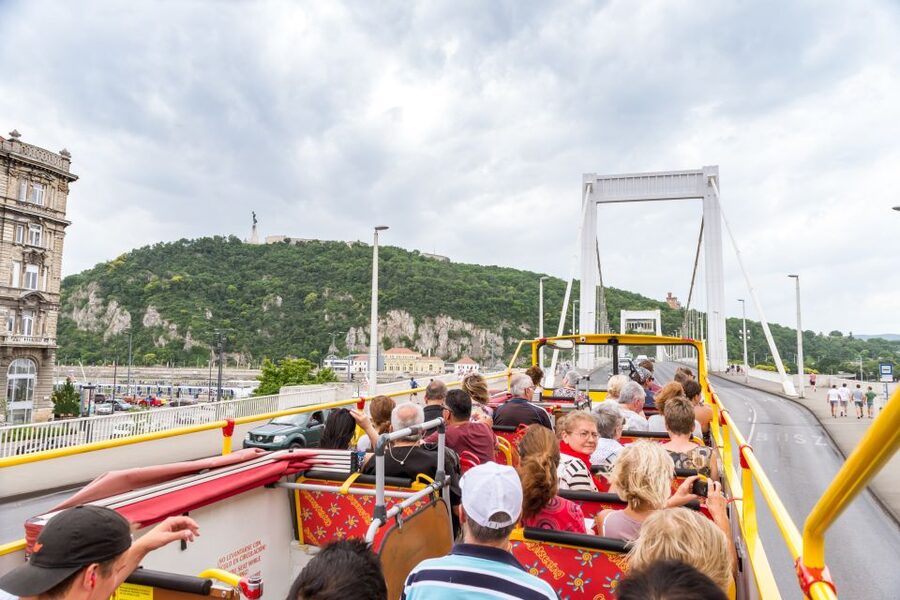
The bus is good at showing you the city. It is less good at showing you how to walk through it.
The one-hour guided walk begins at 11am from St Stephen’s Basilica and covers the central riverfront areas. You will see the basilica, Parliament, the Shoes on the Danube Bank, Vaci Street, and the Danube Promenade. The guide speaks English only, so the walk is not a substitute for the multilingual audio if you need another language.
I would pair the walking tour with the bus rather than choosing one or the other. Take the walk on your first morning, then use the bus afterward to reach Heroes’ Square, Gellert Square, or Castle Garden. The tour gives you context, while the bus saves your feet and helps you connect the scattered sights.
Guides such as Claudia have been praised for keeping a good pace and adding humor without turning the walk into a lecture. Instructions for some additional walks around Buda have not always been clear, so pay close attention to the meeting point printed for your chosen option. The included walk described here begins at St Stephen’s Basilica, not at Buda Castle.
Audio commentary and bus comfort
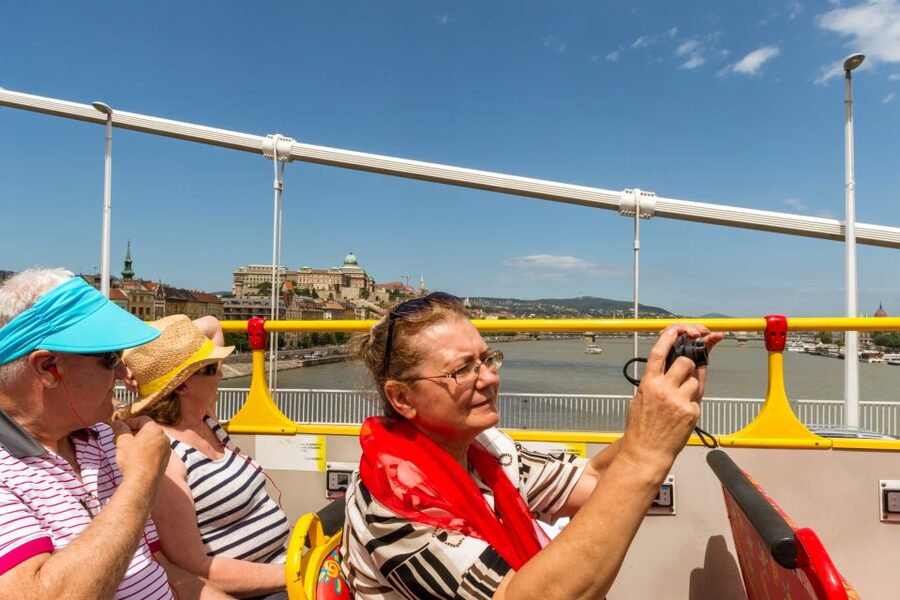
The audio guide is available in 15 languages, which is one of the pass’s more useful features. It lets you learn about the buildings while the bus moves, even when there is no live guide speaking clearly.
Bring or keep the headphones you receive when you first board. You may not receive another pair each time you change buses. The audio works well when the equipment is functioning, but the live announcements from some staff can be hard to hear because of weak microphones.
Bus conditions vary. Some vehicles have open upper decks, while others have roof coverings. On warm days, the covered buses can feel hot, especially when air conditioning is not working. On a sunny day, the upper deck provides better views. On a cold or wet day, the lower deck is more comfortable, though the windows may limit photography.
The buses are wheelchair accessible. Pets are not allowed, except for service dogs, and smoking is prohibited.
The Danube cruise, and an important change
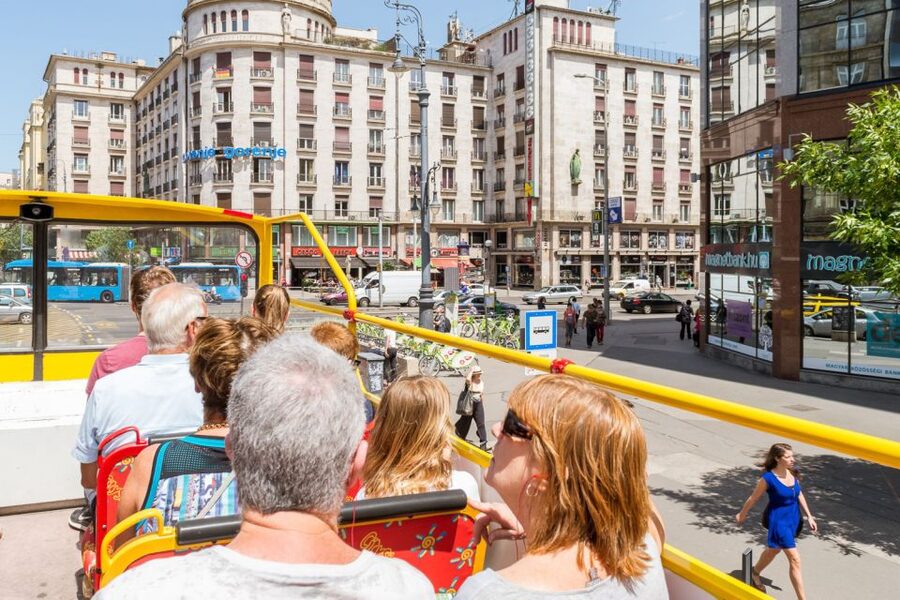
The river cruise has been a popular extra because Budapest often looks best from the Danube. From the water, Parliament, Buda Castle, the bridges, and the hills line up in a way that is difficult to appreciate from street level.
The cruise is described as a one-hour boat trip in the supplied experience. Daylight sailings provide a broad view of the city, while an evening departure can be especially attractive when the buildings are lit. A 9pm sailing has been singled out as a strong choice for illuminated views, when available.
There are some practical limits. The upper-deck seating may be uncomfortable, and indoor seating can fill quickly in bad weather. Commentary on the top deck may also be limited. The cruise is a pleasant extra rather than a replacement for a dedicated sightseeing boat tour.
Most important, check the booking date and current terms. For bookings made from December 10 onward, the boat tour is no longer included. Bus-pass holders can buy a boat ticket for HUF 3,500 rather than HUF 5,000 at the boat departure point. Bookings made before that change are honored with the cruise included.
Is the $41 price good value?
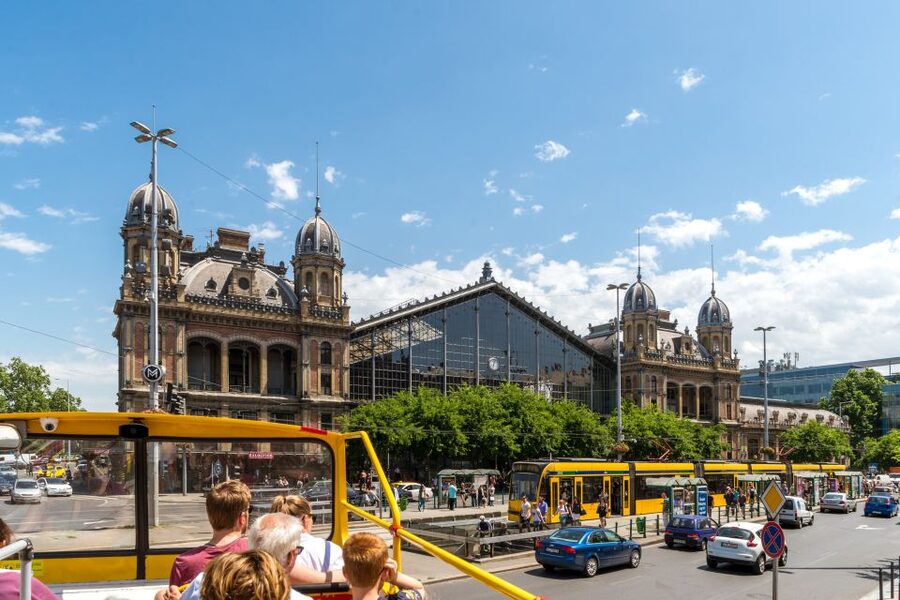
At $41 per person, the one-day pass is reasonable if you plan to ride the route more than once, use the walking tour, and visit several parts of Budapest. It becomes easier to justify with the 48-hour or 72-hour option, particularly if the price difference at booking is small.
A 48-hour ticket is often the best balance. You can use the first day for the full route and major sights, then use the second day as a simple way to reach places you missed. The bus stops running relatively early, so it is not a replacement for the metro, trams, or taxis after 5pm.
The 72-hour option suits a slower visit. You can spend one day in Pest, another around Buda and the river, then use the third day for a second look or transport between stops. The pass starts when you first use it, not automatically at 9am on the selected date. If you board at midday, your 72 hours run from midday.
Attractions such as the Parliament interior, synagogue, museums, and funicular are not included. The discount booklet may reduce the cost of selected attractions, but you should not assume every major ticket is covered.
How to plan your days
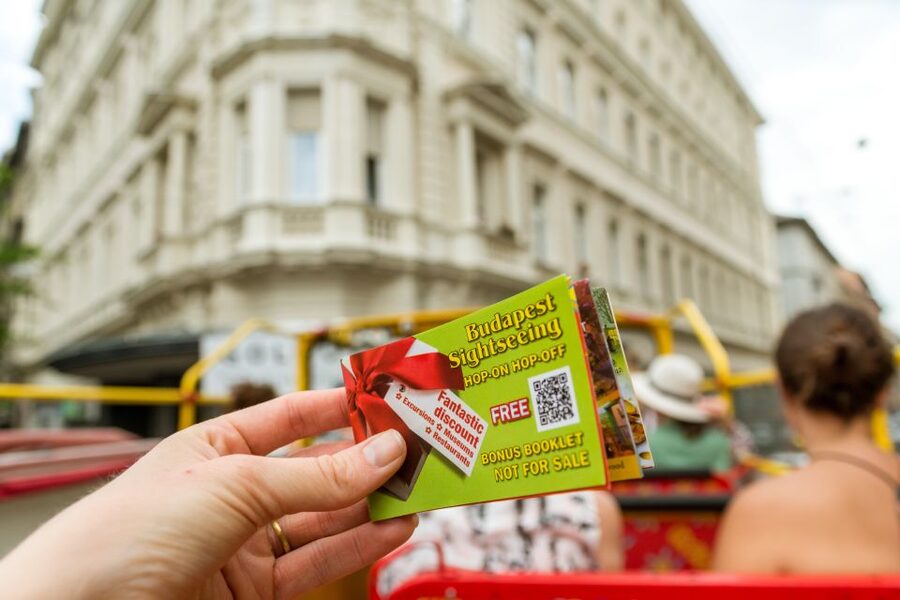
For one day, begin with the 11am walking tour if you can. Afterward, take the red route toward Heroes’ Square, then return through central Pest and cross to the Buda stops. You will see a lot, but you will need to choose only a few places for longer visits.
For two days, use the first day to understand the route. Get off at Parliament, Heroes’ Square, Gellert Square, and Castle Garden, depending on your interests. Use the second day for sights you could not fit in, or simply use the bus as transport between central areas.
For three days, slow down. Spend one day on Pest, one day on Buda and the Danube, and one day revisiting the areas you liked best. This plan also gives you more flexibility if traffic, weather, or crowded boats disrupts your schedule.
The pass can be redeemed with a mobile or printed voucher at any stop on the route. Vouchers are valid on any day within 12 months of the selected travel date, which gives you some flexibility if your plans shift.
Who should choose this tour?
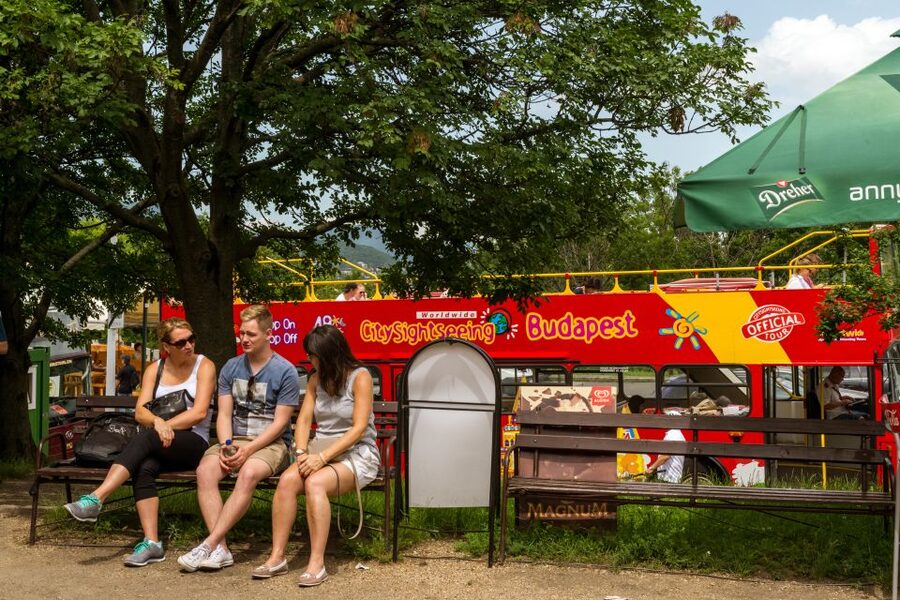
I would choose this bus tour if you are visiting Budapest for the first time, dislike navigating unfamiliar public transport, or want an easy overview before choosing where to spend your time. It also suits anyone who finds long walks difficult, since the city’s sights are spread across both banks and the Buda hills.
It works well for families, older visitors, and anyone visiting during poor weather. The buses offer a warm or covered place to rest between stops, though roof coverage and air conditioning vary.
I would be more cautious if your main goal is Fisherman’s Bastion, Castle Hill, or late-night sightseeing. You will still need another plan for the upper Buda hills, and the bus schedule does not extend far into the evening. The tour also offers less value if you only want a single short ride between two central points.
Should you book it?
Book it if you want a practical introduction to Budapest, plan to see sights on both sides of the Danube, and will use the pass for at least a full day. I would lean toward 48 hours when the supplement is small, since the second day turns the bus into useful transport rather than just a sightseeing loop.
The strongest combination is the bus, the 11am walking tour, and a river cruise if your booking still includes one. Just check the boat terms, confirm the operating stops, and make a separate plan for Fisherman’s Bastion and evening travel. With those limits in mind, this is a solid way to get your bearings and reach the city’s big sights without spending the first days working out every connection.
FAQ
How long is the Budapest hop-on hop-off pass valid?
You can choose a 24-hour, 48-hour, or 72-hour pass. The period begins when you first use the pass, rather than automatically at 9am.
What time does the red bus route operate?
The first departure from Stop 1 at St Stephen’s Basilica is at 9am, and the last departure from that stop is at 5pm. Buses generally run every 10 to 20 minutes, though actual intervals can vary.
How long does the full red route take?
The full circuit takes about 90 minutes. Traffic can make the ride longer, and some schedules describe the loop as around one hour and 20 minutes.
Is the walking tour included?
Yes. The pass includes a one-hour guided walking tour that starts daily at 11am from Szent Istvan ter 1, near St Stephen’s Basilica. The walking tour is narrated in English only.
Which languages are available for the audio guide?
The audio guide is available in Spanish, Turkish, Chinese, English, Finnish, French, German, Greek, Hebrew, Hungarian, Italian, Japanese, Arabic, Polish, Portuguese, and Russian.
Is the Danube cruise included?
The boat tour is no longer included for bookings made from December 10 onward. You can buy a reduced boat ticket for HUF 3,500 instead of HUF 5,000 by showing your bus ticket at the boat departure point. Earlier bookings are honored with the cruise included.
Can wheelchair users use the buses?
Yes. The buses are wheelchair accessible. Pets are not allowed, but service dogs are permitted.
Just joined the route map around the world
- San Pedro de Atacama: Vallecito + Magic Bus★ 5.0 · 4 reviews
- Santander: City Sightseeing Hop-On Hop-Off Bus Tour & Train★ 4.3 · 170 reviews
- Santiago: 1-Day Hop-On Hop-Off Bus and Cable Car Ticket★ 4.3 · 332 reviews
- San Francisco: Sightseeing Sunset Tour by Open-Top Bus★ 4.4 · 105 reviews
- San Francisco: Movie Filming Locations Bus Tour★ 4.9 · 368 reviews
- San Fransisco: Vintage VW Bus Wine Country Tour Small Group★ 5.0 · 5 reviews
- San Francisco: Hop-On Hop-Off Tour with Optional Night Tour★ 4.5 · 94 reviews
- SF: Napa & Sonoma Wine Tour & Hop-on Hop-off Tour (Save 15%)★ 4.5 · 2 reviews