
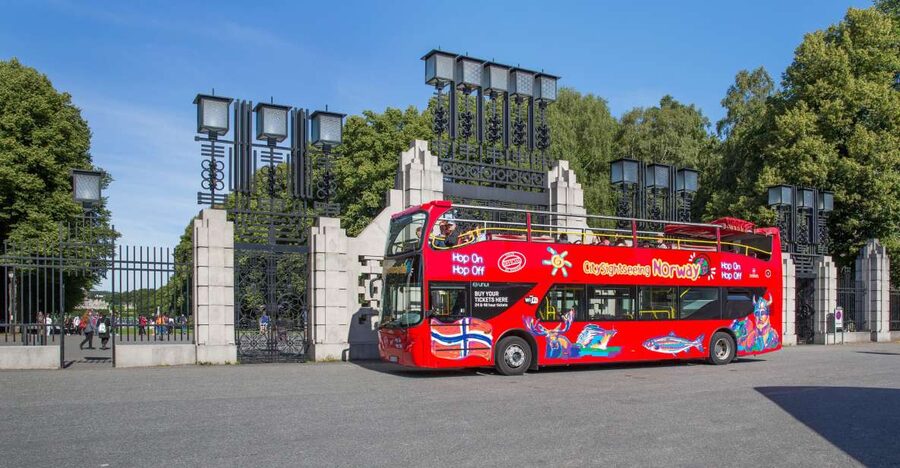
Review · NORWAY
Oslo: Best of Oslo Walking Tour and Hop-on Hop-off Bus Tour
Oslo’s story comes together best on foot, and this package starts there. You walk through the modern center, old Christiania, Karl Johan Street, and the area around the Nobel Peace Prize Center before using a double-decker bus to reach sights farther apart. I especially like the mix of local history and easy sightseeing. You get the city’s main landmarks without spending the whole day figuring out public transport.
I also like that the pass includes a self-guided Vox City app, which lets you keep exploring after the live walk. The main caution is the bus capacity: cruise ship crowds can fill buses before they reach the University stop, so you may face a long wait even with a valid ticket.
Key points to know
- Christiania explains Oslo’s changing identity: Learn why the capital carried that name for about 300 years and where the original city center was located.
- The walking tour covers central Oslo efficiently: See the Parliament, Grand Hotel, Karl Johan Street, Oslo Cathedral, City Hall, and other key sights.
- A 24-hour bus ticket adds reach: Ride between more than 11 stops for views of attractions such as the Viking Ship Museum and Kon-Tiki Museum.
- The Nobel Peace Prize gets proper attention: The tour explains why Oslo hosts this award, the only Nobel prize presented outside Sweden.
- The Vox City app extends the day: Use the included self-guided routes for places such as Frogner Stadion, Trinity Church, and Aamodt Bridge.
- Bus timing needs planning: Service is listed from 10 a.m. to 4 p.m., and full buses may be a problem at the University stop.
Starting at the University Aula in central Oslo

The experience begins at the University Aula, near the statue of P.A. Munch. This is also Stop 1 on the City Sightseeing bus route, so it gives you a useful base for both parts of the package.
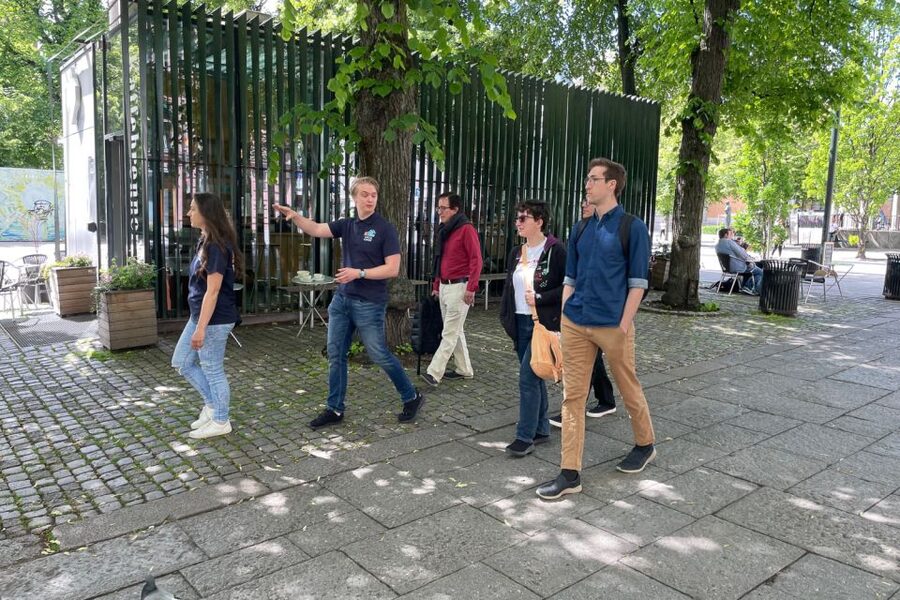
Look for a guide wearing a dark blue Vox City Walks uniform. The live tour is offered in English and Norwegian. The exact guide name is not provided, so I would not book this expecting a particular host. The important thing is the format: a human-led walk first, followed by a flexible bus circuit and app-based sightseeing.
You can also board the bus at any designated City Sightseeing stop around Oslo. That flexibility matters if you arrive late, are staying near another stop, or want to use the bus before the walking tour. Still, the walking tour’s meeting point is the clearest place to begin because it puts you near several central sights.
More Hop-On Hop-Off Bus Tours in Norway
- Oslo: 24 or 48-Hour Hop-On Hop-Off Sightseeing Bus GrayLine
★ 4.0 · 2,088 reviews - Northern Lights Big Bus Chase with Chasing Lights
★ 5.0 · 1,631 reviews - Ålesund: 1-Day Hop-On Hop-Off Sightseeing Bus GrayLine
★ 4.0 · 795 reviews
Walking through Karl Johan Street and the city center
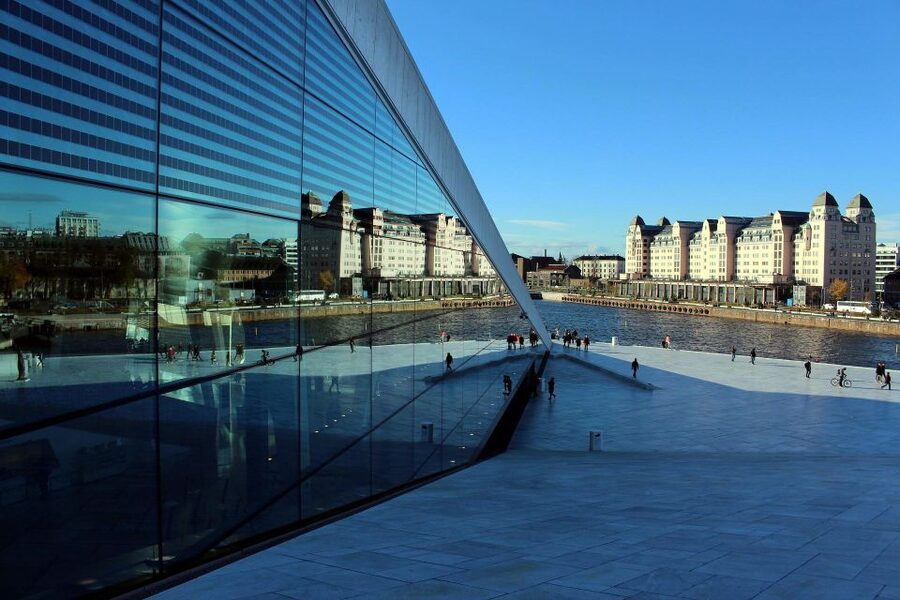
The Best of Oslo walk circles Sentrum, the city center by the Skagerrak. This is a compact introduction to Oslo’s public buildings, main shopping street, old squares, and waterfront connections.
You pass the Norwegian Parliament, the Grand Hotel, and Karl Johan Street, Oslo’s principal avenue. The route also includes the National Theater, the University of Oslo, Oslo Cathedral, Stortorvet, Glasmagazinet, and the old district known as Kvadraturen.
I like this part because it gives you the basic map of central Oslo quickly. You are not simply ticking off buildings. You are learning how the capital is arranged, where civic life takes place, and how the historic center relates to the newer waterfront.
The list of stops includes a fire tower, the Tiger sculpture, Oslo’s Second City Hall, the Gamle rådhus, and the Ceremony Pier. Some are major landmarks, while others are short visual clues to the city’s past. That mix keeps the walk from feeling like a parade of grand buildings.
The tour also explains Oslo’s nickname, the Tiger City. You will hear the story behind that name as you move through the center. This is a small detail, but it gives the city a personality beyond its museums and official buildings.
Understanding Christiania, Oslo’s original center
Christiania is one of the most useful parts of the walk for anyone who wants more than postcard views. The tour covers the historical center of Oslo and explains why the Norwegian capital changed its name for roughly 300 years.
That name change is easy to miss if you explore independently. A sign or museum label may give you a date, but a guide can connect the old name to the city’s development and its central streets. The walk treats Christiania as part of Oslo’s living layout, not as an isolated history lesson.
You will also hear about Kvadraturen, the old grid-shaped district. Its name refers to the regular street plan, and the area helps explain how the city was rebuilt and organized. The route includes the old City Hall, or Gamle rådhus, and other central landmarks tied to Oslo’s civic past.
This is where the walking portion earns its keep. The bus can show you plenty of buildings, but it cannot replace the sense of direction you gain by walking through the older quarters with an explanation in front of you.
The Nobel Peace Prize Center and the Ceremony Pier
The Nobel Peace Prize is one of Oslo’s defining international connections. The tour explains the award and why this prize is presented in Oslo, while the other Nobel prizes are awarded in Sweden.
You pass the Nobel Peace Prize Center and the Ceremony Pier, two places that help connect the city with the annual award ceremony. The visit does not include admission to attractions, so you should think of this as an exterior introduction and a chance to understand the setting.
That distinction matters. If you want exhibitions inside the Nobel Peace Prize Center, you will need to arrange and pay for entry separately. The walking tour is better suited to a first orientation, especially if your schedule is tight and you want to know which museums deserve a later visit.
The same rule applies to the other museums named on the route. The ticket helps you locate them and hear about them, but it does not cover entry.
Same streets, a different ride:
- Tromsø: Northern Lights Bus Tour with Free Photography
★ 4.5 · 1,642 reviews - Tromso: Northern Lights Chase with Photo Package Included
★ 4.3 · 1,091 reviews - Tromso: Northern Lights Photography Tour by Bus (or miniBus)
★ 4.3 · 809 reviews - Oslo: City Sightseeing Hop-On Hop-Off Bus Tour
★ 3.6 · 724 reviews
Seeing the Opera House and waterfront from the streets
Oslo’s Opera House is one of the most recognizable modern sights in the city. The tour presents it as a symbolic building by the water, with a design that invites attention from the surrounding waterfront.
You also pass Aker Brygge, a popular harbor district with restaurants, bars, and places to sit near the water. This is a useful contrast to Christiania and the government quarter. In a short walk, you move from old city history to Oslo’s modern public spaces.
The walking route also covers Oslo City Hall and the second City Hall, giving you a look at the city’s civic buildings. You will see how central Oslo combines government, culture, shopping, dining, and waterfront recreation in a relatively small area.
I would take note of places you want to revisit. The tour gives you a broad introduction rather than long stops at every landmark. Aker Brygge and the Opera House are especially easy to return to on your own after the guided walk.
Using the double-decker bus for the wider city
The included bus ticket is valid for 24 hours from first activation, while the overall activity is described as valid for one day from activation. The practical point is simple: activate it when you are ready to use it, not automatically at the first possible moment.
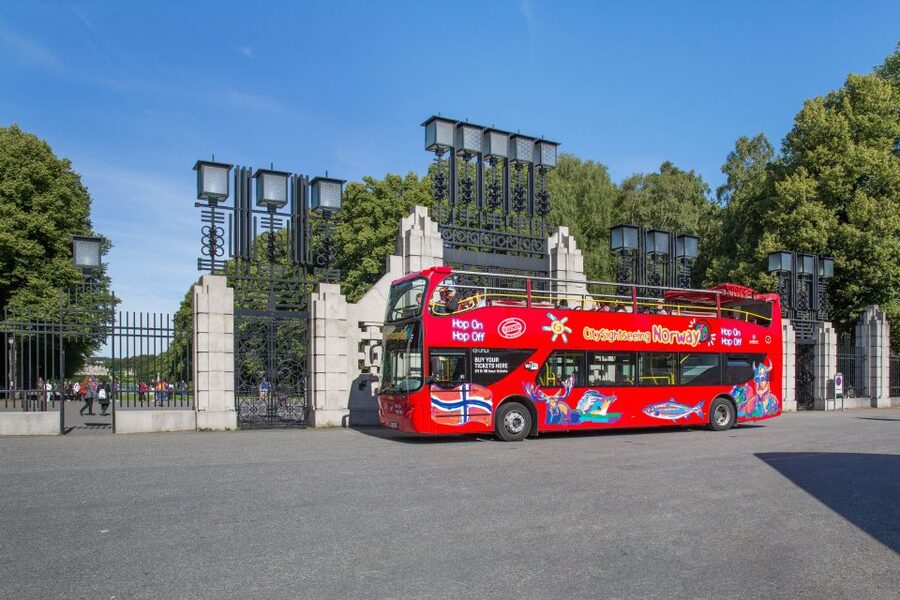
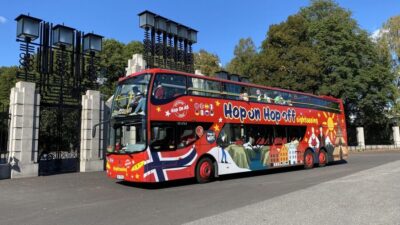
The City Sightseeing route has more than 11 stops around Oslo. From the open upper deck, you get a broad view of streets and landmarks without walking between every district. The onboard audio guide is available in English, French, German, Spanish, and Italian.
The bus route is useful for attractions beyond the compact center. It includes information about the Kon-Tiki Museum, the Viking Ship Museum, and the Cultural History Museum. You can also use it to reach the area around Frogner, although the supplied details do not promise admission or a guided visit inside any museum.
The bus is a good choice when your legs need a break, the weather turns poor, or you want a quick first look at Oslo’s wider layout. The upper deck should provide the best panoramic view, but the package does not guarantee a particular seat or level.
The main bus problem: full vehicles at the University stop
This is the biggest practical warning. The University stop is the stated starting point, but cruise ship passengers may board earlier and fill buses before they arrive there.
A visitor reported waiting at the University for a full hour after being told the next bus would arrive in 10 minutes. The buses were already full, and passengers with confirmed bookings could not board. This is not a small inconvenience if you have museum reservations or a train to catch.
I would avoid building your whole day around one precise bus departure. If possible, try another designated stop, allow plenty of spare time, and consider taking the walking tour first. The bus schedule is listed as roughly 10 a.m. to 4 p.m., but you should check the current operator information before setting out because hours can change.
This capacity issue does not erase the value of the ticket, but it changes how you should use it. Treat the bus as a flexible sightseeing tool, not a guaranteed point-to-point service at an exact time.
Adding more routes with the Vox City app
The included Vox City mobile app adds self-guided routes after the live portion ends. Scan the QR code on your voucher to download it and gain access to the routes.
The listed self-guided sights include Frogner Stadion, the Norwegian Parliament, Trinity Church, Karl Johan’s monument, Grensen, and Aamodt Bridge. These stops broaden the experience beyond the central walking route and give you another way to explore at your own speed.
The app is useful if you prefer to pause for photos, stop for lunch, or skip a sight that does not interest you. It also gives you something to use if the bus is too full. The audio guide supports English, French, German, Spanish, and Italian, making it helpful for visitors who do not want to rely on the live tour language.
Do not expect the app to replace every museum visit. It supplies routes and commentary, while attraction admission, food, drinks, and public transport remain separate.
What the $82 price really buys you
At $82 per person, this is not a cheap way to ride a city bus. Its value depends on using all three parts: the guided walk, the 24-hour bus ticket, and the app.
The walking tour is the strongest piece for a first visit. It covers central Oslo, Christiania, the Nobel Peace Prize setting, the Parliament, Karl Johan Street, the Opera House, and the waterfront in one organized outing. If you paid for separate sightseeing options, the total could easily approach this price, but the comparison depends on local prices and how much walking you would otherwise do.
The bus adds value if you plan to visit several outlying sights or want a break from walking. It adds less value if you are staying in central Oslo and prefer to use ordinary public transport. Public transportation tickets are not included, so budget for those if you leave the sightseeing route.
Entry to attractions is also not included. If the Viking Ship Museum, Kon-Tiki Museum, or Nobel Peace Prize Center is a main reason for your visit, treat this package as transport and orientation rather than a museum pass.
I see the best value for a first-time visitor with one open day, especially someone who wants both a guide and a simple way to cover more ground. The value is weaker if you mainly want interior museum visits or need a bus service that runs to a strict timetable.
Who should book this Oslo combination?
I would recommend it to you if you want a quick introduction to Oslo and like mixing walking with riding. It suits first-time visitors, short city breaks, cruise passengers with a free day, and anyone who wants the main sights explained without arranging several separate tours.
It also works well for mixed groups. One person can enjoy the history walk, another can use the bus for a wider view, and everyone can return to central sights later with the app.
I would be more cautious if you have limited mobility, a tight schedule, or fixed museum bookings. The walking route covers a number of central sights, and the bus may not take the next passenger if it is full. You should also check the current route hours before committing your only Oslo day to this plan.
Final verdict: useful orientation, imperfect bus logistics
This is a practical way to meet Oslo in one day. The guided walk supplies the context that a bus loop cannot, especially around Christiania, the Nobel Peace Prize, Karl Johan Street, and the city’s public buildings. The bus and app then let you widen your range without planning every turn yourself.
I would book it if the walking tour is your priority and you see the bus as a bonus rather than a guaranteed shuttle. Start early, allow spare time, download the app before you need it, and check the current bus hours. With those precautions, the package offers a solid first look at Oslo. Without them, a full bus at the University stop could turn a convenient sightseeing plan into a long wait.
FAQ
Where does the walking tour begin?
The walking tour begins at the University Aula, near the statue of P.A. Munch. The guide wears a dark blue Vox City Walks uniform.
Can I board the sightseeing bus somewhere other than the University Aula?
Yes. You can board at any designated City Sightseeing stop around Oslo. The University Aula is also Stop 1 on the bus route.
How long is the hop-on hop-off ticket valid?
The ticket is valid for 24 hours from first activation. The activity itself is listed as valid for one day from activation.
What languages are available on the walking tour?
The live guide speaks English or Norwegian. The included audio guide is available in English, French, German, Spanish, and Italian.
Does the price include museum admission?
No. Entry to attractions is not included. This applies to the Nobel Peace Prize Center, Viking Ship Museum, Kon-Tiki Museum, and other museums along the route.
Is public transportation included?
No. Public transportation tickets are not included in the package.
What are the sightseeing bus operating hours?
The listed operating hours are from 10 a.m. to 4 p.m. Check the City Sightseeing Oslo website for the latest schedule before you go.
How do I use the included Vox City app?
Scan the QR code on your voucher to download the Vox City app. It provides self-guided routes and audio content for additional Oslo sights.
Just joined the route map around Norway
- Oslo: Guided Oslo Highlights Tour by bus & Oslofjord cruise★ 4.5 · 157 reviews
- Geiranger: Panorama Bus Tours 1,5/2hr (Highlights viewpoint)★ 4.5 · 24 reviews
- Molde: Atlantic Ocean Road & Varden Audio Guide Bus Tour★ 4.1 · 473 reviews
- Kristiansand: Guided Bus Tour and Moose Park Experience★ 4.8 · 33 reviews
- Haugesund: City Sightseeing Hop-On Hop-Off Bus Tour★ 3.7 · 116 reviews
- Haugesund: 1-Day Hop-On Hop-Off Sightseeing Bus GrayLine★ 3.9 · 163 reviews
- Geiranger to Ålesund Bus Tour (one way)★ 4.3 · 4 reviews
- Geiranger Dalsnibba: mini bus tour★ 4.3 · 83 reviews
Norway Bus Tours, side by side.
Oslo: 24 or 48-Hour Hop-On Hop-Off Sightseeing Bus GrayLine
Read our review →
Tromsø: Northern Lights Bus Tour with Free Photography
Read our review →
Northern Lights Big Bus Chase with Chasing Lights
Read our review →
Tromso: Northern Lights Photography Tour by Bus (or miniBus)
Read our review →
Ålesund: 1-Day Hop-On Hop-Off Sightseeing Bus GrayLine
Read our review →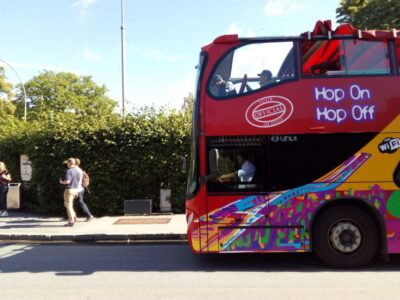

Oslo: Grand City Sightseeing Tour by Bus with Fjord Cruise
Read our review →
Bergen: Nærøyfjorden, Flåm, and Stegastein Guided Bus Tour
Read our review →Other lists with this bus tour