

Review · GREECE
Naxos Highlights Bus Tour with Free Time for Lunch at Apeiranthos
Naxos saves some of its best moments for the mountain roads. This full-day tour links the Temple of Demeter, old villages, a pottery workshop, an olive press, Apollonas Beach, and an unfinished marble Kouros in one well-planned loop. I like the way it lets you see rural Naxos without renting a car, and I like the mix of guided visits and free time. The main drawback is the long ride on narrow, twisting roads, so take motion-sickness medicine if you need it.
I also like the practical pickup service from the beach resorts and Naxos Town. Guides including Thanos, Alex, and Angeliki are praised for clear English, island stories, and friendly help, while drivers such as Vasilis and Spiros handle the mountain bends with care. The day is tightly timed, though, and a large group can make it easy to miss part of a talk if you arrive late at a stop.
Key points at a glance
- A full island sampler: Cover six very different places in about eight hours, from an ancient sanctuary to a fishing village.
- A useful car-free choice: Hotel-area pickup and an air-conditioned bus save you from narrow roads and difficult parking.
- Real village time: Shop, stroll, and eat at Chalki and Apeiranthos instead of only looking out the bus window.
- A taste of local craft: See traditional pottery in Damalas and an old olive-oil press.
- Bring cash and swimwear: Demeter’s Temple costs €5 in cash, and Apollonas offers time for a quick swim.
- Expect mountain motion: Much of the route uses winding roads, hairpin turns, and steep bends.
Why this Naxos bus tour works so well
Naxos is easy to underestimate from the waterfront. Chora has the famous Portara and a handsome old town, but the island’s character changes quickly once you head inland. Whitewashed villages give way to mountain roads, marble lanes, olive groves, old churches, and broad views across the island.
This tour gives you that wider picture in one day. For $42.33 per person, you get roughly eight hours of transport, an English-speaking local escort, and stops that would be difficult to combine by public bus. You still pay for your own food, drinks, and entrance tickets, but the basic price is strong for anyone who does not want to drive.
The tour is also a sensible first full day on Naxos. It helps you understand the island’s size and terrain before you decide where to spend the rest of your holiday. You get ancient sites, village life, food, craft, and coastline rather than a day built around one monument.
The tradeoff is pace. You will not have hours in any single village. This is a sampler, not a slow village stay. I would choose it for orientation and variety, then return independently to one or two places that catch your attention.
More bus tours with a meal around Greece:
- Naxos: Highlights Bus Tour with Free Time for Lunch and Swim
★ 4.8 · 1,434 reviews - Kefalonia: Island Highlights Bus and Boat Tour with Lunch
★ 4.6 · 35 reviews - Heraklion:Gramvousa & Balos Bus and Boat tour with Lunch .
★ 3.9 · 19 reviews
Demeter’s Temple, a quiet start among olive trees

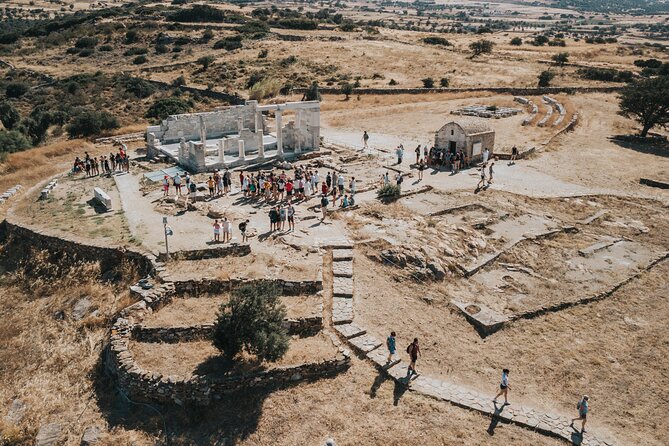
The first stop is the 6th-century Temple of Demeter, one of Naxos’ most important ancient sites. From the entrance, you walk uphill through a garden before reaching the sanctuary. The setting gives the visit a calmer feel than a major city monument, and the short walk is part of the experience.
Admission is not included. You pay €5 per person in cash at the gate. Your guide explains the sanctuary’s background before you enter, but the guide is not licensed to provide commentary inside the temple grounds. You then have time to look around and visit the small on-site museum.
That distinction matters. If you expect a guide beside you explaining every stone inside the monument, you may be disappointed. If you are happy to receive the main context first and then explore on your own, the arrangement works well.
Demeter’s Temple is closed on Tuesdays and May 1. On those dates, the operator gives you more time in Chalki and Apeiranthos instead. Check the day of your booking before you count on the temple, and carry the required cash either way.
Damalas pottery and the old olive press
Damalas is a small village, and the stop shifts the focus from ancient religion to working island traditions. At a traditional pottery workshop, Manolis welcomes the group and demonstrates old methods of making ceramics. This is one of the most personal parts of the day because you see an individual craft rather than a large formal attraction.
The visit lasts about 30 minutes, so expect a demonstration and a short chance to look at the work. You might find something to buy, so a small tote bag is useful. One person who took the tour planned to carry very little and ended up shopping more than expected.
After the pottery workshop, you visit a restored olive press museum. The guide explains how olive oil was once produced, giving you a practical look at an industry that shaped everyday life on Greek islands. I like this pairing because the two visits show skills tied to ordinary village life, not only famous monuments.
This stop is also a good break from the bus. The day includes plenty of road time, and a compact visit with a local craftsperson adds warmth to the schedule.
Chalki, Venetian architecture and free time

The next stop is Chalki, an old commercial center with Venetian buildings, small shops, ceramic galleries, and local products. You get about 45 minutes to explore without the group moving as one.
The village is a good place to use your free time selectively. You can walk the streets, browse pottery, pick up food products, or visit Vallindras distillery, the island’s oldest distillery. The optional Kitron distillery visit costs €3 per person. That fee is separate from the tour, and the visit may not fit comfortably if you want time for shopping and a relaxed walk.
Chalki rewards a little independence. Listen carefully to the guide’s meeting instructions, then choose what interests you. If you want a drink or a browse through the shops, 45 minutes goes quickly. If the distillery is your priority, make it your first stop.
The visit also gives you a taste of Naxos’ Venetian past without turning the day into a lecture. The architecture is easy to appreciate while walking, and the village feels different from the more rugged highland stops later in the route.
More bus tours around Greece:
- Athens, Piraeus, and Coastline: Blue Hop-On Hop-Off Bus
★ 3.9 · 4,849 reviews - Athens: City Sightseeing Hop-On Hop-Off Bus Tour
★ 4.3 · 4,520 reviews - Thessaloniki: Full-Day Bus Trip to Meteora
★ 4.8 · 3,471 reviews - Santorini: Traditional Sightseeing Bus Tour with Oia Sunset
★ 4.6 · 2,306 reviews
Apeiranthos, marble lanes and lunch

Apeiranthos is the longest village stop, with about 90 minutes for lunch and a walk. Built at the foot of Fanari mountain, it is known for marble-paved alleys, Venetian towers, verandas, traditional shops, and mountain views.
This is where the schedule gives you the most room to slow down. You choose your own taverna and pay for lunch directly. Two local dishes to look for are rosto and kalogiros. The tour does not include a meal, so check prices and allow enough time to order, eat, and reach the meeting point.
I would treat lunch as part of the cultural experience rather than a quick refueling stop. Apeiranthos has a strong village feel, and eating local food here adds something a roadside café cannot. Still, 90 minutes is not generous if you want a long meal, shopping, and a full walk. Choose your priorities before sitting down.
The marble lanes can be uneven, and the village is built on a slope. Wear shoes suited to walking rather than beach sandals. The climb is not presented as a major hike, but you will be on foot and moving through an old mountain settlement.
The mountain drive to Apollonas
The route then heads north past Koronos and the island’s old emery mines. The drive is one of the most scenic parts of the day, but it is also where motion-sensitive passengers may struggle.
Expect narrow mountain roads, switchbacks, hairpin turns, and tight corners. Experienced drivers such as Vasilis and Spiros receive repeated praise for managing the route calmly, and the air-conditioned bus makes the long ride more comfortable. Even so, careful driving cannot remove the curves.
Take motion-sickness tablets before departure if you need them, not after you feel ill. Sit where you usually feel most stable, keep water close, and avoid a heavy meal immediately before the steepest sections. The guide may share stories and mythology during the journey, though the amount of commentary can vary by guide and by how busy the day is.
This is a place where expectations matter. You are not buying a gentle coastal sightseeing ride. You are crossing the mountainous center and north of Naxos, which is exactly why the tour reaches villages and sites that are hard to connect without a car.
Apollonas Beach and the ancient Kouros

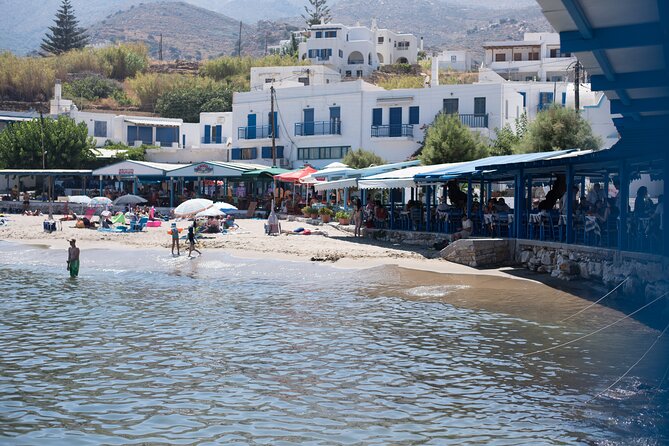
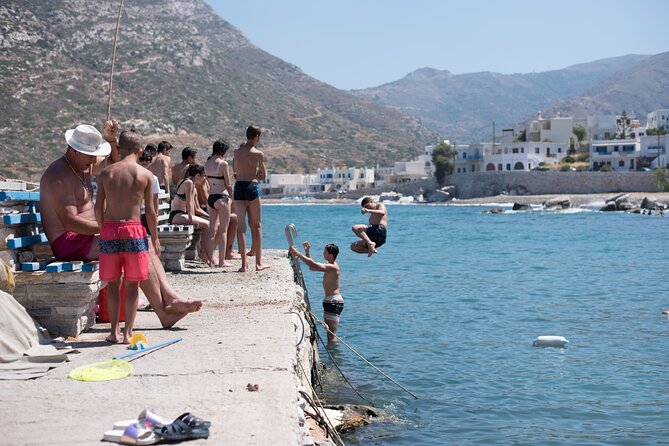
Apollonas is a small fishing village on the coast, and the 45-minute stop gives you time for a quick swim, coffee, or dessert beside the sea. Bring swimwear under your clothes if you want to use the water. The stop is short, so do not count on a long beach session.
I like the contrast here. After marble villages and mountain roads, you get an open coastal pause. You can keep it simple: walk near the shore, have a drink, or cool off before the final site.
The last stop is the Apollonas Kouros, an unfinished marble statue about 11 meters long. It has remained in the same place for more than 2,500 years. The visit lasts only about 15 minutes, but the sight is unusual because the ancient work was abandoned where it began.
Do not expect a polished museum display. The Kouros lies at the quarry site, and its unfinished state lets you see the scale and process of ancient marble carving. The short visit works well at the end of a long day, although anyone who wants extended archaeological commentary may find the time brief.
Guides, buses and the feel of the day
The experience depends heavily on the guide. Thanos is often described as entertaining, clear, and generous with stories about Greek mythology. Alex is praised for combining humor with useful facts, while Angeliki is noted for friendly explanations and strong English. The guide may also help you with practical questions during free time.
The driver matters just as much. Naxos’ roads can be narrow, steep, and awkward for anyone unused to island driving. A careful professional driver lets you pay attention to the views instead of worrying about each bend.
The vehicle is air-conditioned, an important detail during a long Greek summer day. The group can reach up to 49 people, so this is not a small private outing unless you upgrade to a private tour. At busy stops, get off the bus promptly and listen for the meeting time. A few minutes lost at the start can mean missing part of a talk or reducing your free time.
The schedule generally runs like clockwork, but you should accept a little variation. The tour operates in rain or shine, and rough weather can lead to small itinerary changes. It also begins and ends at the Naxos Bus Transfer office near the port, with pickup available from central places in Plaka, Maragkas, Agia Anna, Agios Prokopios, Stelida, and Naxos Town.
Pickup times run from 8:35 in Plaka to 9:05 at the port office. Be at your stated pickup point five minutes early. If your accommodation is not close to one of the listed areas, contact the operator for the most convenient meeting point.
What to bring and what to budget
The base price is $42.33 per person. For an eight-hour island tour with transport and a local English-speaking escort, that is good value, especially if you would otherwise need to rent a car or arrange several separate transfers.
Budget extra money for:
- €5 cash for Demeter’s Temple
- €3 for the optional Kitron distillery visit
- Lunch in Apeiranthos
- Drinks, coffee, dessert, and personal purchases
- Any pottery, ceramics, or local products you choose to buy
Bring water, sun protection, comfortable walking shoes, and a small bag for purchases. Add a swimsuit and towel if a swim at Apollonas sounds appealing. Motion-sickness medicine is the most important extra for anyone affected by winding roads.
Free cancellation is available if you cancel at least 24 hours before the start time. Changes or cancellations inside that window are not accepted for a refund.
Who should book this Naxos tour?
I would recommend it to you if you want a broad introduction to Naxos, do not want to drive, or have only one free day for the island’s inland villages. It suits couples, solo visitors, and families who can manage a full day with several short stops.
It is also a strong choice for history and mythology fans, food-focused visitors, and anyone curious about pottery, olive oil, marble, and rural Greek life. The mix is the main strength. You are not spending eight hours on one type of attraction.
I would think twice if you dislike winding roads, need a slow pace, or want several hours at the beach. You may also prefer a private tour if your group wants to change the schedule, linger over lunch, or spend longer at specific sites.
For most first-time visitors, I would book it early. The tour is commonly reserved well in advance, and its 97 percent recommendation rate with a 4.8 rating from 1,215 reviews reflects a very dependable day out. Just remember what you are buying: a busy but rewarding island overview, not a leisurely village holiday.
FAQ
How long does the Naxos Highlights Bus Tour last?
The tour lasts approximately eight hours and ends back at the meeting point near Naxos Port.
What is included in the tour price?
The price includes an experienced English-speaking local escort and transportation in an air-conditioned vehicle.
Is hotel pickup available?
Pickup and drop-off are available from central places in Plaka, Maragkas, Agia Anna, Agios Prokopios, Stelida, and Naxos Town. You can also meet the bus at the Naxos Bus Transfer office outside the port.
How much does entry to Demeter’s Temple cost?
Admission costs €5 per person and must be paid in cash at the site. The fee is not included in the tour price.
Is the Kitron distillery visit included?
The distillery visit is optional and costs €3 per person. That fee is not included.
What happens if Demeter’s Temple is closed?
The temple is closed on Tuesdays and May 1. On those dates, the tour provides more free time in Chalki and Apeiranthos.
Is lunch included?
No. You receive free time to choose and pay for lunch in Apeiranthos. Local dishes to look for include rosto and kalogiros.
Are the mountain roads difficult?
A large part of the route uses winding, mountainous roads with narrow sections and hairpin turns. Motion-sickness tablets are recommended if you are sensitive to this type of driving.
Just joined the route map around Greece
- Samos: Full-Day Guided Island Bus Tour★ 4.0 · 8 reviews
- Rhodes: Combo Ticket – Hop On Hop Off Bus & Submarine Cruise★ 3.9 · 9 reviews
- Rhodes: Hop-on Hop-off Bus and Submarine Tour★ 4.1 · 199 reviews
- Rhodes: Lindos by night – Bus tour with free time to explore★ 4.3 · 17 reviews
- Rhodes: Butterfly Valley and Filerimos Hill Bus Trip★ 4.4 · 196 reviews
- Rhodes: Butterfly Valley Half-Day Bus Trip★ 4.3 · 351 reviews
- Piraeus City tour hop on hop off mini train★ 3.5 · 18 reviews
- From Paros: Paros Island Bus Tour and Boat Trip to Antiparos★ 4.6 · 28 reviews
Greece Bus Tours, side by side.

Athens, Piraeus, and Coastline: Blue Hop-On Hop-Off Bus
Read our review →
Athens: City Sightseeing Hop-On Hop-Off Bus Tour
Read our review →

Santorini: Traditional Sightseeing Bus Tour with Oia Sunset
Read our review →
City Sightseeing Athens, Piraeus & Beach Riviera Hop-On Hop-Off Bus Tours
Read our review →

Naxos: Highlights Bus Tour with Free Time for Lunch and Swim
Read our review →
Other lists with this bus tour