

Review · BUS TOURS
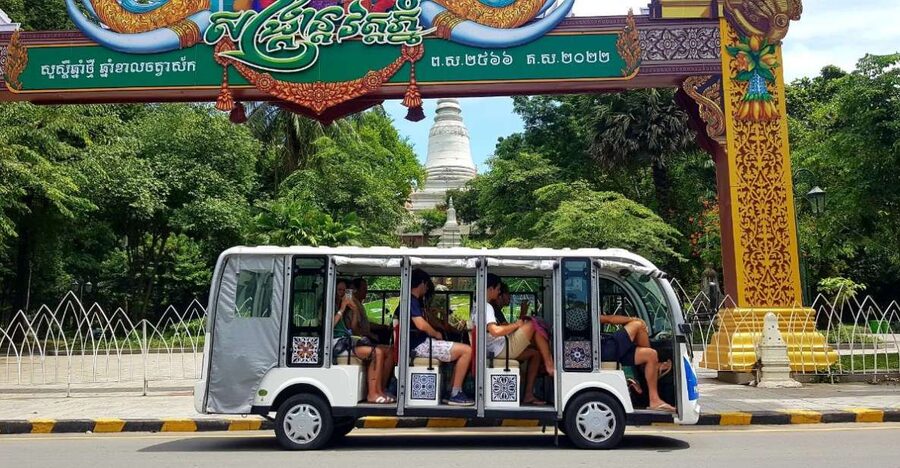
Heritage tour of Phnom Penh in electric bus
Phnom Penh’s past comes into focus on this 2.5-hour electric bus tour, which links royal, colonial, religious, artistic, and painful chapters of Cambodian history. You visit 19 stops connected with 22 major sites, while tablet videos show old photographs, films, and even virtual interiors that you cannot normally enter.
I especially like the three walk-in visits, including an Hokkien temple, the National Library, and the Royal University of Fine Arts. I also like the gentle pace in a city where heat and traffic can wear you down quickly. The main consideration is that this is an overview, not a full museum tour, so you will want extra time afterward for the Royal Palace, museums, or riverside.
Key points at a glance
- 19 stops and 22 historic sites: Cover a wide stretch of Phnom Penh without arranging separate tuk-tuk rides.
- Electric bus transport: A quieter, more restful way to see the city during a hot afternoon.
- Tablet-based films and vintage photos: Compare Phnom Penh’s earlier appearance with the city you see today.
- Three unusual interior visits: Enter an Hokkien temple, the National Library, and the Royal University of Fine Arts.
- 10 audio languages: Choose Cambodian, Chinese, English, French, German, Italian, Japanese, Korean, Russian, or Spanish.
- Street 240 finale: Finish close to the Royal Palace and riverside, with an easy starting point for more sightseeing.
A useful first look at Phnom Penh
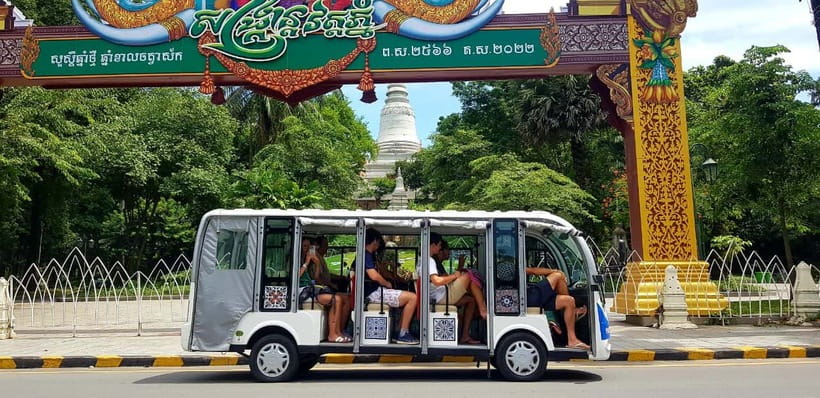
I like this tour because it gives you a citywide introduction before you commit your limited time to individual sights. Phnom Penh can seem scattered at first, with royal buildings, French-era streets, markets, religious sites, and newer development spread across a large urban area.
The electric bus solves part of that problem. You can sit back while the route connects the main themes of the capital: its beginnings as a fishing village, its growth under the French protectorate, the rise of Art Deco architecture, the royal family, the city’s social classes, and the dark years of Khmer Rouge rule.
The presentation also helps you see buildings as part of a bigger story. Instead of looking at an old façade and moving on, you get historical photographs and short films that explain how Phnom Penh changed over time.
More history from the top deck around the world:
- Prague: Historic City Center Bus Tour with Top Sights
★ 4.4 · 2,360 reviews - 2-Hour Gettysburg Battlefield Guided History Bus Tour with a National Park Guide
★ 4.5 · 2,201 reviews - Prague: Hop-on Hop-Off Historical Tram Ticket for Line 42
★ 4.1 · 1,702 reviews
Why the electric bus works well in the heat
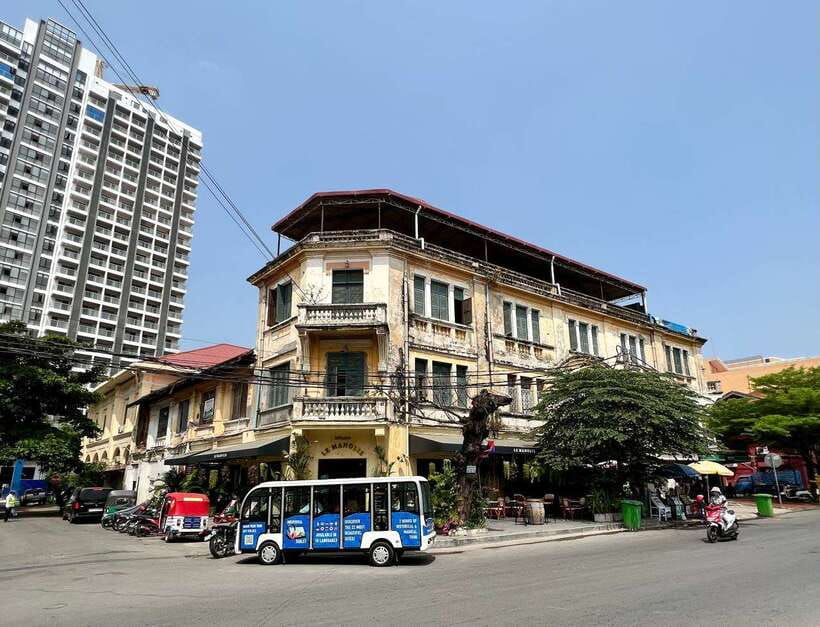
Phnom Penh is not a city I would always choose to explore on foot for two and a half straight hours. The heat can be heavy, and a route covering 22 sites would require a fair amount of planning and backtracking.
The electric bus makes the sightseeing easier on your body. You still get out at several points, but you are not spending the whole experience walking between distant places. One French-speaking visitor described the tour as restful despite the heat, which captures its practical value well.
This is not a fast panoramic ride where you simply watch the streets slide past. The bus is the base for a guided route, and the stops give you chances to walk into selected places and look more closely. The balance is useful: enough movement to keep the experience active, with enough sitting time to stay comfortable.
You should still dress for warm weather and bring sensible footwear. The tour includes a bottle of water, but food and other drinks are not included.
From fishing village to planned capital
One of the most helpful parts of the tour is the opening explanation of how Phnom Penh grew from a fishing village into Cambodia’s capital. That change gives you a framework for the rest of the ride.
The city’s development under the French protectorate brought a more formal urban plan and new architectural styles. The tour follows that change through buildings and public institutions, showing how a Southeast Asian capital was reshaped along French lines.
I find this kind of introduction especially useful if you have just arrived. You begin to understand why some parts of Phnom Penh feel distinctly colonial, while others reflect Cambodian royal traditions, Chinese community life, or the city’s later rebuilding.
The route also discusses the social fabric of the capital. You get context about the royal family, the urban elite, and everyday life at the beginning of the 20th century. That makes the buildings feel connected to people and institutions, rather than just dates and architectural labels.
Colonial buildings and the Art Deco period
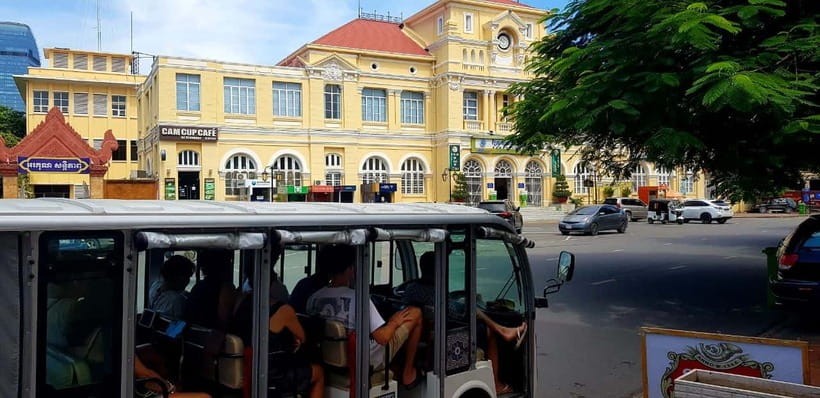
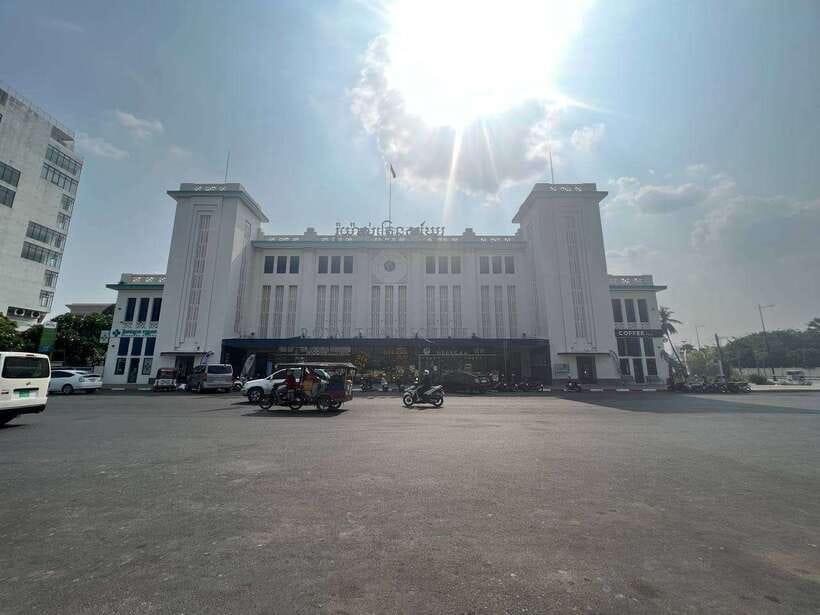
The tour gives special attention to the period when Phnom Penh developed a taste for Art Deco architecture. This is a good fit for the city, where decorative façades and old civic buildings can appear among ordinary modern streets.
You will not receive a full architectural course, but the tablet material adds useful visual evidence. Vintage photographs help you compare earlier streetscapes with the present city, while the guide explains why particular buildings mattered.
This visual element is one of the strongest reasons to choose the experience over a basic bus circuit. A building can be difficult to appreciate when you only see its present exterior. Old images can reveal its original setting, design, or role in city life.
The tour also offers virtual access to some buildings closed to the public. That does not replace entering a real historic interior, but it gives you a sense of spaces you would otherwise miss. If you enjoy architecture or old photographs, the tablet adds real value to the ride.
More bus tours around the world:
- Mt Fuji and Hakone 1-Day Bus Tour Return by Bullet Train
★ 5.0 · 26,383 reviews - Barcelona: 24 or 48-Hour Hop-On Hop-Off Bus Tour
★ 4.4 · 20,872 reviews - London: Warner Bros. Studio Harry Potter Tour & Branded Bus
★ 4.7 · 19,194 reviews - Rome: City Sightseeing Hop-on Hop-off Bus with Audioguide
★ 4.0 · 16,045 reviews
Three places where you get out and go inside
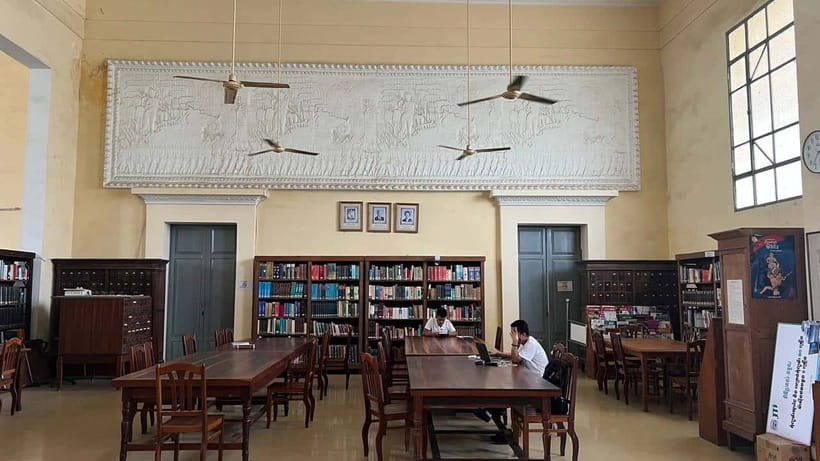
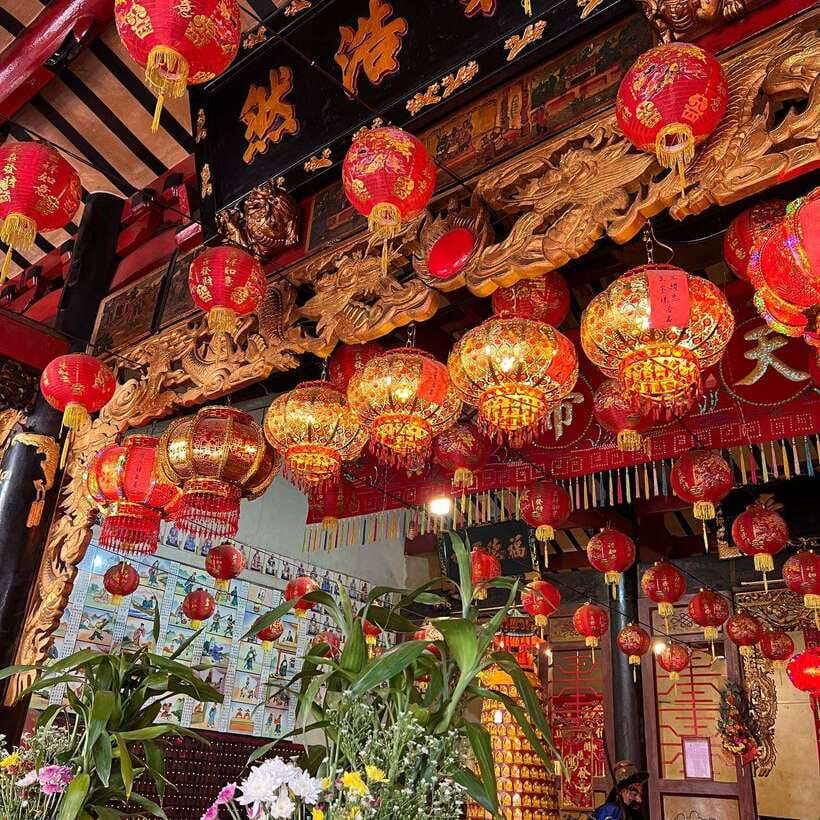
The tour includes visits to three unusual places: an Hokkien temple, the National Library, and the Royal University of Fine Arts. These stops break up the bus journey and give you a more direct sense of Phnom Penh’s cultural institutions.
The Hokkien temple brings Chinese Cambodian heritage into the story. It helps show that Phnom Penh’s identity was shaped by more than the royal court and French administration. Chinese community life is one of the threads that makes the capital’s history more layered.
The National Library connects the tour to education, books, and the preservation of Cambodian culture. It is a different kind of historic stop from a palace or temple, and that variety keeps the route from becoming a parade of façades.
The Royal University of Fine Arts adds another important angle. Cambodia’s artistic traditions and modern cultural institutions are part of the city’s story, not a separate subject reserved for specialist museums.
At these stops, the guide may add information beyond what is on the tablet. A Swiss visitor found the extra explanations particularly useful, noting that the guide gave additional details when the group got off the bus. That is worth keeping in mind: the experience has both a set audio-video structure and room for live explanation.
The tablet is more than an audio guide
You receive a tablet and headset, with audio available in 10 languages: Cambodian, Chinese, English, French, German, Italian, Japanese, Korean, Russian, and Spanish.
The tablet matters because it combines sound with films, vintage photographs, and virtual views inside selected buildings. If you learn best through images, this will be more effective than listening to a guide describe a street or interior you cannot see.
The live instructors speak English or French. French-speaking participants have praised the clear explanations, and one French visitor specifically highlighted the combination of the guide and tablet. You can therefore choose the audio language that suits you while still receiving help from the guide in English or French.
A small limitation is that a tablet can make the experience feel less spontaneous than a purely live walking tour. You may be switching attention between the street, the device, and the guide. Still, the visual material earns its place, especially when it shows parts of buildings that are not open to the public.
The royal family and Phnom Penh’s civic life
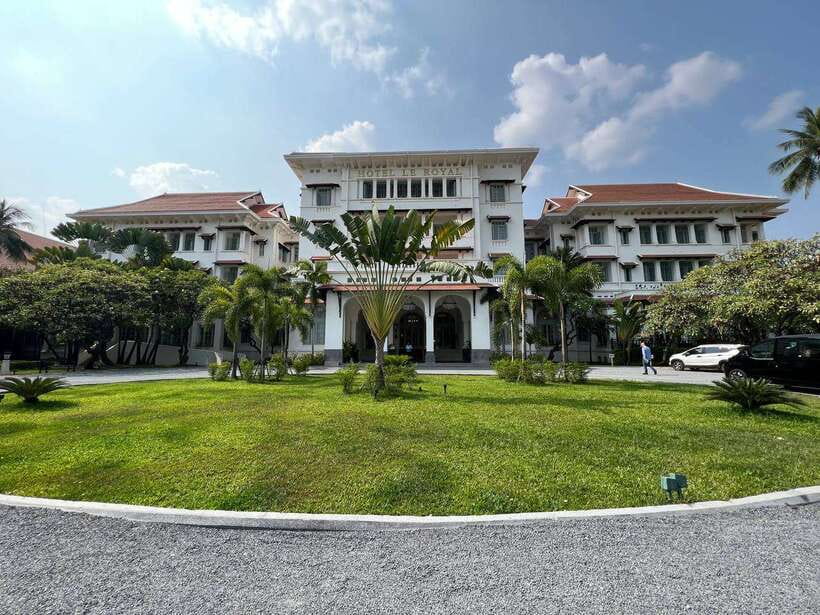
The route places the royal family within the wider story of the capital. This helps explain why the area around the Royal Palace matters so much, even if the tour does not replace a separate visit inside the palace complex.
The tour also examines the lifestyle of the elite at the beginning of the 20th century. That subject gives you a better feel for how Phnom Penh’s institutions and neighborhoods developed during the colonial period.
I appreciate that the route does not treat royal history as the only story worth hearing. The inclusion of the Hokkien temple, library, university, architecture, and social organization gives you a broader picture of the city.
At the same time, the tour is an overview. If you want detailed royal history, a long palace visit, or an expert study of Cambodian architecture, you will need to add separate visits afterward.
Facing the Khmer Rouge years
The tour also addresses the dark years of the Khmer Rouge regime. This is an important inclusion because Phnom Penh’s modern history cannot be understood through colonial buildings and royal landmarks alone.
The subject is handled as part of the city’s wider transformation. You get a historical bridge from the earlier capital to the devastation and disruption of the Khmer Rouge period, then to the Phnom Penh you see today.
Because the experience covers 22 sites in only two and a half hours, this section cannot offer the depth of a dedicated visit to the Tuol Sleng Genocide Museum or the Killing Fields. I would treat it as necessary context, then make time for those sites separately if you want a fuller understanding of the period.
The value here is the connection. You are not hearing about the Khmer Rouge years in isolation. You are seeing them as one chapter in a much longer urban story.
What the 19-stop route feels like
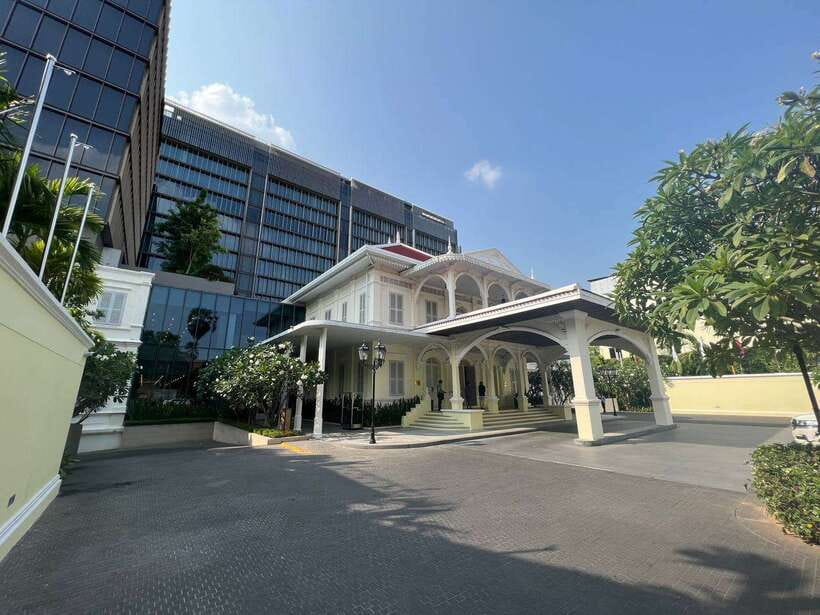
The route is designed for variety rather than long stays at one attraction. You move between historic buildings, cultural sites, and streets that show how Phnom Penh has changed.
At some stops, you get off the bus and walk into a site. At others, the tablet fills in the details through film, photographs, and narration. This creates a useful rhythm, though it also means you should not expect a long guided visit at every one of the 22 sites.
A small group can make the experience feel more personal. One booking had only three participants, and the guide was able to provide many extra explanations. Group size can vary, so I would not count on having a private tour, but a smaller departure may give you more chances to ask questions.
The tour is particularly useful at the start of a Phnom Penh stay. It gives you ideas for where to return, which buildings deserve more time, and how the city’s different districts relate to one another.
Ending near Street 240 and the riverside
The route ends on Street 240, close to the Royal Palace and the riverside. That is a smart finish because you can continue sightseeing without arranging another ride immediately.
Street 240 is a practical place to pause and decide what comes next. You can use the rest of the day to visit the Royal Palace area, walk toward the river, or return to one of the places that caught your attention during the tour.
The ending also makes the tour useful as a planning tool. You are not simply dropped back at an anonymous starting point. You finish in an area with clear options for independent exploration.
Hotel pickup and drop-off are not included, and private tuk-tuk transport is also not included. You should arrange your own way to the departure point and from the end of the route. The experience includes the electric bus, tablet, headset, and water, but not meals or drinks.
Is $27 a fair price?
At $27 per person, I consider this good value if you want a structured introduction to Phnom Penh. The price combines transport, a live guide, a tablet with video content, access to selected interiors, and a route that covers 22 sites.
You could spend less by walking around independently, but you would need to research the buildings, plan the route, arrange transport between areas, and find explanations for places that are closed to the public. You might also spend more on separate tuk-tuk rides.
The value is strongest for first-time visitors, people with limited time, and anyone who wants historical context without committing to a full-day tour. If you already know Phnom Penh well, or prefer slow museum visits, the quick pace may feel less satisfying.
The tour has a five-out-of-five overall rating from 49 submitted ratings, and 97 percent of participants gave the transport a perfect score. That supports the idea that the bus is a major part of the experience, especially in hot weather.
Who should book this experience?
I would choose this tour if you are arriving in Phnom Penh without a clear sightseeing plan. It gives you a broad introduction, then ends in a useful central area where you can continue independently.
It also suits you if you like architecture, historic photographs, royal history, or the way cities change over time. The video material makes the experience more engaging than a simple drive past old buildings.
French-speaking visitors have a particularly strong reason to consider it, since the live guide can provide explanations in French and the audio guide includes French as an option. English speakers are also supported by the live instruction and audio content.
I would think twice if you dislike using tablets, want long visits at each site, or prefer a walking tour focused on one neighborhood. The tour covers a lot, but its strength is breadth and orientation rather than extended time at any single attraction.
Should you book the Phnom Penh Heritage Tour?
Book it if you want to understand Phnom Penh before exploring it on your own. The electric bus keeps the route comfortable, the tablet adds photographs and film that ordinary sightseeing cannot provide, and the three interior visits give the experience some real substance.
I would schedule it early in your stay, then use the final stop near Street 240 to continue toward the Royal Palace or riverside. Leave the tour knowing that it is a strong overview, not the last word on Cambodia’s history.
At $27, it offers a sensible mix of comfort, coverage, and context. For a first look at Phnom Penh, that is a good deal.
FAQ
How long does the Phnom Penh Heritage Tour last?
The tour lasts 2.5 hours.
How many sites does the tour cover?
The route has 19 stops and introduces 22 major sites connected with Phnom Penh’s history.
What languages are available for the audio guide?
Audio is available in Cambodian, Chinese, English, French, German, Italian, Japanese, Korean, Russian, and Spanish.
What languages can the live instructor speak?
The live instructor can speak English and French.
Which places can you enter during the tour?
The tour includes visits to an Hokkien temple, the National Library, and the Royal University of Fine Arts.
Is hotel pickup included?
No. Hotel pickup and drop-off are not included, and private tuk-tuk transport is also not included.
What is included in the $27 price?
The price includes the electric bus tour, tablets, headsets, a bottle of water, and the multilingual audio guide. Food and drinks are not included.
Just joined the route map around the world
- San Pedro de Atacama: Vallecito + Magic Bus★ 5.0 · 4 reviews
- Santander: City Sightseeing Hop-On Hop-Off Bus Tour & Train★ 4.3 · 170 reviews
- Santiago: 1-Day Hop-On Hop-Off Bus and Cable Car Ticket★ 4.3 · 332 reviews
- San Francisco: Sightseeing Sunset Tour by Open-Top Bus★ 4.4 · 105 reviews
- San Francisco: Movie Filming Locations Bus Tour★ 4.9 · 368 reviews
- San Fransisco: Vintage VW Bus Wine Country Tour Small Group★ 5.0 · 5 reviews
- SF: Napa & Sonoma Wine Tour & Hop-on Hop-off Tour (Save 15%)★ 4.5 · 2 reviews
- San Francisco: Hop-On Hop-Off Tour with Optional Night Tour★ 4.5 · 94 reviews