
Review · JAPAN
From Tokyo: Kamakura, Great Buddha, and Enoshima Bus Tour
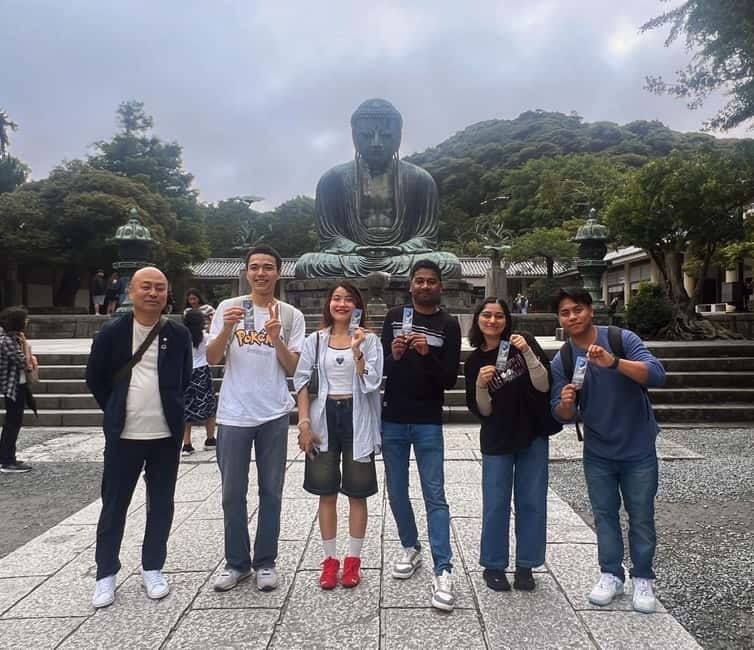
The day’s best moment is the Great Buddha of Kamakura, a 13.5-meter copper statue that has survived earthquakes, typhoons, and roughly 750 years of weather. I like that this tour combines it with the seaside ride on the Enoden train and a stop at Tsurugaoka Hachimangu, so you get more than one famous photo stop.
I also like the mix of free time and guided transport. You can browse local shops in Enoshima, explore Asakusa at your own pace, and avoid piecing together several train routes from Tokyo. The tradeoff is time: Enoshima and the Great Buddha can feel brief, especially if you want the observation lighthouse or a slow look around each site.
Key points at a glance
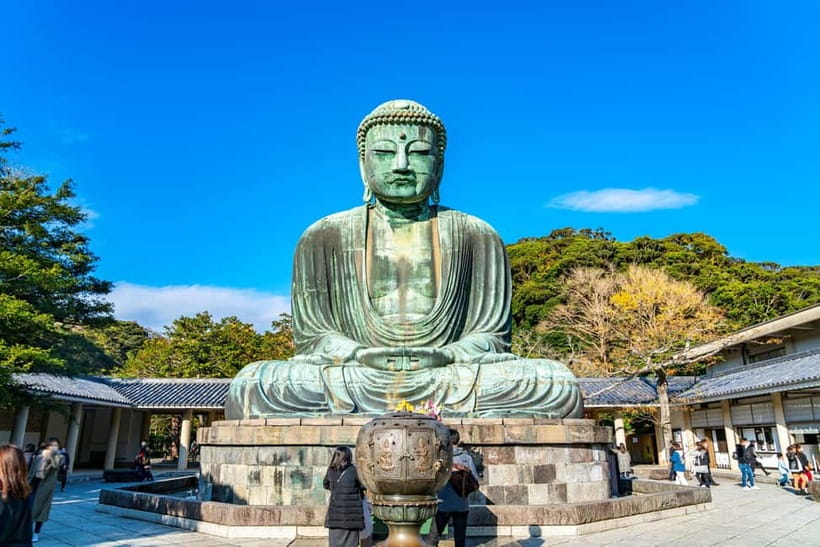
- The Great Buddha is the day’s clearest highlight: You can view the statue from outside and pay 50 yen on site to step inside it.
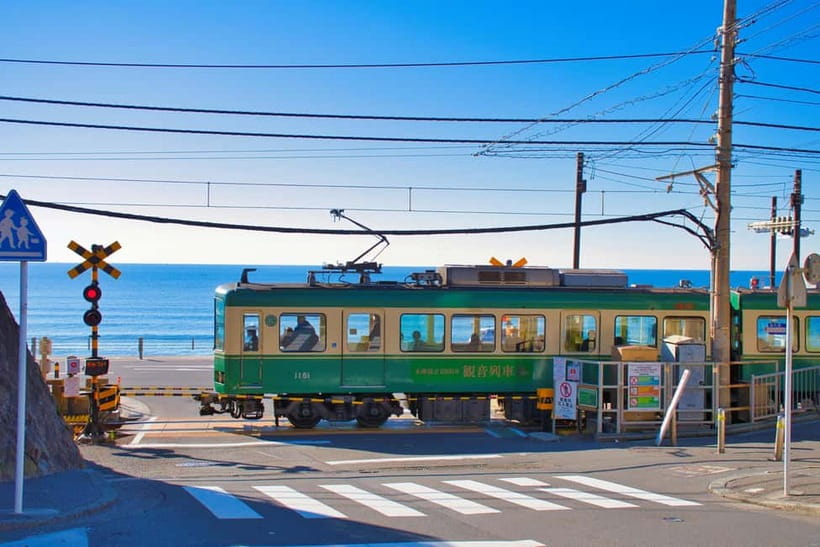
- The Enoden ride adds real local character: This retro one-car train runs beside the sea and may offer views toward Mt. Fuji.
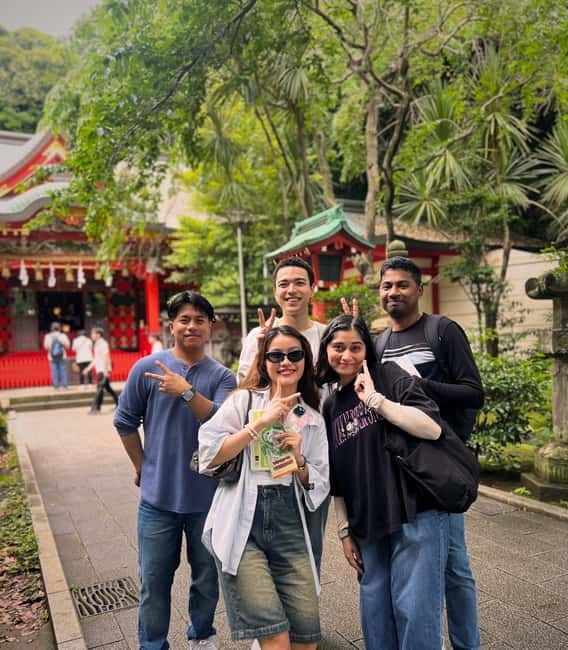
- Kamakura’s samurai past comes alive at Tsurugaoka Hachimangu: The shrine dates back more than 800 years and remains the spiritual center of the old capital.
- You get free time, not just a whistle-stop march: This suits you if you like exploring shops, food stalls, and temple grounds independently.
- The route links old Japan with modern Tokyo: Asakusa supplies temple roofs and old shopping streets, while Shibuya brings the famous crossing and city energy.
- The $75 price is strongest for convenience: Transport, the train ticket, Great Buddha admission, and an optional lunch are bundled together, but hotel pickup is not.
Why this Kamakura day trip works
Kamakura sits south of Tokyo on the coast and served as Japan’s political center during the Kamakura Period. That gives the day a useful shape. You begin with Buddhist and samurai-era sights, move through a seaside town, then return to Tokyo for traditional Asakusa and modern Shibuya.
I like this route because it covers several places that are awkward to combine on your own in one day. You need to get from Tokyo to Kamakura, then from the Great Buddha area to Enoshima, then use the Enoden line, and finally return to Tokyo. The tour handles that movement by air-conditioned vehicle and includes the Enoshima Electric Railway ticket.
The current rating is 4.5 out of 5 from six ratings. That is a small sample, so I would treat it as a useful signal rather than a final verdict. The strongest points are the clean transport, well-planned route, free time at several stops, and the chance to escape central Tokyo for a day.
The main weakness is narration. Some guides have been easy to understand and helpful, while communication has been harder when English ability is limited. If you want a full lecture at every shrine, this may leave you wanting more. If you prefer a guide to organize the day and then give you room to look around, the format is a better fit.
More bus tours around Japan:
- Mt Fuji and Hakone 1-Day Bus Tour Return by Bullet Train
★ 5.0 · 26,383 reviews - 1-Day Tokyo Bus Tour
★ 5.0 · 14,250 reviews - PERFECT KYOTO 1-Day Bus Tour
★ 5.0 · 13,518 reviews
Meeting in Shinjuku before the crowds
The tour begins near the Shinjuku Center Building, about a seven-minute walk from JR Shinjuku Station. Look for the red brick entrance in front of the taller white building and a LIMON staff member wearing yellow.
The meeting time is 7:30 a.m., and the bus leaves strictly at 7:40. Give yourself extra time inside Shinjuku Station. It is large, busy, and not a place where you want to be guessing which exit leads toward the Center Building.
Hotel pickup is not included. That keeps the starting point simple, but you need to plan your own route there. The vehicle depends on the number of people booked. It may be a bus or another air-conditioned vehicle, so the exact size and seating feel are not fixed.
This is an early start and a full day. Bring water, wear shoes you can walk in for hours, and expect the tour to operate in rain unless severe weather forces a change.
The Great Buddha of Kamakura
The Great Buddha is the tour’s anchor. The statue measures 13.5 meters, roughly four stories, and was originally covered in gold leaf. Time, weather, earthquakes, and typhoons have left it with the dark copper color you see today.
There is something pleasingly direct about seeing it in the open air. The statue is not hidden in a vast complex or surrounded by layers of decoration. You walk up and face a calm, monumental figure whose size becomes clear only when you stand close.
Admission to see the Great Buddha is included. For another 50 yen, paid locally, you can enter the statue and read about how it was made. It is a small extra, but worth considering if you want more than the standard exterior view.
Allow your expectations some room here. The stop is important, but it is not designed for a long, leisurely study of the grounds. If you want time for photographs, the interior visit, and a quiet pause, keep an eye on the meeting instructions. Some people have found the visit shorter than hoped.
Enoshima’s sea air and shop-lined approach
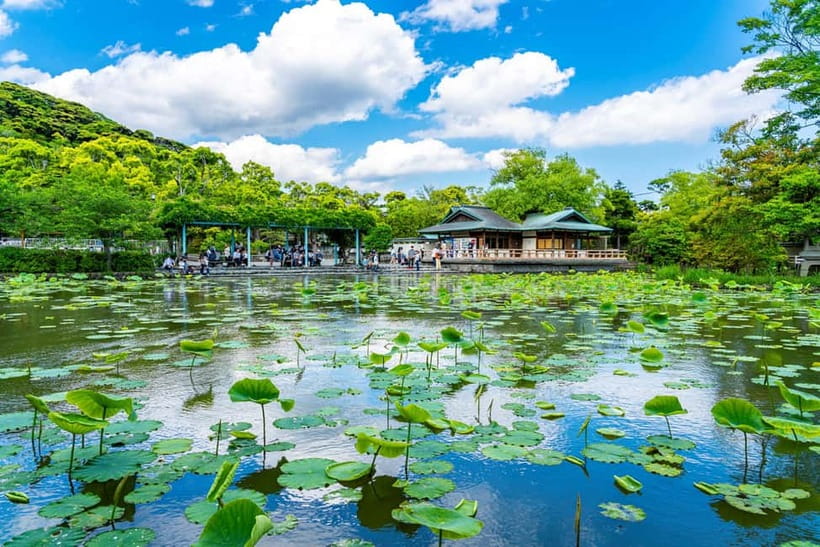
Next comes Enoshima, an island area known for its shrine, sea views, food, and souvenir shops. Nakamise-dori leads toward Enoshima Shrine and gives you a chance to browse local specialties or pick up something small to eat.
The shrine is linked with three sister goddesses associated with the sea, water, good luck, finance, and the arts. That range of associations makes the visit feel more personal than simply checking off another historic building. You can take in the worship spaces, watch the flow of people, and notice how the island combines religious tradition with a lively visitor district.
This is also the part of the day where time can pinch. You may have enough time to walk the approach, look around the shrine, and sample a local snack, but not enough for every attraction. The observation lighthouse is not guaranteed to fit into the schedule. If that view matters to you, ask the guide early how much free time you have and plan your priorities.
I would choose one aim here rather than trying to do everything. Browse Nakamise-dori, see the shrine, or focus on the ocean. Trying to fit in every shop and the lighthouse can turn a pleasant stop into a race.
Same streets, a different ride:
- Peaceful Hiroshima & Miyajima UNESCO 1 Day Bus Tour
★ 5.0 · 5,309 reviews - Kyoto: Fushimi Inari, Kinkakuji, Bamboo Grove 1 Day Bus Tour
★ 4.8 · 4,316 reviews - Tokyo: Meiji Shrine, Asakusa, Skytree Bus Tour and Cruise
★ 4.7 · 1,986 reviews - Tokyo: Kamakura & Enoshima Day Trip including Temple Tickets
★ 4.5 · 1,375 reviews
Riding the Enoden beside the water
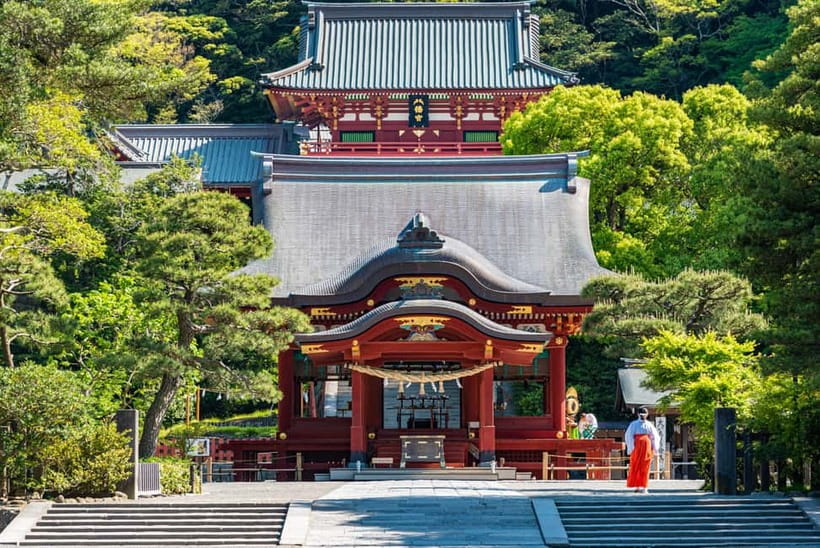
The Enoshima Electric Railway is one of the tour’s most distinctive details. It is a retro, one-car train that runs along the coast, giving you a short change from bus travel and a closer look at the seaside neighborhoods.
The ride is valuable because it feels like part of the region, not just a transfer between attractions. Look toward the water, and you might catch a glimpse of Mt. Fuji across the bay when conditions are right. You may also recognize the famous railroad crossing associated with the anime Slam Dunk.
The train is included in the tour price, which saves you one small ticket purchase and removes some route planning. Still, this is a public railway experience, not a private scenic carriage. The view depends on weather, timing, and your side of the train.
Tsurugaoka Hachimangu and the samurai capital
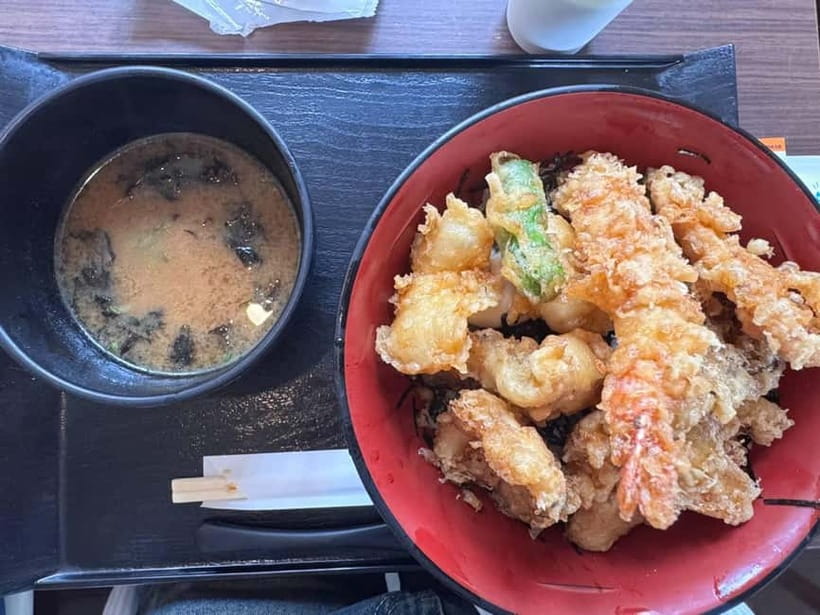
Tsurugaoka Hachimangu is Kamakura’s major Shinto shrine and dates back more than 800 years. During the Kamakura Period, the city was the home base of Japan’s samurai government. The shrine keeps that connection alive through its annual Yabusame ritual, in which mounted archers fire arrows on horseback.
You will find a calmer mood here than in the shopping streets. Take time to look at the pond and garden, then walk through the shrine grounds with the basic customs in mind. Keep your voice down near worship areas and follow signs about where photographs are allowed.
The shrine works best after the Buddha and Enoshima because it gives the day a historical center. The Buddha shows Kamakura’s Buddhist tradition, while Tsurugaoka Hachimangu connects the city to Shinto practice and samurai power.
The guide may explain the main facts, but the amount of historical detail can vary. Some people have found the narration clear and helpful. Others wanted more background on the landmarks. I would treat the guided talk as an introduction, then read posted information and use your free time to form your own impression.
Komachi-dori and the pleasure of free time
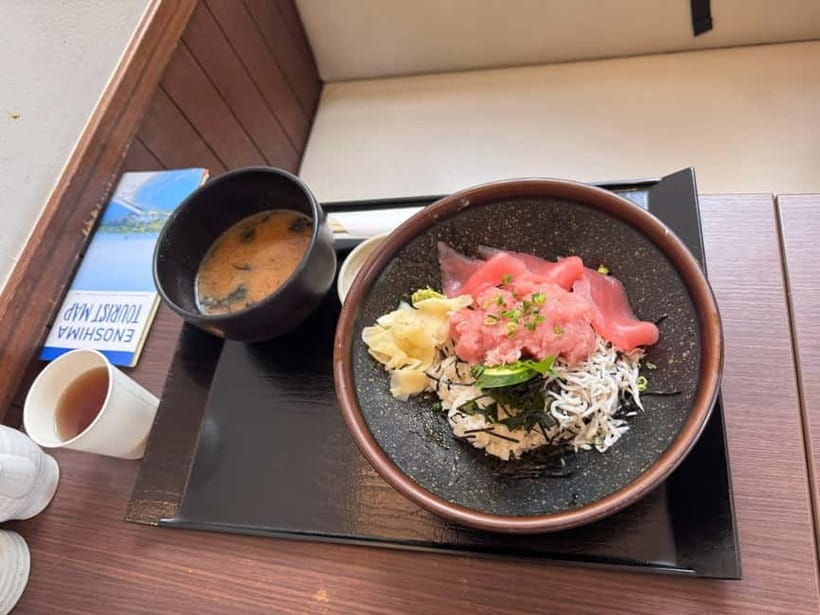
Kamakura’s Komachi-dori is a lively shopping street and a useful place to experience the town at street level. You can browse small shops, look for snacks, and see how a historic destination handles modern day visitors.
Free time is one of the tour’s better features. You are not kept in a single group for every minute, and that lets you choose what matters most. I would use it for food and small purchases rather than expecting a long museum visit, since no museum admission is included in the listed package.
Lunch depends on the option you select. The meal has been described as filling and enjoyable, but you should check the exact booking option before assuming it is part of your price. If lunch is not included, the shopping streets provide a practical place to find food, though the available time may be limited.
Asakusa, Senso-ji, and Nakamise-dori
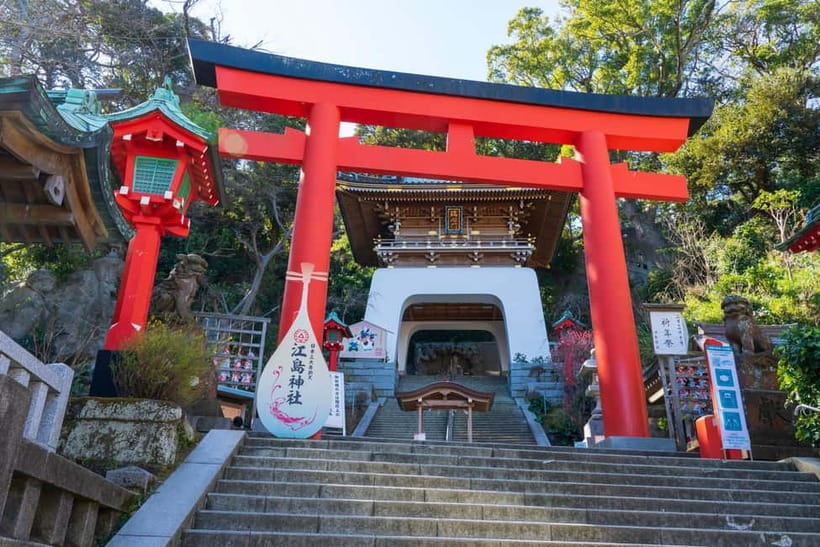
After Kamakura, the route returns to Tokyo and heads to Asakusa. The change is striking. You move from coastal Kamakura and its old shrine town to one of Tokyo’s most recognizable traditional districts.
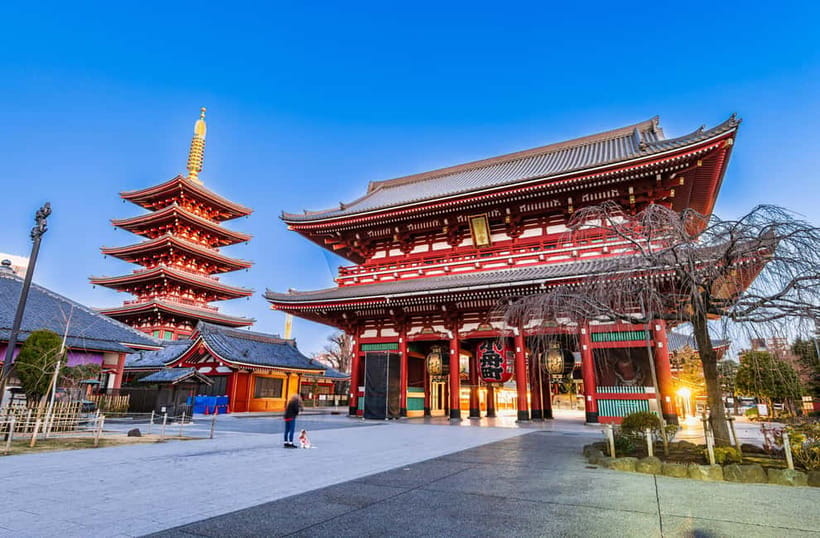
Start at Kaminari-mon, the large red gate that marks the approach to Senso-ji. From there, Nakamise-dori leads toward the temple through a line of shops selling souvenirs, snacks, and traditional goods. The street can be busy, so keep your group meeting details in mind and do not wander too far without checking the time.
Senso-ji gives you traditional temple architecture with Tokyo Skytree visible in the distance. That pairing neatly sums up Asakusa: old religious buildings in front of a modern city skyline.
You can choose to remain in Asakusa rather than continue with the group to Shibuya. This is useful if you want a slower evening around Senso-ji, prefer traditional Tokyo to the city’s commercial center, or do not need to see Shibuya Crossing. Confirm the end arrangements with the guide, since the supplied details describe both a finish around Shibuya and an end back at the original meeting point.
Finishing in Shibuya
The group continues toward Shibuya, with a Tokyo Metro ticket from Asakusa included for that part of the route. Shibuya Crossing is the final modern contrast to the day’s temples, shrines, and old railway.
The tour disbands in Shibuya according to the route description. Since the end information also refers to the meeting point, check this detail before booking or ask the guide during the day. The Metro ticket is still useful, but you should know exactly where your organized portion ends.
Shibuya is a sensible finish because it leaves you in one of Tokyo’s best-connected districts. It also gives the day a clear arc: ancient capital, seaside railway, old temple quarter, then present-day Tokyo.
What $75 gets you
At $75 per person, this is not the cheapest way to see Kamakura, but the value depends on how much planning you want to avoid. You receive guided touring in Kamakura, admission to the Great Buddha, the Enoden ticket, air-conditioned transport, and the Tokyo Metro ticket from Asakusa to Shibuya.
Lunch is included only if you choose that option. Hotel pickup and drop-off are not included, so add the cost and effort of reaching Shinjuku and managing your return plans.
I think the price is fair for a first visit when you want several distant stops in one day. It is less compelling if you already know Kamakura well, enjoy planning Japanese rail routes, or want to spend half a day at one shrine or island viewpoint.
The biggest value is time saved on connections. The biggest cost is the loss of flexibility. You see a lot, but you cannot linger everywhere.
Who should book this day?
I would recommend it for a first-time visitor to Tokyo who wants one full day outside the city, especially if Kamakura is high on the list but independent planning feels like work. It also suits you if you like a balance of organized transport and personal exploring.
Families with older children may appreciate the variety: a huge statue, a train ride, sea views, shopping streets, temples, and Shibuya. Infants aged 0 to 2 can join free, but they do not receive a bus seat or lunch, which is an important practical detail.
I would be more cautious if you have limited mobility or dislike long walking days. The route includes shrine grounds, shopping streets, station movement, and several stops on foot. Comfortable shoes and water are not optional extras here.
The language choice is English or Japanese. The quality of English explanation may vary by guide, so book this mainly for the route and transport if detailed interpretation is essential to you. The guides have been helpful overall, but the depth of narration is not guaranteed at every stop.
Should you book it?
Book this tour if you want to see the Great Buddha, Enoshima, Tsurugaoka Hachimangu, Asakusa, and Shibuya in one ambitious day without managing every train connection yourself. The clean vehicle, included Enoden ride, free time, and well-planned range of sights make it a practical choice at $75.
Skip it if your priority is a slow visit to Enoshima’s lighthouse, extended time at the Great Buddha, or detailed historical teaching at every stop. In that case, choose a shorter, more focused Kamakura outing.
For most first-time visitors, I would book it with realistic expectations: this is a broad sampler, not a slow cultural retreat. Keep your shoes comfortable, arrive early at Shinjuku, and decide in advance which stop deserves your extra minutes.
FAQ
Where does the tour begin?
Meet at the Shinjuku Center Building, about a seven-minute walk from JR Shinjuku Station. The meeting point is at the red brick entrance in front of a taller white building.
What time should I arrive?
The meeting time is 7:30 a.m. The vehicle departs strictly at 7:40 a.m., so arrive early enough to find the location and check in with the LIMON staff member in yellow.
Is hotel pickup included?
No. You need to make your own way to the Shinjuku meeting point.
Is admission to the Great Buddha included?
Yes. Admission and the visit to the Great Buddha of Kamakura are included. Entering inside the statue costs an additional 50 yen, paid on site.
Is lunch included?
Lunch is included only when you select the lunch option. It is not automatically part of every booking.
Which languages are available?
The tour is offered in English and Japanese. The amount of English explanation may vary by guide.
How much walking should I expect?
Expect a significant amount of walking around the Buddha, Enoshima, the shrine grounds, shopping streets, Asakusa, and the stations. Comfortable shoes and water are recommended.
Can I stay in Asakusa instead of going to Shibuya?
Yes. You can choose to remain in Asakusa or continue with the group toward Shibuya. The route information also gives conflicting end details, so confirm the final meeting arrangement with the guide on the day.
Just joined the route map around Japan
- Osaka/Kyoto: Katsuoji, Kinkakuji, Arashiyama 1-Day Bus Tour★ 4.6 · 33 reviews
- Okinawa: Full-Day Bus Tour to Yanbaru National Park★ 4.3 · 44 reviews
- Okinawa: Tropical Dream , Ryukyu Mura, Banta Cafe Bus Tour★ 4.3 · 19 reviews
- Okinawa: Churaumi Aquarium, Ryukyu Village & Manza Bus Tour★ 4.5 · 118 reviews
- Okinawa: Double-Decker Open Top Bus Tour for Shuri Castle★ 4.0 · 3 reviews
- Okinawa Churaumi or Tropical, Kouri American Village BusTour★ 4.4 · 140 reviews
- Okinawa: Bus Tour to Churaumi Aquarium with Sightseeing★ 4.3 · 20 reviews
- Kyoto: Full-Day Guided Bus Tour to Top Highlights & Tickets★ 4.6 · 533 reviews
Japan Bus Tours, side by side.
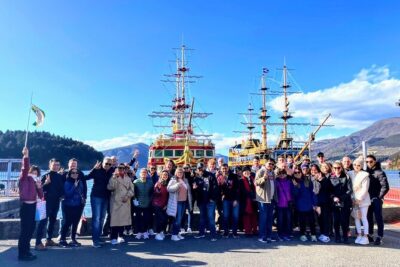
Mt Fuji and Hakone 1-Day Bus Tour Return by Bullet Train
Read our review →
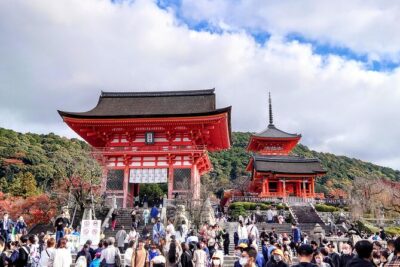
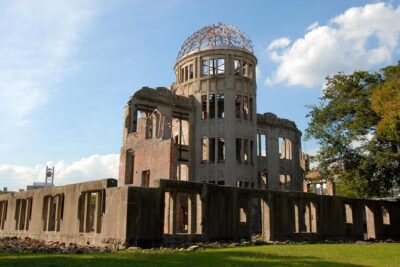
Peaceful Hiroshima & Miyajima UNESCO 1 Day Bus Tour
Read our review →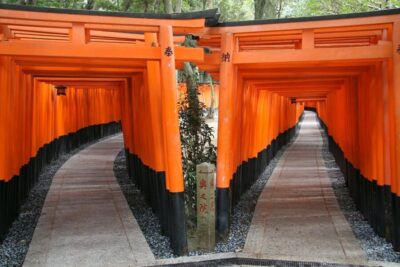
Kyoto: Fushimi Inari, Kinkakuji, Bamboo Grove 1 Day Bus Tour
Read our review →
Tokyo: Meiji Shrine, Asakusa, Skytree Bus Tour and Cruise
Read our review →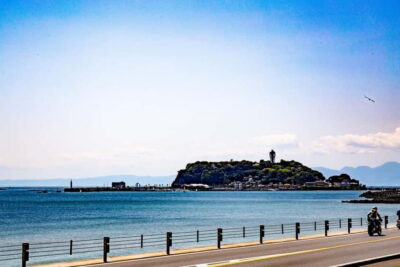
Tokyo: Kamakura & Enoshima Day Trip including Temple Tickets
Read our review →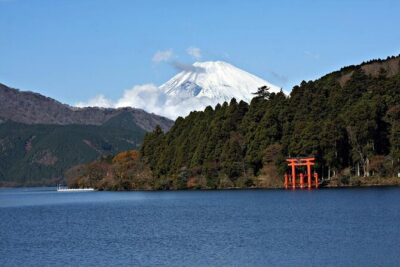
Mt Fuji & Hakone Cruise, Drum Show Bus 1 Day from Tokyo
Read our review →Other lists with this bus tour