
Review · EGYPT
From Aswan: Trip to Abu Simbel by Bus
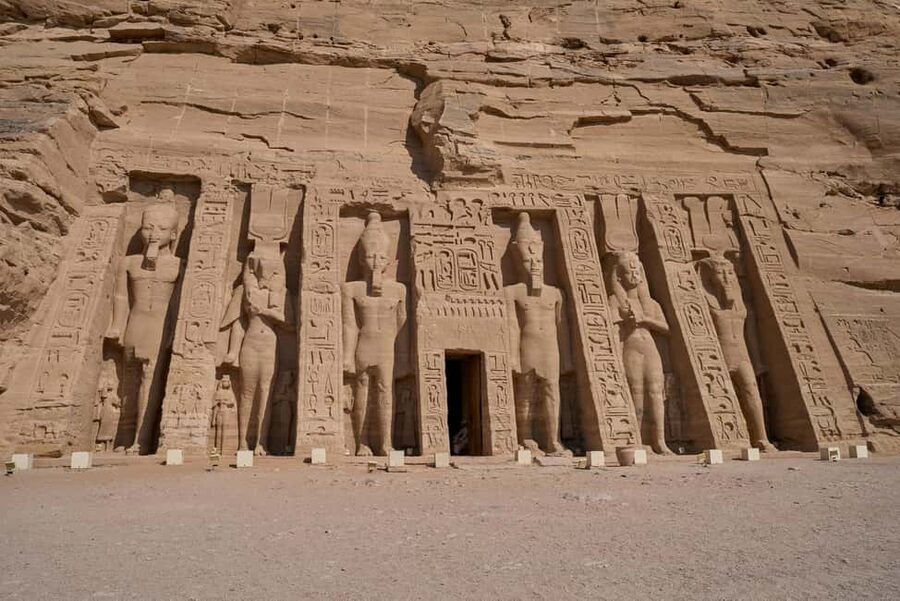
Abu Simbel is the reason to take this trip. After a long desert drive from Aswan, you reach two temples cut into the rock, fronted by the famous four giant statues of Ramses II. Inside, the carved halls and royal images make the journey feel worthwhile. I especially like the hotel pickup and the chance to see both Ramses II’s temple and Queen Nefertari’s smaller temple without arranging transport yourself.
I also like the early departure. It gives you a chance to arrive among the first groups and see the façades in the softer morning light. The main drawback is the road time: expect about four hours each way, based on the reported journey, and be ready for a very early pickup around 4 to 4:15 a.m. Guide time can also be brief, so this is best for visitors who mainly want reliable transport and entry to Abu Simbel rather than a long, lecture-style tour.
Key points to know before booking
- The temples are about four hours from Aswan by road, making this a full-day outing rather than a quick side trip.
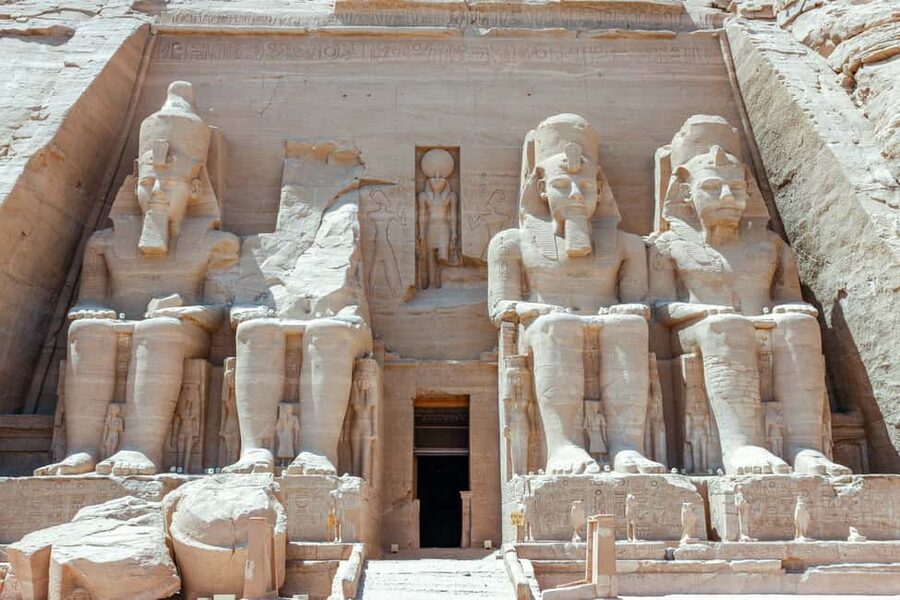
- The four colossal statues of Ramses II form the main approach to the Great Temple.
- Both Abu Simbel temples are included, including the temple dedicated to Queen Nefertari and Hathor.
- The early start can work in your favor, with one reported departure reaching the site early enough for excellent morning views.
- Transport, entrance fees, bottled water, and an English-speaking guide are included in the $110 price.
- Guide service may be limited, so confirm the schedule and what guiding will be provided before you pay.
Why Abu Simbel deserves the long ride from Aswan
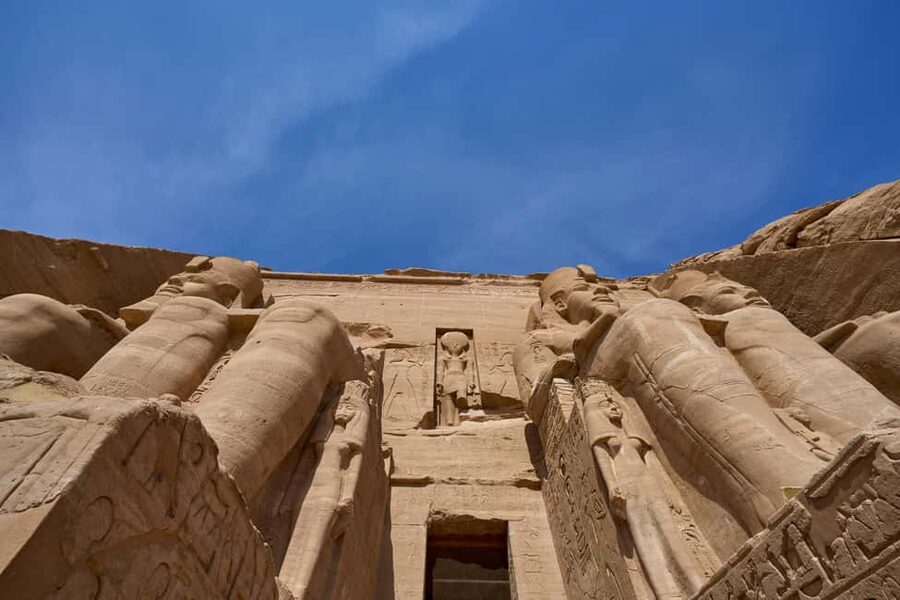
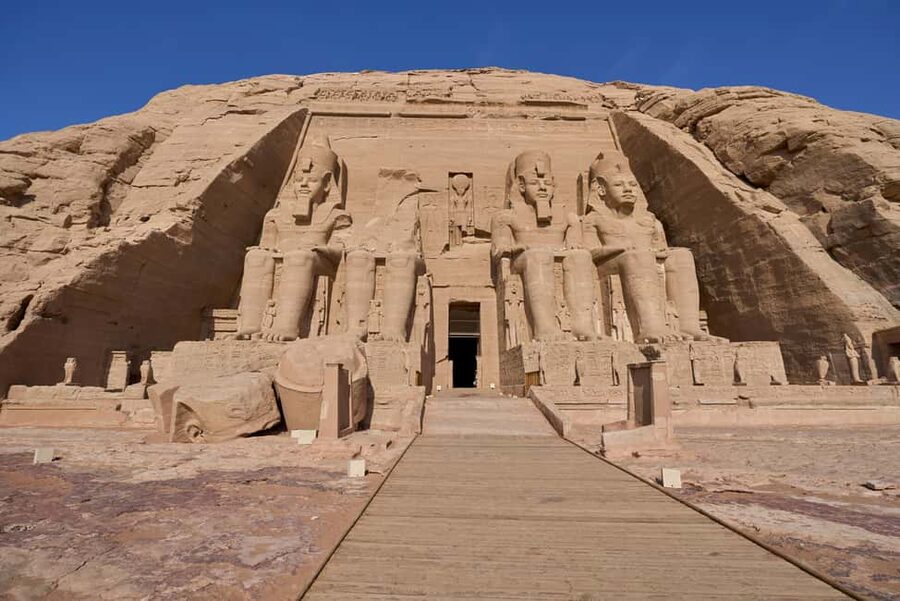
The temples at Abu Simbel were built during Egypt’s New Kingdom under Ramses II. Their scale is the first thing you notice. The Great Temple is cut into a cliff, with four seated figures of Ramses II forming a giant royal welcome.
This is not a site where you simply wander past a few columns. The façade makes a political statement. Ramses II presents himself as a powerful ruler with a divine role, and the size of the statues tells you exactly how he wanted to be remembered.
Inside, the Great Temple is dedicated to Ptah, Re-Her-Akhtey, Amun-Re, and Ramses II himself. The temple is also known as the Sun Temple of Ramses II. You can expect carved scenes, royal figures, and a carefully planned sequence of halls leading farther into the rock.
The second temple belongs to Queen Nefertari and is also linked with Hathor. Its scale is smaller, but it is not an afterthought. The pairing of the two temples joins Ramses II, Nefertari, Hathor, and the sun gods in one powerful royal setting.
For me, that pairing is one of the best reasons to take this particular outing. You do not see only the famous façade of Ramses II. You also get the chance to compare the two temples and understand how royal power and religious belief were presented together.
More bus tours around Egypt:
- VIP Day Trip to Cairo by Bus with Top Tour operators
★ 5.0 · 739 reviews - Day trip to Cairo by bus from Sharm el Sheikh
★ 4.5 · 334 reviews - Sharm El Sheikh: Great Pyramids, Sphinx, Museum Tour by Bus
★ 3.7 · 287 reviews
The 4 a.m. pickup and the long road south
The day begins before sunrise. The stated plan is hotel pickup in Aswan by modern air-conditioned coach, while one report describes a small van being used for the early run. The exact vehicle may vary, but you should expect an early road departure and a long ride.
One booking was moved from a planned 10 a.m. start to 4:15 a.m., so do not assume the time shown when you first look at the tour will remain unchanged. Confirm your pickup time with the operator before the day before the trip. The early departure is not a minor detail. It shapes the entire experience.
The drive to Abu Simbel takes about four hours, with a similar journey back to Aswan. That is roughly eight hours on the road before counting time at the temples. A modern air-conditioned vehicle and bottled water help, but you are still committing to a demanding day.
I would bring a small breakfast, extra water for personal use, sun protection, and something warm for the early morning. The supplied water is useful, but it may not be enough for every person across such a long day. Since the official inclusions do not mention meals, plan to arrange your own food.
The road time can feel more reasonable if you view the trip as a major archaeological site reached from Aswan, not as a short excursion. Abu Simbel is far enough away that organized road transport removes a major planning problem. You do not need to find a driver, negotiate a separate vehicle, or manage entrance tickets on your own.
Approaching the four statues of Ramses II
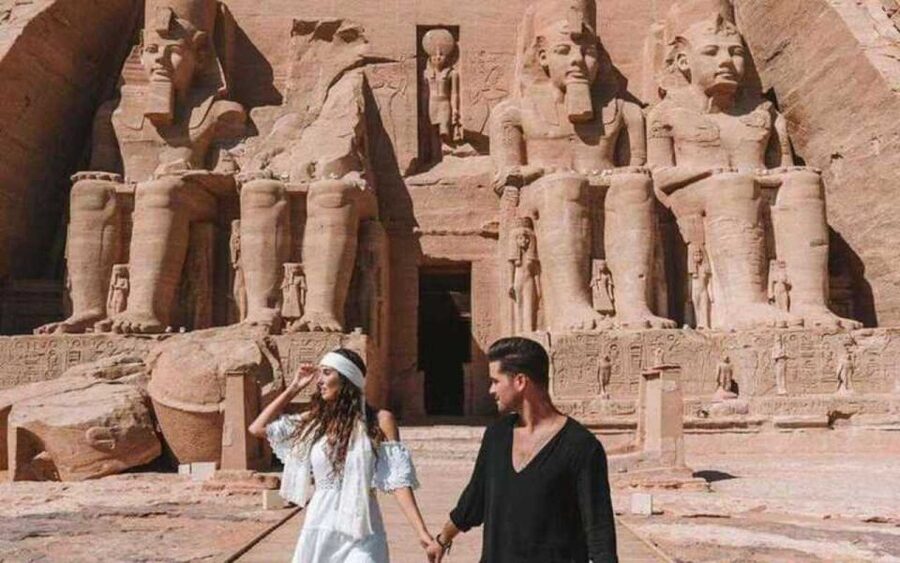
The first sight of the Great Temple is the emotional high point of the day. The façade is dominated by four seated statues of Ramses II, each built on a scale that makes nearby visitors seem tiny.
Give yourself time to look before following the guide inside. The exterior is not just a photo stop. The statues, doorway, and carved figures explain the temple’s purpose before you hear any spoken history.
The guide is meant to explain the temple and the role of Ramses II. An English-speaking guide accompanies the group, and entrance fees to the stated historical sites are included. However, the quality and amount of explanation may depend on the guide assigned that day.
One account describes only a short talk outside, followed by time to take photographs and enter the temple. Another guide later led part of the group without speaking English. That means you should not book this experience expecting a full private lecture inside every room.
The practical approach is to treat the guide as a helpful introduction, not your only source of information. Pay close attention during the first explanation, then allow yourself time to study the carvings. If the guide gives you only a short orientation, you can still appreciate the site, but the experience may feel less satisfying if you paid mainly for detailed interpretation.
Inside the Great Sun Temple
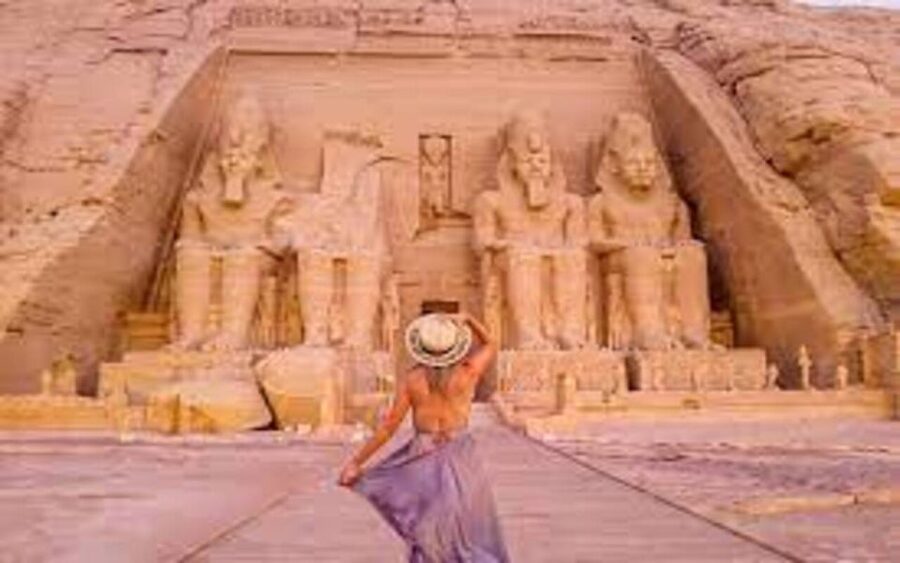
The Great Temple is the larger and more imposing of the two. Its dedication to Ptah, Re-Her-Akhtey, Amun-Re, and Ramses II reflects the religious and political world of the New Kingdom.
As you move inside, the carved halls continue the royal message seen outside. The temple was designed to make Ramses II appear closely tied to the gods. That connection is important because the building is not simply a memorial. It is a place where kingship, religion, and public power meet.
The name Sun Temple of Ramses II helps explain the focus on light and solar worship. The site’s placement and design were carefully planned, and the guide should give you the basic story behind that design.
Your time inside may be partly independent. One reported schedule allowed about an hour for photographs and entering the temple before an additional guided walk. Since the precise timing can vary, use the first free period wisely. Photograph the façade, then go inside and look for the details that are easy to miss when a group moves quickly.
The main limitation here is crowd and guide management. If your guide is handling several groups, you may have periods when you are on your own. That is not necessarily bad, especially if you prefer to move slowly, but it is worth knowing before you compare this trip with a private guide.
Same streets, a different ride:
- Sharm El-Sheikh: Full-Day Tour of Cairo and Pyramids by Bus
★ 4.8 · 237 reviews - Bus Tour to Ras Mohamed from Sharm El Sheikh
★ 5.0 · 88 reviews - Ras Mohamed National Park Half Day Tour by Bus In Sharm El Sheikh
★ 4.5 · 60 reviews - Day Tour to Cairo from Hurghada By Bus
★ 4.0 · 46 reviews
Queen Nefertari’s temple and the Hathor connection
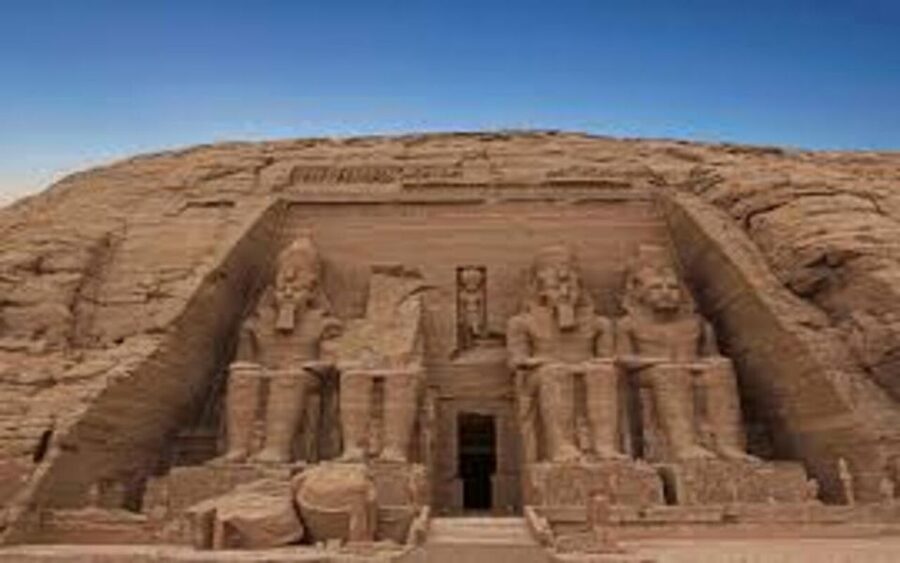
The second temple is dedicated to Queen Nefertari and is also called the Temple of Hathor. Its place beside Ramses II’s temple is meaningful. The two buildings bring the king, queen, goddess, and sun gods together in a shared royal statement.
Do not treat this as a quick extra stop. The smaller temple gives the visit balance. Ramses II’s temple emphasizes the king’s monumental power, while Nefertari’s temple shows the importance given to the queen and her connection with Hathor.
The supplied plan includes both temples, so the $110 cost is not only paying for a view of the famous four statues. You also receive entry to the paired sanctuary and a chance to see how the two buildings differ.
Because the visit may include a short formal explanation and independent time, I would listen carefully for the story of Hathor and Nefertari. If the guide moves quickly or spends time with another group, keep the two temples in mind as a comparison exercise. Notice how the scale, façade, and religious associations work together.
The rescue of Abu Simbel
The temples you see today are also part of a major modern preservation effort. The Egyptian government and UNESCO cooperated to save Abu Simbel from flooding.
That fact adds another layer to the visit. You are not looking at ruins left in place by chance. The temples survived because an enormous preservation project protected them when the waters connected with the Aswan High Dam threatened the original setting.
Your guide should explain this part of the story, since it helps answer a natural question: why are these temples preserved in their present location and condition? The rescue also connects Abu Simbel with the wider changes brought by modern water management in southern Egypt.
This is one place where a strong guide can make a big difference. A brief explanation gives you the basic facts. A fuller account helps you understand why Abu Simbel is important both as an ancient monument and as a modern conservation achievement.
Lake Nasser and the changing view outside the temples
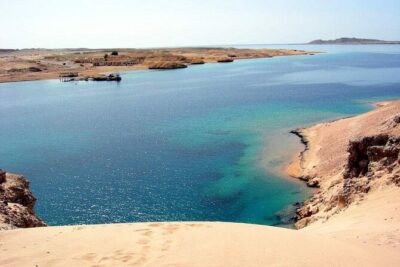
The trip also offers views connected with Lake Nasser. The lake is part of the modern setting around Abu Simbel, and its calm presence contrasts with the hard rock and desert surrounding the temples.
Do not expect a separate lake cruise or a long waterfront activity. Lake Nasser is a visual part of the journey and the Abu Simbel setting, not a separate included excursion. Still, it gives the day more variety than a simple drive to an isolated monument.
The contrast is striking: ancient temples carved into stone, a vast body of water created by modern engineering, and a long road linking Aswan with the site. That combination helps you see Abu Simbel as part of both ancient and modern Egypt.
Is $110 a fair price?
At $110 per person, the price is reasonable if you value convenience and included costs. Hotel pickup and return, air-conditioned transport, an English-speaking guide, entrance fees, bottled water, taxes, and service charges are included.
The value becomes less clear if your main goal is extensive guiding. The reported experience was mixed, with one visitor describing a short explanation outside and limited English during part of the site visit. If the operator provides only basic orientation, you are paying mostly for transport, entry, and organization.
That can still be a good deal. Arranging a dependable private vehicle for a full road day can cost more, and the shared small-group format keeps the price below a private excursion. You also avoid the hassle of buying tickets and organizing the return drive.
The price is less attractive for anyone expecting a polished, fully guided archaeological tour from start to finish. Ask before booking how long the English-speaking guide will stay with your group inside the temples and whether the quoted departure time is final.
Who should choose this Abu Simbel trip?
I would choose this outing if you are staying in Aswan, want to see Abu Simbel, and prefer a ready-made plan. It suits people who value hotel pickup, shared transport, and included admission more than a private pace.
It is also a good fit if you are comfortable with a very early start. One positive account praised the punctual 4 a.m. departure and fast travel to the site, which allowed an early arrival and good morning views. Arriving early can make the famous façade feel calmer and gives you better light for photographs.
I would think twice if you dislike long drives, need a relaxed morning, or want detailed guiding in every room. The return journey is long, and an early schedule can be tiring even when the temples are excellent.
Pay attention to the driving standard as well. One report described the driver as going too fast and said the group had to ask for slower driving several times. That is a serious concern. If you feel unsafe, speak up early and clearly. The vehicle may be modern and air-conditioned, but comfort also depends on how the driver handles the road.
Hotels on Soheil Island, Hisa Island, at Aswan Airport, or in a Nubian hostel may incur an extra pickup charge. Check this before confirming so the final price does not surprise you.
Should you book it?
Book this trip if Abu Simbel is high on your Egypt list and you want the simplest shared option from Aswan. The temples are extraordinary, both major buildings are included, and the early departure may give you a better first look at the façades.
I would book only after confirming three points: the exact pickup time, the vehicle and driving arrangements, and how much English guiding you will receive inside the temples. At $110, the trip offers solid practical value when transport and admission are your priorities.
If you need careful driving and strong historical explanation, a private alternative may be worth the extra cost. If you mainly need a dependable way to reach Abu Simbel and can manage an eight-hour road day, this excursion can get the essential job done.
FAQ
How much does the Abu Simbel bus trip from Aswan cost?
The price is $110 per person.
What time does the tour depart?
The trip begins early in the morning. Reported pickup times include around 4 a.m. and 4:15 a.m. Confirm the final time with the operator because the schedule can change.
How long is the journey from Aswan to Abu Simbel?
The road journey takes about four hours each way, according to the reported experience.
Are hotel pickup and return included?
Yes. Pickup from your Aswan hotel and return transport are included. Hotels on Soheil Island, Hisa Island, at Aswan Airport, or in a Nubian hostel may require an extra charge.
Which temples will I visit?
You will visit the Great Temple of Ramses II and the temple of Queen Nefertari, also known as the Temple of Hathor.
Is an English-speaking guide included?
Yes. An English-speaking guide is included for the group, although the amount of guiding provided at the temples may vary.
What is included in the price?
The price includes hotel pickup and return, an English-speaking guide, entrance fees, air-conditioned transfers, bottled water on the bus, service charges, and taxes. Tipping and unlisted extras are not included.
Just joined the route map around Egypt
- Private Overnight Tour to Cairo from Hurghada by Bus★ 5.0 · 2 reviews
- Luxor Tour from Hurghada by bus★ 3.9 · 11 reviews
- Hurghada to Cairo: Full-Day Tour one way Bus & Flight Return★ 4.2 · 9 reviews
- Sharm El Sheikh: Great Pyramids, Sphinx, Museum Tour by Bus★ 3.7 · 287 reviews
- Bus Tour to Ras Mohamed from Sharm El Sheikh★ 5.0 · 88 reviews
- Day Tour to Cairo from Hurghada By Bus★ 4.0 · 46 reviews
- Day Tour To Luxor from Hurghada by Bus with Lunch★ 5.0 · 17 reviews
- Day Tour To Luxor from Hurghada by Bus★ 4.5 · 32 reviews
Egypt Bus Tours, side by side.
VIP Day Trip to Cairo by Bus with Top Tour operators
Read our review →
Sharm El Sheikh: Great Pyramids, Sphinx, Museum Tour by Bus
Read our review →
Sharm El-Sheikh: Full-Day Tour of Cairo and Pyramids by Bus
Read our review →
Ras Mohamed National Park Half Day Tour by Bus In Sharm El Sheikh
Read our review →
Other lists with this bus tour