
Review · JAPAN
Peaceful Hiroshima & Miyajima UNESCO 1 Day Bus Tour
Hiroshima’s most powerful lesson and Miyajima’s most beautiful view come together in one long day. You move from the Atomic Bomb Dome and Peace Memorial Museum to a ferry, a shrine built over the sea, temple lanterns, and the famous red torii gate. It is a striking change of mood, and a useful way to understand both sides of this part of Japan.
I like the included ferry and admission fees, which remove several small decisions from a busy day. I also like the help of a local guide, with Rino, Marin, Momiji, and Mo all praised for clear explanations, friendly energy, and good group management. The main caution is simple: this is an 8-hour group tour with a maximum of 45 people, so you will walk, keep to a schedule, and have limited time for independent exploring.
Key points to know before booking
- Two UNESCO-linked sights in one day: See the Atomic Bomb Dome and Itsukushima Shrine without arranging separate transport.
- A serious morning: The Peace Memorial Park and Museum can be emotionally difficult, so allow yourself quiet time afterward.
- Miyajima adds a complete change of mood: Take the ferry, see the floating shrine, visit Daishoin, and browse island food stalls.
- Guides make the difference: Rino, Marin, Momiji, and Mo have been singled out for warmth, humor, organization, and strong English.
- Lunch is optional: The included choice is Hiroshima-style okonomiyaki, with a vegetarian version available, but severe allergy sufferers should skip the meal option.
- Plan your evening carefully: The tour returns to its meeting point, and a Shinkansen ticket should be booked after 6:30 pm.
Why this Hiroshima and Miyajima combination works
Hiroshima and Miyajima are close enough to pair, but they offer very different experiences. Hiroshima asks you to think about war, civilian suffering, memory, and peace. Miyajima gives you sea views, old religious buildings, local food, deer, and a slower island setting.
Doing both in a single day saves time and avoids the puzzle of matching a city bus, a ferry, and timed admission. The air-conditioned coach is especially useful in warm or wet weather. You also get free Wi-Fi on the bus and multilingual audio guidance in English, French, Spanish, Italian, German, Portuguese, and Ukrainian.
The tradeoff is that the day belongs to the group. You are not free to linger for hours in the museum, hike around Miyajima, or wait for a particular tide at the torii gate. If you have only one day in the area, that compromise makes sense. If you have three or four days, independent visits would give you more breathing room.
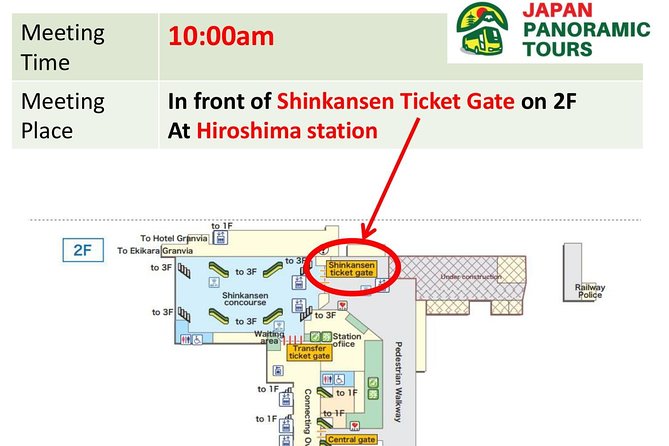
The meeting point is by Currency Exchange Japan in Hiroshima’s Minami Ward, near Matsubara-cho. The tour starts at 10 am and ends back there. Hotel pickup is not included, so give yourself extra time to find the meeting point. Arriving late is a serious problem: you cannot join partway through the route, and late arrivals do not receive a refund or a new date.
More day trips by coach around Japan:
- Mt Fuji and Hakone 1-Day Bus Tour Return by Bullet Train
★ 5.0 · 26,383 reviews - 1-Day Tokyo Bus Tour
★ 5.0 · 14,250 reviews - PERFECT KYOTO 1-Day Bus Tour
★ 5.0 · 13,518 reviews
Hiroshima Castle and the city’s earlier story
The day includes a stop connected with Hiroshima Castle, built in 1589. The main building is what you see, rather than the smaller defensive structures once used to protect the castle. The explanation given on the tour links the surviving presentation to a later, more peaceful period, when those defensive features no longer served the same purpose.
This is a brief historical introduction before the heavier part of the day. It helps place Hiroshima in the story of feudal Japan rather than treating the city only as the site of the 1945 bombing.
Do not expect a long castle visit. The schedule is designed to get you onward to the Peace Memorial area, so think of this as a short orientation stop rather than a full castle study.
Atomic Bomb Dome: a ruin with a direct message
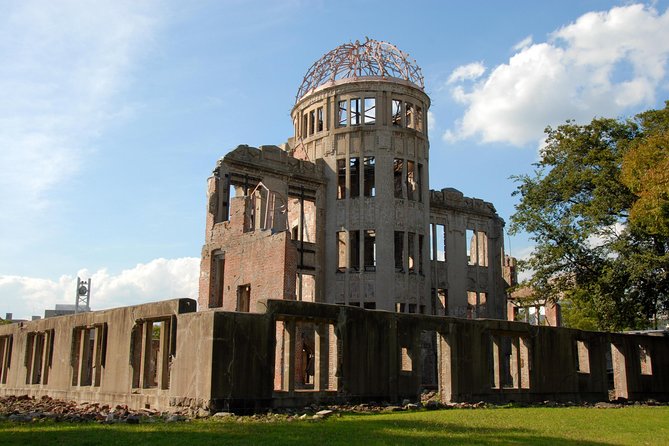
The Atomic Bomb Dome is one of Hiroshima’s clearest symbols. It is the preserved ruin of the former Hiroshima Prefectural Industrial Promotion Hall, located close to the atomic bomb’s hypocenter on August 6, 1945.
You have about 15 minutes here, with no admission charge. That is enough to look closely at the exposed framework, listen to the guide, and take in the fact that this damaged building was left in place as a memorial.
The short stop can feel abrupt. You will not have much time to walk around the riverfront or study every angle of the building. Still, the guide’s context matters because the Dome is more than a photogenic ruin. Its presence gives physical shape to the scale of the destruction and to Hiroshima’s decision to preserve a difficult reminder.
Peace Memorial Park and Museum
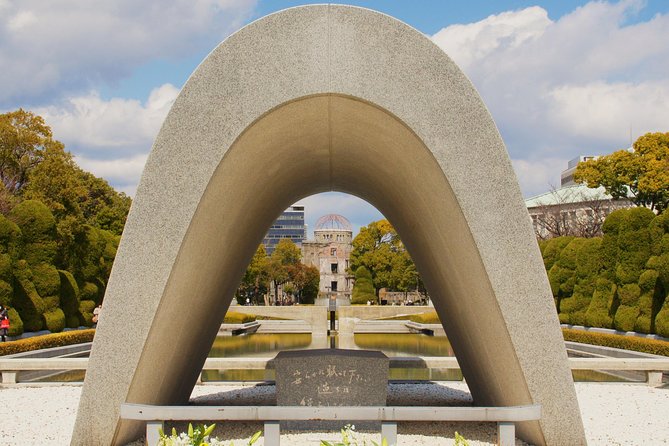
The Peace Memorial Park receives about 35 minutes, followed by roughly one hour in the Peace Memorial Museum. The park contains several important memorials, including the Atomic Bomb Dome and the cenotaph for the victims of the bombing.
This part of the tour is not light sightseeing. The museum uses personal stories, photographs, and objects to show what happened to civilians and survivors. The material is confronting, and the emotional effect can stay with you long after you leave.
I appreciate that the guide can provide structure before you enter. Guides such as Rino, Marin, and Momiji have been praised for explaining the setting clearly while allowing space for personal reactions. Some departures may visit the museum later in the day, depending on crowd levels and the guide’s plan. That change can be useful, since moving to Miyajima first gives you a gentler pause before the museum.
Crowds are the biggest concern here. One account describes a crowded, one-way route through the museum that felt hard to leave and difficult to view comfortably. That problem is not controlled by the tour company, but it is worth knowing before you book. If you dislike crowded indoor spaces, tell your guide early and give yourself permission to move at your own pace where possible.
The museum visit is included in the price. That matters because it is the central historical stop, not an optional extra. From February 16 to 21, 2026, the museum will be closed for exhibit replacement. During that period, the tour plans to visit the Hiroshima National Peace Memorial Hall for the Atomic Bomb Victims instead, with no price reduction.
More bus tours around Japan:
- Kyoto: Fushimi Inari, Kinkakuji, Bamboo Grove 1 Day Bus Tour
★ 4.8 · 4,316 reviews - Tokyo: Meiji Shrine, Asakusa, Skytree Bus Tour and Cruise
★ 4.7 · 1,986 reviews - Tokyo: Kamakura & Enoshima Day Trip including Temple Tickets
★ 4.5 · 1,375 reviews - Mt Fuji & Hakone Cruise, Drum Show Bus 1 Day from Tokyo
★ 4.0 · 1,287 reviews
The ferry to Miyajima
The ferry ride to Miyajima takes about 20 minutes each way, and the return ticket is included. After the quiet intensity of the Peace Park, the crossing gives you a welcome change of scene.
The ferry is also part of what makes this tour practical. You do not need to work out the separate ticketing system or wonder which departure fits the coach schedule. Your guide directs the group through the transfer, while the bus handles the longer movements on land.
Weather and ferry operations can affect the order of the day. The operator may rearrange stops to reduce crowding or respond to traffic, weather, and transport conditions. That flexibility is useful, though you should not expect the exact order shown in the advertised schedule.
Miyajima: the day’s lighter half
Miyajima is known for its wooded hills, shrine buildings, sea views, food stalls, and deer. The island’s name is often translated as Shrine Island, and its religious importance is tied to the belief that the island itself was sacred.
You have about 50 minutes for the island portion before the shrine visit. That is enough for a first look at the main street, some snacks, and a taste of the island atmosphere. It is not enough for a relaxed food tour, a long shopping session, and a mountain hike.
If you choose lunch, the meal is Hiroshima-style okonomiyaki. Unlike the Osaka version, Hiroshima okonomiyaki is built in layers, with ingredients arranged rather than simply mixed together. The meal gives you a chance to try one of the region’s signature dishes without searching for a restaurant while the group waits.
The vegetarian lunch contains no pork or seafood, but it does include eggs and gluten. The operator does not provide an allergy-free lunch. If you have a severe allergy, select the no-lunch option and bring your own food. You can also skip the meal option if you want to sample Miyajima’s market snacks or choose your own okonomiyaki.
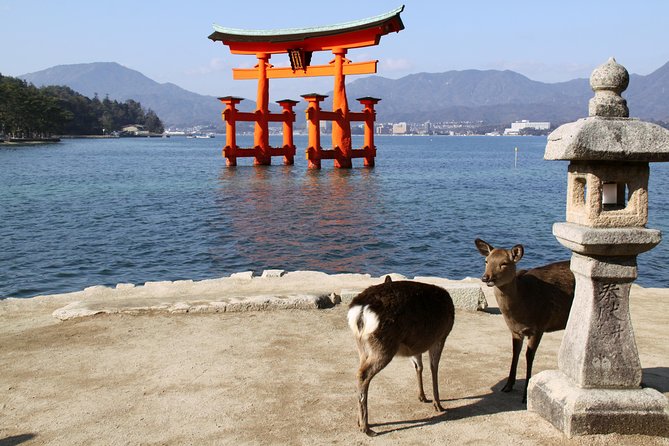
Keep an eye on your belongings around the island’s deer. They are part of Miyajima’s character, but they can be more assertive than their gentle appearance suggests. The island also involves a fair amount of walking, including the route from the ferry toward the shrine. A moderate level of fitness is expected.
Itsukushima Shrine and the floating torii gate
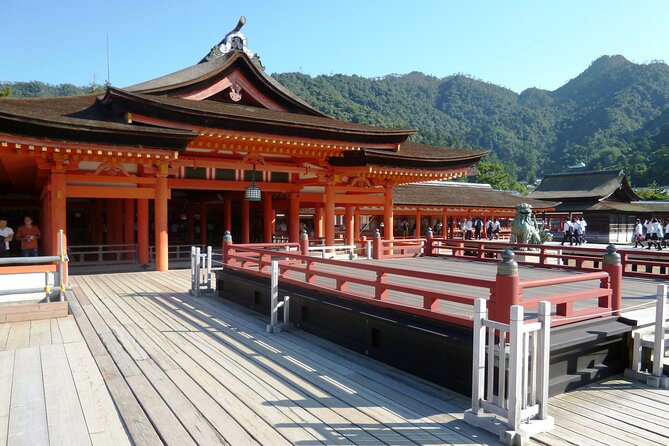
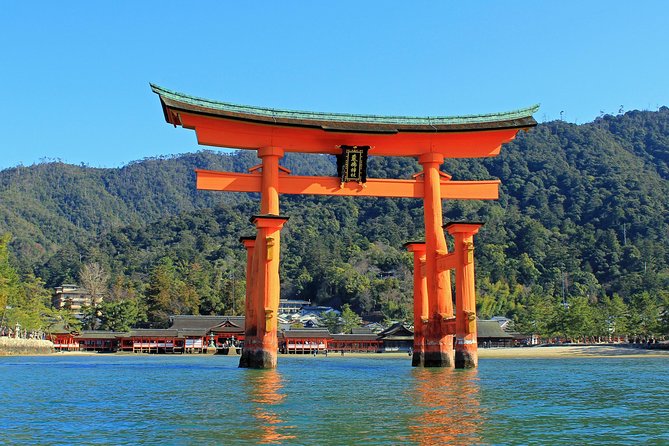
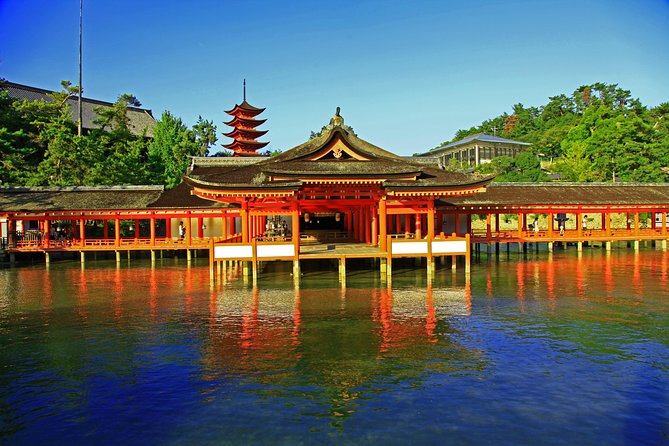
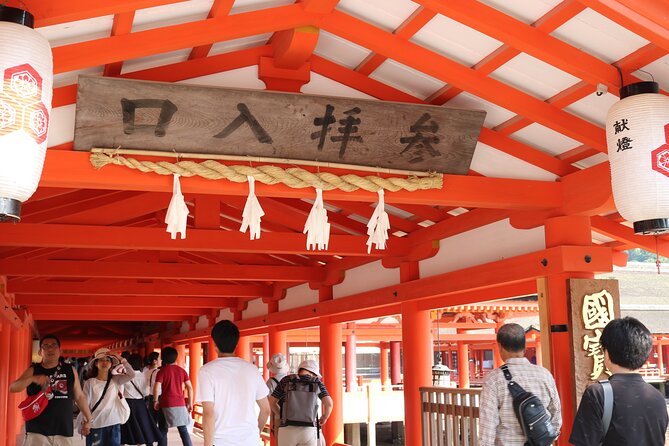
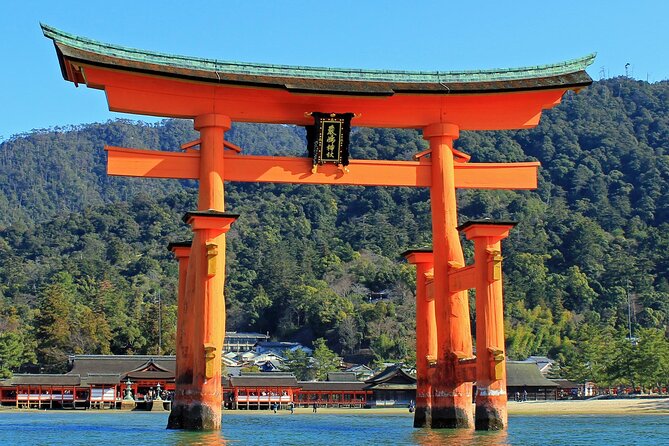
Itsukushima Shrine is the visual center of Miyajima. Its buildings were constructed over the water because the island was regarded as sacred, and the famous red torii gate appears to float offshore under the right tide conditions.
The shrine’s origins reach back to 593, while much of the present construction was rebuilt in 1168 under Kiyomori Taira. The 50-minute visit gives you time to see the main structures, hear how the sea setting shaped the design, and look toward the torii from the shore.
The gate does not always look the same. Tide levels affect how close the water comes to the shrine and whether the torii appears to float. The tour information does not promise a particular tide, so book this experience for the shrine and island as a whole, not for one exact photograph.
Admission to Itsukushima Shrine is included. That is helpful because the shrine is the reason many people come to Miyajima, and the organized entry keeps the group moving during a tight schedule.
Daishoin Temple and the quieter side of Miyajima
Daishoin Temple receives about 30 minutes. It is a good counterpoint to Itsukushima Shrine, with colorful Jizo guardian figures, Buddha statues, and rows of lanterns.
The temple is photogenic, but it also offers a calmer religious setting. Look for the small guardian statues dressed in different colors and the Buddha figures placed around the grounds. The visit is short, so focus on the details rather than trying to see every corner.
The walk to Daishoin adds to the physical demands of the day. One person who had limited energy found the route to the shrine tiring, and that is a useful warning for anyone with mobility concerns. This is not a good choice if you need frequent long breaks or want to avoid uneven walking entirely.
Guides, group size, and the pace
The guide is the human center of this experience. The assigned guide varies, but Rino, Marin, Momiji, and Mo have each received strong praise for friendly conversation, clear English, humor, historical explanations, and steady organization.
That combination matters here. The day has two very different moods, and a good guide knows when to explain, when to keep things moving, and when to give you space. Guides have also helped with practical matters such as food suggestions, Japanese phrases, photographs, and route changes.
The group can contain up to 45 people. That is a fairly large coach tour, so do not expect a private guide or an intimate walking experience. The upside is a clear structure and a lower price than arranging a private day. The downside is that meeting times are firm, and a slow lunch or long museum stop can affect the whole group.
The onboard audio guidance is useful if you are seated away from the guide or prefer to hear explanations in another language. It does not replace the guide’s ability to answer questions, but it adds information during the coach rides.
Is $129.25 a fair price?
At $129.25 per person, this tour is not the cheapest way to see Hiroshima and Miyajima. Its value comes from what is bundled together: an air-conditioned coach, an English-speaking guide, audio guidance, museum admission, Itsukushima Shrine admission, ferry tickets, and the full route between the city and island.
You are also paying for reduced planning. You do not need to coordinate the ferry with the museum, find your way through Miyajima, or decide how much time to leave between major stops. For a first visit or a tight schedule, that can be worth more than saving a little money.
Lunch is only included if you choose that option. Drinks and other food are not included. If you want maximum flexibility around meals, book without lunch and bring food that suits your needs.
Free cancellation is available up to 24 hours before the start time. Cancellations or changes inside that window are not refunded or accepted, so check your plans before the final day.
Who should book this day tour?
I would choose this tour if I had one free day in Hiroshima and wanted both the peace memorials and Miyajima without handling the transport myself. It also suits families and first-time visitors who want a clear route, though younger children should be comfortable with walking and a serious museum visit.
It works well for people who like a guide’s context. The Hiroshima sites carry facts that are easy to miss on your own, while Miyajima’s shrine and temple make more sense when you understand their religious setting.
I would hesitate if you want long, quiet museum time, a full Miyajima food crawl, or a hike into the island’s hills. The schedule gives you a strong first look, not an unhurried exploration. I would also think twice if you are booking a Shinkansen immediately after the tour. The return is at the original meeting point, and the practical advice is to book a train after 6:30 pm.
Should you book the Hiroshima and Miyajima tour?
Book it if you want the efficient version of Hiroshima: the Atomic Bomb Dome, Peace Park, museum, ferry, Itsukushima Shrine, and Daishoin in one organized day. The best part is the contrast between the morning’s sober memorials and Miyajima’s sea, food, temple details, and red torii gate.
Skip it if you have several days and prefer to set your own pace. For most people with limited time, though, the included transport and admissions justify the price. Choose the no-lunch option if you have a serious allergy or want to eat independently, arrive well before 10 am, and leave your evening open until after 6:30 pm.
FAQ
How long is the Hiroshima and Miyajima bus tour?
The experience lasts approximately 8 hours. It starts at 10 am and returns to the original meeting point in Hiroshima.
Where does the tour start and finish?
The meeting point is Currency Exchange Japan at 1 Matsubaracho, Minami Ward, Hiroshima, near public transportation. The tour ends back at the same meeting point.
Are ferry tickets and entrance fees included?
Yes. The price includes the round-trip ferry, Hiroshima Peace Memorial Museum admission, admission to Miyajima Island, and admission to Itsukushima Shrine.
Is lunch included?
Lunch is included only if you select the lunch option. The meal is Hiroshima-style okonomiyaki. A vegetarian version contains no pork or seafood, but it does contain eggs and gluten.
Is the tour available in languages other than English?
The local guide speaks English. Multilingual audio guidance on the bus is available in English, French, Spanish, Italian, German, Portuguese, and Ukrainian.
Can I take a Shinkansen after the tour?
The tour provider advises booking your Shinkansen after 6:30 pm, or purchasing the ticket after the tour on the day. The tour ends back at the meeting point, but traffic and itinerary changes can affect timing.
Just joined the route map around Japan
- Osaka/Kyoto: Katsuoji, Kinkakuji, Arashiyama 1-Day Bus Tour★ 4.6 · 33 reviews
- Okinawa: Full-Day Bus Tour to Yanbaru National Park★ 4.3 · 44 reviews
- Okinawa: Tropical Dream , Ryukyu Mura, Banta Cafe Bus Tour★ 4.3 · 19 reviews
- Okinawa: Churaumi Aquarium, Ryukyu Village & Manza Bus Tour★ 4.5 · 118 reviews
- Okinawa: Double-Decker Open Top Bus Tour for Shuri Castle★ 4.0 · 3 reviews
- Okinawa Churaumi or Tropical, Kouri American Village BusTour★ 4.4 · 140 reviews
- Okinawa: Bus Tour to Churaumi Aquarium with Sightseeing★ 4.3 · 20 reviews
- Kyoto: Full-Day Guided Bus Tour to Top Highlights & Tickets★ 4.6 · 533 reviews
Japan Bus Tours, side by side.

Mt Fuji and Hakone 1-Day Bus Tour Return by Bullet Train
Read our review →
Kyoto: Fushimi Inari, Kinkakuji, Bamboo Grove 1 Day Bus Tour
Read our review →
Tokyo: Meiji Shrine, Asakusa, Skytree Bus Tour and Cruise
Read our review →
Tokyo: Kamakura & Enoshima Day Trip including Temple Tickets
Read our review →
Mt Fuji & Hakone Cruise, Drum Show Bus 1 Day from Tokyo
Read our review →
Kyoto/Osaka: Nara, Fushimi Inari Taisha, Arashiyama Bus Tour
Read our review →Other lists with this bus tour