
Review · BUS TOURS
Nairobi: Party bus(matatu) adventure experience
Nairobi’s party bus culture turns an everyday commute into a rolling music venue. This 210-minute experience lets you compare a calm city bus with the louder, highly decorated matatus that carry Nairobi’s daily rhythm through routes such as Westlands, Ngong Road, and Eastlands. The contrast is the main attraction, not a fixed sightseeing list.
I like the walking time through the CBD and the way the tour connects transport with Nairobi’s urban art, music, and history. I also like the private-group format, bottled water, and guides who can adjust the plan when local conditions change. You get a city experience, rather than a polished bus ride made only for tourists.
The main caution is security and unpredictability. A recent outing ended early after a minor collision involving a matatu and a car, and another rating raised concerns about traveler safety. Bus fares are extra, and the party bus may wait until enough regular passengers are aboard.
Key points to know before you book
- The tour begins at KICC: Meet at the entrance of the Kenyatta International Convention Centre, opposite the Nairobi Governor’s office.
- You compare two transport styles: A regular city bus offers a quieter commute, while a party matatu brings loud music, bold decoration, and a social atmosphere.
- The route can include Westlands, Ngong Road, and Eastlands: The exact ride depends on local bus availability and the route chosen with your guide.
- The bus ride is not private: You may wait for the matatu to fill with local passengers who are commuting to work or other destinations.
- Bring extra Kenyan shillings: Bus fare is not included. The activity information lists 500 KES, while one outing used 100 KES per person for a 20 to 30-minute ride in each direction.
- This is best for flexible visitors: You should be comfortable with traffic, changing plans, public transport, and a less controlled setting.
Starting at KICC and entering Nairobi’s daily rhythm
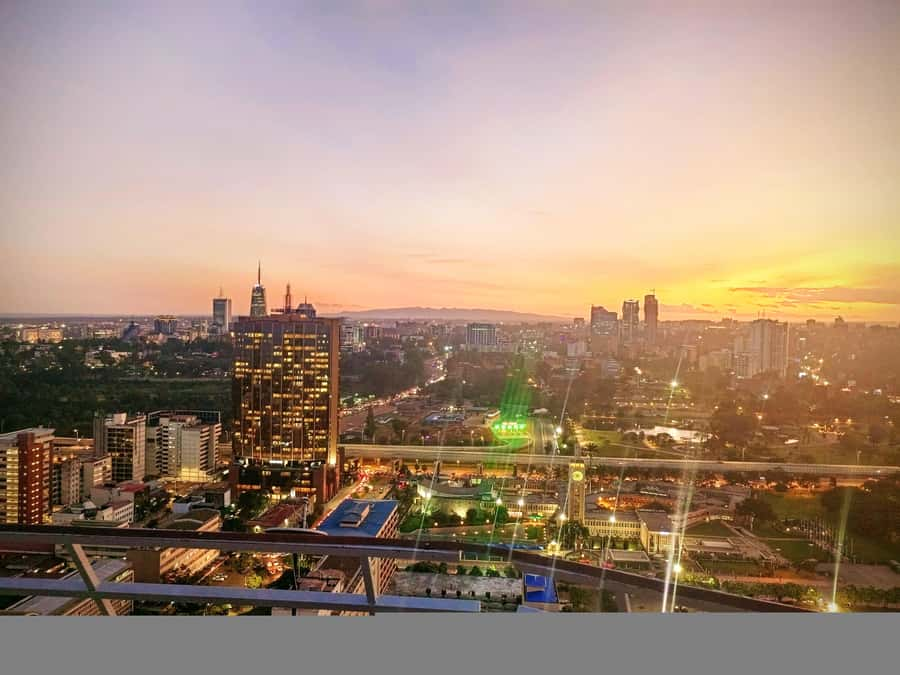
Your meeting point is the entrance of the Kenyatta International Convention Centre, opposite the office of the Nairobi Governor. That location puts you right in the Central Business District, where the tour begins with a walk and an introduction to Nairobi’s public transport system.
The KICC itself is a paid extra if you choose to enter. The entry fee is not included, but payment can be made by card. The tour does not depend entirely on going inside, so you should treat the building visit as an optional add-on rather than part of the transport experience itself.
From KICC, your guide helps you get your bearings in the CBD before moving toward the city bus stages. This opening is useful because Nairobi’s transport system can seem confusing at first. Different vehicles, routes, fares, and sounds compete for your attention. A guide gives you a framework for understanding what you are seeing.
The tour is offered as a private group with an English-speaking guide. That does not mean you will have a private bus. It means the guiding portion is arranged for your own booking group, while the public bus ride uses normal local transport.
More Party Bus Tours in the world:
- Istanbul Party Pub Crawl with Party Bus in Sultanahmet and Taksim
★ 5.0 · 1,882 reviews - Nashville’s Wildest Honky Tonk Public Party Bus (21+)
★ 5.0 · 1,305 reviews - Aruba Nightlife and Barhopping on Chogogo Party Bus
★ 4.5 · 1,201 reviews
The first ride: regular city buses from the CBD
The initial comparison begins with ordinary city transport. At Kencom Bus Stage, you may see standard services such as Citi Hoppa and Super Metro. These buses are designed for practical commuting, not entertainment.
The atmosphere is generally calmer. Passengers may sit quietly, look at their phones, or listen to music as the bus moves through the city. This part gives you an important reference point. Without it, the party bus can seem like the whole of Nairobi’s transport culture. In fact, most people are using buses to get to work, school, shops, and home.
The planned ride toward Westlands links the CBD with one of Nairobi’s major commercial areas. The point is less about checking off a landmark and more about seeing how the city moves between districts. You get a sense of the ordinary pace of a Kenyan commute before the tour shifts toward the more theatrical side of matatu culture.
Public transport also means delays and waiting. You may not leave the stage at once, and the timing can change with traffic and the number of passengers. If you need a tightly timed sightseeing schedule, this will feel loose. If you want to see transport as residents use it, the waiting is part of the lesson.
Party matatus in Nairobi’s creative neighborhoods
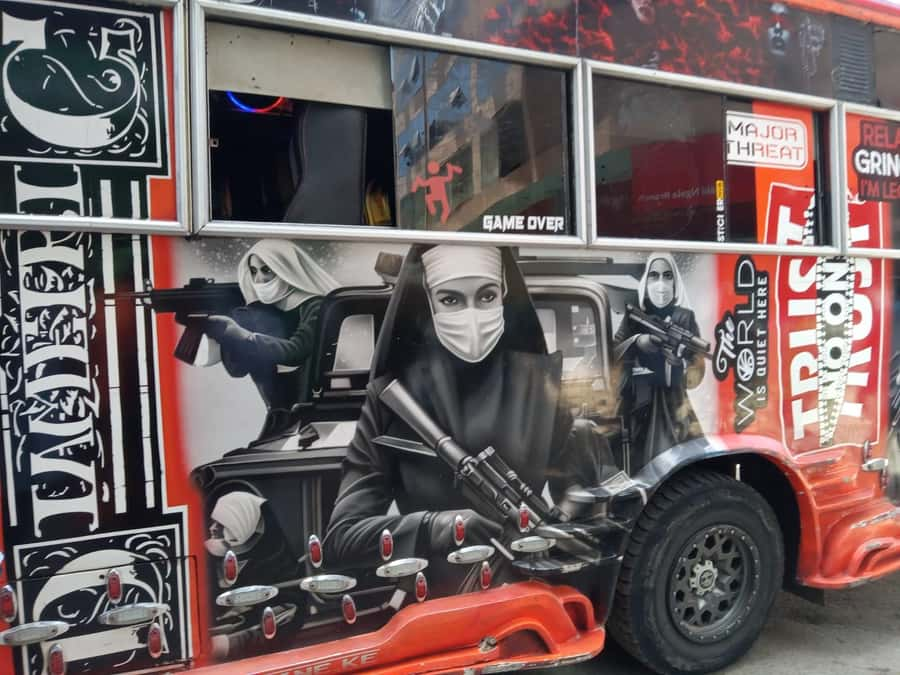
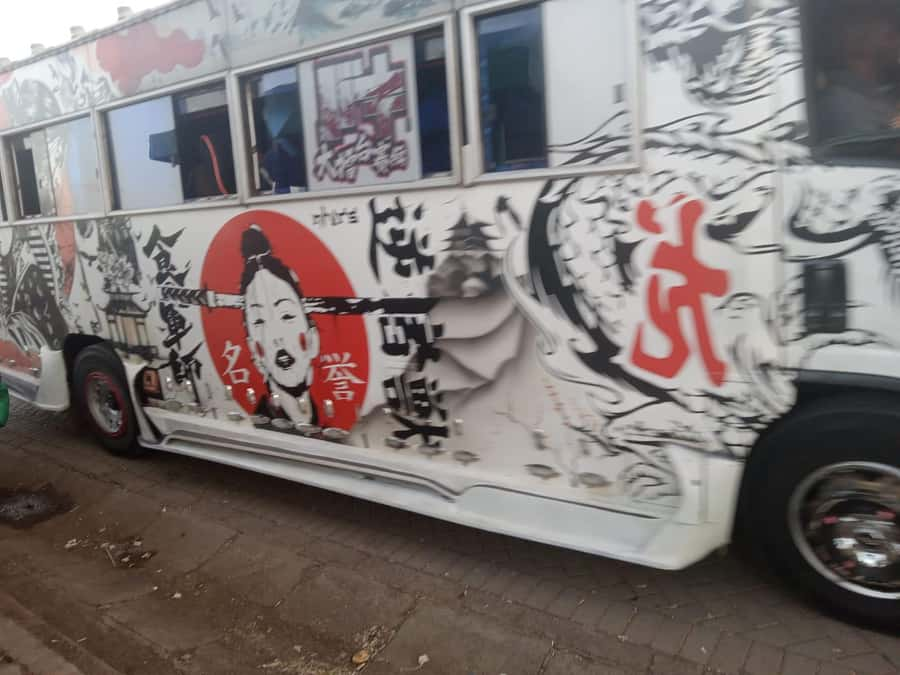
The party bus section introduces a different version of the same basic vehicle. Nairobi’s matatus are privately owned minibuses, and many are decorated with large graphics, bright interiors, and powerful sound systems. The design can turn the vehicle into a moving piece of urban art.
The tour identifies two possible routes that help explain this culture. Ngong Road is presented as a creative route, while Eastlands is described as a central area for matatu culture. The two routes give you different ways to view the city’s relationship with music, decoration, and local identity.
You should not expect every departure to follow an identical route. The experience depends on which party matatu is available and how the day’s transport works. Your guide may need to select a vehicle after reaching the bus stage, rather than presenting one reserved bus waiting only for your group.
That difference matters. The party bus is not a private sightseeing coach. You may wait for it to fill with local passengers, many of whom are traveling for work or other everyday reasons. One recent outing had a short wait before departure, but you should allow room for similar delays.
The result can feel more genuine than a private vehicle arranged for tourists, but it is also less predictable. You are seeing a working transport system, not a staged performance.
What the music and artwork tell you
The party matatu is more than a noisy version of a normal bus. Its design reflects Nairobi’s youth culture, music tastes, street art, and desire for personal expression. The vehicle becomes a public canvas that moves through neighborhoods instead of remaining in one gallery or venue.
The loud sound system is a central part of the experience. For some people, that is the fun. For others, especially anyone sensitive to noise, it may be tiring. The activity is built around the contrast between a structured regular bus and a party bus where music and social energy take over.
This is also where the guide’s explanation matters most. The advertised focus includes the history of Nairobi transport and the shift from simple commuting to entertainment-focused bus culture. Ask your guide how the vehicle styles differ, why owners invest in decoration, and how a party bus fits into the wider matatu system.
You are not only looking at painted panels. You are seeing how transport can carry local ideas about status, taste, music, and community. That makes the ride more rewarding than simply taking photographs of a colorful vehicle.
More bus tours around the world:
- Mt Fuji and Hakone 1-Day Bus Tour Return by Bullet Train
★ 5.0 · 26,383 reviews - Barcelona: 24 or 48-Hour Hop-On Hop-Off Bus Tour
★ 4.4 · 20,872 reviews - London: Warner Bros. Studio Harry Potter Tour & Branded Bus
★ 4.7 · 19,194 reviews - Rome: City Sightseeing Hop-on Hop-off Bus with Audioguide
★ 4.0 · 16,045 reviews
Westlands, Ngong Road, and Eastlands: what each part offers
The route toward Westlands provides a useful city connection. It shows how a bus links the CBD with a commercial district and gives you a practical look at Nairobi’s road traffic and commuting patterns. The drawback is that the ride is primarily transport, not a sightseeing loop with a long list of formal attractions.
Ngong Road is tied to the tour’s creative side. Here, the emphasis is on the art and personality of the matatu rather than on a single monument. If you enjoy street-level city scenes, this may be one of the most interesting sections. You will see how an ordinary route can become part of Nairobi’s visual culture.
Eastlands is presented as the heart of matatu culture. The value here is context. You are not only seeing a party vehicle in isolation, but placing it within the neighborhoods and transport habits that helped shape the culture. Again, the exact stops and route are not fixed in the information provided, so you should ask your guide what is planned that day.
Several parts of the itinerary are described simply as guided walks, sightseeing, visits, and photo stops. That suggests a flexible city tour rather than a set sequence of major attractions. Flexibility is useful when the bus system changes, but you should not book this expecting detailed entry visits at several museums or monuments.
The practical difference between a regular bus and a party bus
The comparison is the heart of the activity:
- A regular bus is mainly calm, functional, and built for daily commuting.
- A party bus is louder, more decorative, and designed for social occasions and entertainment.
- A regular bus generally costs less.
- A party bus experience carries a premium because the atmosphere is part of the product.
- A regular bus follows the needs of daily riders.
- A party bus adds music, artwork, and celebration to the same basic idea of moving people.
This helps explain the $32 price. You are not paying only for a bus fare. You are paying for a guide, a private booking arrangement, local interpretation, bottled water, and help navigating an unfamiliar transport system.
Still, the value depends on your expectations. If you mainly want to ride a decorated bus, the price may feel high because the actual public bus fare is separate. If you want a guided introduction to Nairobi’s transport culture, the walking, explanations, route comparison, and support add more value.
The listed bus fare is 500 KES and is not included. One recent outing paid 100 KES per person for a ride expected to last 20 to 30 minutes each way, then paid another small fare for a normal matatu after changing plans. Because fares and routes can vary, I would carry at least the stated 500 KES in Kenyan currency, with small notes if possible.
Safety, traffic, and changing plans
You should take the safety information seriously. Public transport in Nairobi involves traffic, crowded stages, unfamiliar vehicles, and a moving environment that your guide cannot fully control. One recent group experienced a minor crash involving a matatu and a random car about ten minutes into the ride. The group chose to return to the KICC area, and the guides adapted by helping them take a normal matatu back.
That flexibility is a real advantage. The guides did not insist on continuing after the family became uncomfortable. They helped change the plan and supported the return to the CBD. The group then went to the KICC helipad, which required another payment.
At the same time, flexibility does not remove the risks of public transport. One rating gave the experience three out of five and specifically questioned traveler security. You should consider that before booking, particularly if you are traveling with small children or want a controlled vehicle with a fixed driver.
The tour does include security, but the available information does not explain exactly what that service covers. Ask the provider about the security arrangement before departure if this is important to you. Do not bring alcohol or drugs, and drones are not allowed. Feeding animals is also prohibited, though animals are not a central part of this city activity.
Private group, public bus
The private-group setup can make the walking and explanations feel more personal. You can ask questions about the transport system, the routes, and the artwork without being part of a large sightseeing crowd.
The public bus portion has a different character. Your group shares the vehicle with local passengers, and you may need to wait for enough people to board. This is one of the most authentic parts of the experience, but it can also confuse anyone expecting a reserved seat or a private party vehicle.
The tour lasts 210 minutes, or three and a half hours. That is enough time for a CBD walk, transport explanation, at least one regular bus comparison, and a party matatu ride if conditions cooperate. It is not so long that the day becomes dominated by bus stages and traffic.
Because the itinerary is flexible, contact the provider if you have booked and received no response, especially after making a late booking. Starting times depend on availability, so check the schedule rather than assuming a fixed departure.
Who will enjoy this experience most
I would recommend this tour to you if you like cities from street level. It suits people who want to understand how residents move around, who enjoy music and graphic art, and who are willing to trade comfort for local context.
It is also a good fit if you have already seen Nairobi’s major sights and want something different. The experience focuses on transport, neighborhoods, and urban culture rather than a standard museum or wildlife outing.
Families should think carefully. The recent minor collision ended one family’s ride early, and younger children may find the noise, traffic, and crowded public transport stressful. Older children and teenagers who enjoy music, vehicles, and city life may find it memorable, but you should explain in advance that the bus is public and the plan can change.
I would not choose this as a first activity after a long flight if you need a calm introduction to Kenya. I would also avoid it if you require guaranteed security, fixed departure times, private transport, or a quiet ride.
Booking value and the final return to KICC
At $32 per person, the tour is fairly priced for a guided, private-group introduction to a distinctive part of Nairobi. The included guide, bottled water, and security help, but the extra bus fare and possible KICC entry fee raise the true cost.
The strongest value comes from interpretation. Without a guide, you could ride a matatu, but you might miss the story behind the decoration, the difference between ordinary buses and party vehicles, and the role of music in Nairobi’s transport culture.
The return to KICC closes the loop. You finish where you began, after seeing both sides of the system: ordinary commuting and transport as celebration. The ending may be less dramatic than the ride itself, but it gives you a useful final comparison.
Should you book the Nairobi party matatu adventure?
Book it if you want a flexible, local look at Nairobi’s bus culture and you are comfortable with public transport, noise, traffic, and some uncertainty. The guides’ willingness to adjust the plan is especially valuable if conditions change.
Skip it if you need a private vehicle, a guaranteed party bus, a fixed sightseeing route, or a strong safety structure. Carry cash, allow extra time, ask about the day’s route, and treat the bus ride as an everyday Nairobi experience with entertainment added, not as a polished amusement ride.
FAQ
Where does the Nairobi party matatu tour start?
The meeting point is at the entrance of the Kenyatta International Convention Centre, opposite the office of the Nairobi Governor.
How long does the experience last?
The activity lasts 210 minutes, or three and a half hours.
What language is the tour offered in?
The live tour guide speaks English.
Is the tour private?
Yes. The activity is arranged for a private group, although the bus ride uses public transport and may include local passengers.
Is bus fare included in the price?
No. Bus fare is extra. The activity information lists 500 Kenyan shillings, so you should bring cash.
Is entry to the Kenyatta International Convention Centre included?
No. The entry fee is separate, but you can pay by card.
What transport routes may be included?
The experience may include travel toward Westlands and exploration of matatu culture around Ngong Road and Eastlands. The exact route can depend on local conditions and bus availability.
Are food and drinks included?
Food and drinks are not included. Bottled water is included.
Can I cancel the booking?
You can cancel up to 24 hours in advance for a full refund.
Can I reserve now and pay later?
Yes. The activity allows you to reserve your place and pay later.
Just joined the route map around the world
- San Pedro de Atacama: Vallecito + Magic Bus★ 5.0 · 4 reviews
- Santander: City Sightseeing Hop-On Hop-Off Bus Tour & Train★ 4.3 · 170 reviews
- Santiago: 1-Day Hop-On Hop-Off Bus and Cable Car Ticket★ 4.3 · 332 reviews
- San Francisco: Sightseeing Sunset Tour by Open-Top Bus★ 4.4 · 105 reviews
- San Francisco: Movie Filming Locations Bus Tour★ 4.9 · 368 reviews
- San Fransisco: Vintage VW Bus Wine Country Tour Small Group★ 5.0 · 5 reviews
- SF: Napa & Sonoma Wine Tour & Hop-on Hop-off Tour (Save 15%)★ 4.5 · 2 reviews
- San Francisco: Hop-On Hop-Off Tour with Optional Night Tour★ 4.5 · 94 reviews