
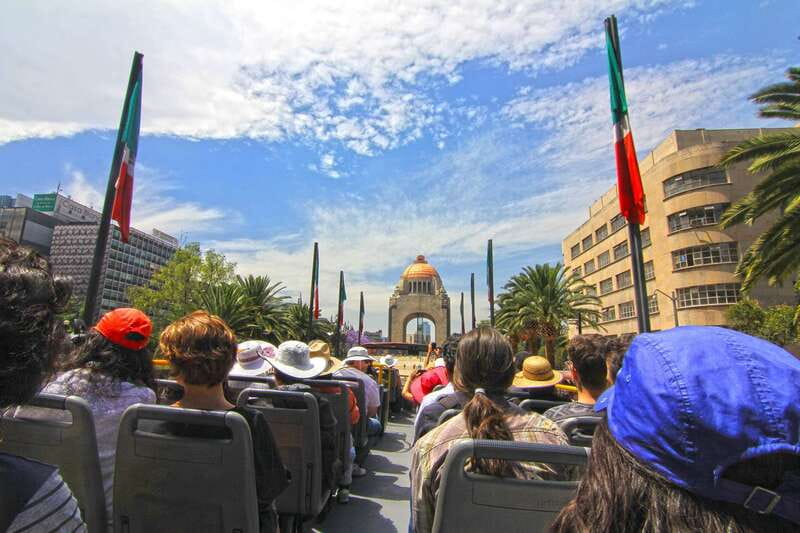
Review · MEXICO CITY
Mexico City: Hop-on Hop-off Bus Tour
Mexico City is too large to understand on foot in a day, but the Turibus network gives you a useful first look at its many districts. One bracelet covers four routes, so you can move from the Zócalo and Reforma to Polanco, Coyoacán, and the Basilica of Guadalupe without arranging a new taxi each time.
I like the freedom to hop off whenever a museum or neighborhood catches your eye, and I like the price: about $21 for one day, or a practical two-day option if you want to see all four circuits. The main catch is traffic. A route that looks short on the map can take much longer, and the Spanish announcements may overpower the audio in your headset.
Key points to know before you board
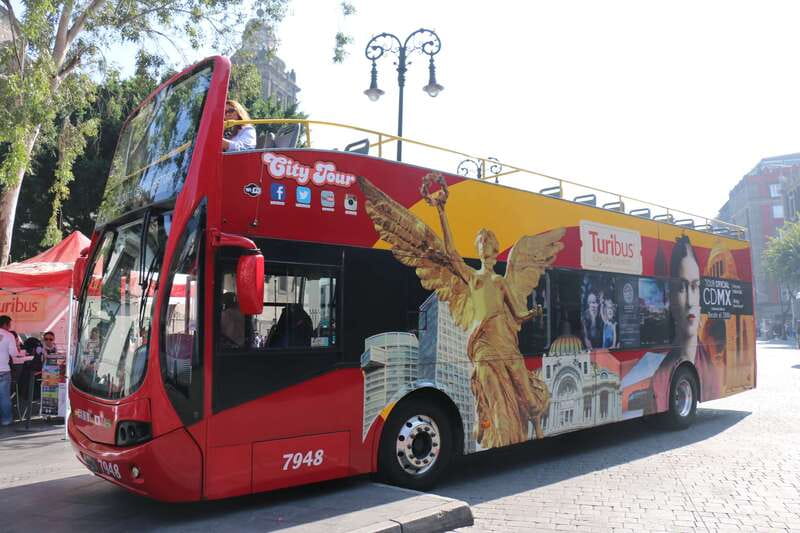
- Four very different routes: Combine Historic Downtown, Polanco, South, and Basilica circuits with one ticket.
- Best for first-time orientation: The bus shows you where major museums, plazas, shopping streets, and neighborhoods are before you return on foot.
- Two days is the wiser choice: One day may cover the main route, but all four circuits require careful planning.
- Bring your own earphones: The supplied earbuds can be poor, and some buses have loud Spanish announcements.
- Traffic shapes the day: The South route can take hours, especially on the way to the Frida Kahlo Museum.
- Open-top comfort, with limits: The upper deck gives you broad views, but afternoon sun, heat, and low wires require care.
Four routes, four versions of Mexico City

This is not one fixed sightseeing loop. It is a city transport system with commentary, and that distinction matters. You can ride a full circuit to get oriented, then hop off at the places you want to explore properly.
The Historic Downtown Route is the best starting point for most people. The Polanco Route focuses on modern design, shopping, and museums. The South Route reaches Coyoacán, San Ángel, UNAM, and Cuicuilco. The Basilica Route connects the historic center with Garibaldi and the Basilica of Guadalupe.
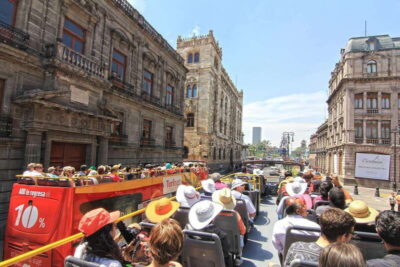
The buses are open-top double-deckers, and the audio system offers Spanish, English, German, French, Italian, Chinese, Japanese, Portuguese, and Russian. There is also a special channel for children. You get one bracelet for all routes and stops.
More Hop-On Hop-Off Bus Tours in Mexico
- Mexico City: Hop-on Hop-off City Tour by Turibus 1-Day Pass
★ 4.1 · 691 reviews - Cancun City Sightseeing and Shopping Tour on a Double Decker bus
★ 4.0 · 540 reviews - Puerto Vallarta: Hop-On-Hop-Off City Bus Tour
★ 4.1 · 386 reviews
Historic Downtown and Reforma: the strongest first ride
The red Historic Downtown circuit is the one I would choose first. It runs daily from about 9 a.m. to 7 p.m., with buses roughly every 30 minutes, although traffic can change that rhythm.
The route includes 19 stops and links several of Mexico City’s most useful sightseeing areas. It reaches the National Auditorium, the Museum of Modern Art, Condesa, Plaza Madrid at Cibeles, Casa Lamm, the Angel of Independence, Reforma 222, the Wax Museum and Ripley’s, the Colón monument, the Juárez Hemicycle, the Zócalo, Plaza Manuel Tolsá, the Franz Mayer Museum, the Monument to the Revolution, the Museum of San Carlos, Reforma and Insurgentes, Reforma Río de la Plata, and the National Museum of Anthropology.
You can think of this circuit as a long introduction to the city. Reforma gives you major monuments and museums, while Condesa and Cibeles show a more local side of the central districts. The Zócalo is the key stop for the Metropolitan Cathedral, the National Palace area, and surrounding food options.
The route also works well as a planning tool. Stay on for a complete ride and mark the places you want to revisit. Then use the bus as transport between selected stops. I would not try to visit every major sight in one pass. The point is to see the city’s shape, not rush through its museums.
The main drawback is time. Traffic around central Mexico City can be slow, especially during busy periods. A few stops may look close together but take much longer than expected. If you have only one day, begin early and use this circuit before attempting the longer southern route.
Polanco: museums, shopping, and modern Mexico
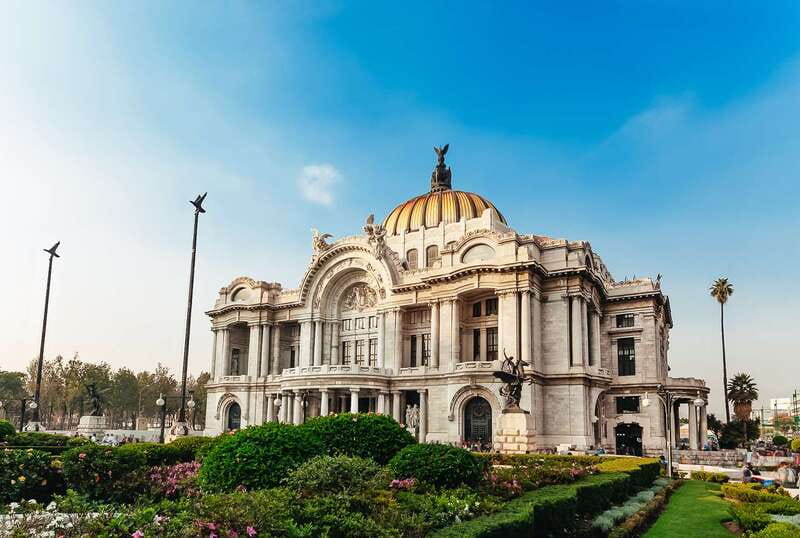
The Polanco Route is shorter, with seven stops, but it covers a different side of the capital. Service runs from Auditorio at 10 a.m., 11:30 a.m., 1 p.m., 2:30 p.m., 4 p.m., and 5:30 p.m.
Stops include Auditorio, Arquímedes and Campos Elíseos, Masaryk and Moliere, Antara shopping center, the Soumaya Museum, Hipódromo and Granja Las Américas, and the Papalote Children’s Museum.
This is the route for polished streets, large shops, newer buildings, and prominent museums. The Soumaya Museum is one of the key reasons to use it, while Papalote works well for families. Masaryk and Moliere are useful if you want to browse the city’s high-end shopping district.
Polanco is also a good contrast to the Historic Downtown circuit. The central route explains Mexico City through plazas, monuments, and older buildings. Polanco shows its modern, commercial face.
The schedule is less flexible than the red route because departures are listed at fixed times rather than every 30 minutes. Check the clock before getting off. If you miss a departure, your wait may be much longer than on the main circuit.
The South Route: Coyoacán requires patience

The South Route is the most ambitious circuit. It runs daily from about 11 a.m. to 7 p.m., with service described as roughly every hour to 90 minutes. Its 19 stops include Fuente de Cibeles, Mercado Roma, the World Trade Center, Torre Manacar, the Frida Kahlo Museum, Centro Histórico Coyoacán, Avenida de la Paz, Centro Cultural San Ángel, the University Olympic Stadium, the botanical garden, Perisur, KidZania Cuicuilco, UNAM Rectoría, Plaza Oasis Coyoacán, Mercado Roma Coyoacán, Fonart, and other Coyoacán stops.
This route gives you a more residential and cultural view of the city. Coyoacán has a slower feel, with historic streets, markets, plazas, and the Frida Kahlo Museum. San Ángel adds colonial architecture and cultural stops. The UNAM section brings in university buildings, gardens, and the Olympic Stadium area.
The important practical warning is time. The ride to the Frida Kahlo Museum can take close to two hours in heavy traffic. That does not make the route a poor choice, but you should not treat it like a quick shuttle. If the museum is your priority, allow plenty of time and consider starting the day with the South Route.
I would use this circuit only after deciding which stops matter most. Getting off at every point is not realistic in one day. Pick one or two targets, then enjoy the ride between them. If you are staying near Reforma or Polanco, the route may also require extra travel to reach its most useful stops.
Same streets, a different ride:
- Mexico City: Double Decker Bus Night Tour
★ 3.8 · 373 reviews - Turibus Hop On Hop Off Mexico City Tour
★ 3.0 · 347 reviews - Cancun: Hop-On-Hop-Off Sightseeing Bus Tour
★ 3.7 · 256 reviews - Mexico City: Night City Tour in a Double Decker Bus
★ 4.2 · 235 reviews
Basilica Route: a compact trip through older traditions

The Basilica Route runs from the Zócalo at 10 a.m., 11:30 a.m., 1 p.m., 2:30 p.m., 4 p.m., and 5:30 p.m. Its listed stops are Zócalo, Garibaldi, the Basilica of Guadalupe, and Palacio de los Condes de Miravalle.
This is the shortest and most focused route. It links the central plaza with Garibaldi and the Basilica, taking you through pre-Hispanic, colonial, and modern chapters of Mexico City.
The Basilica of Guadalupe is the main reason to choose it. For many visitors, this is a central cultural and religious stop, not simply another landmark. Garibaldi offers a different atmosphere and connects the route to Mexico’s mariachi tradition.
Because departures are spaced at fixed times, check when the next bus is due before getting off. The route is easier to fit into a day than the South circuit, but it still needs planning if you want time at the Basilica and other stops.
What the audio guide is really like
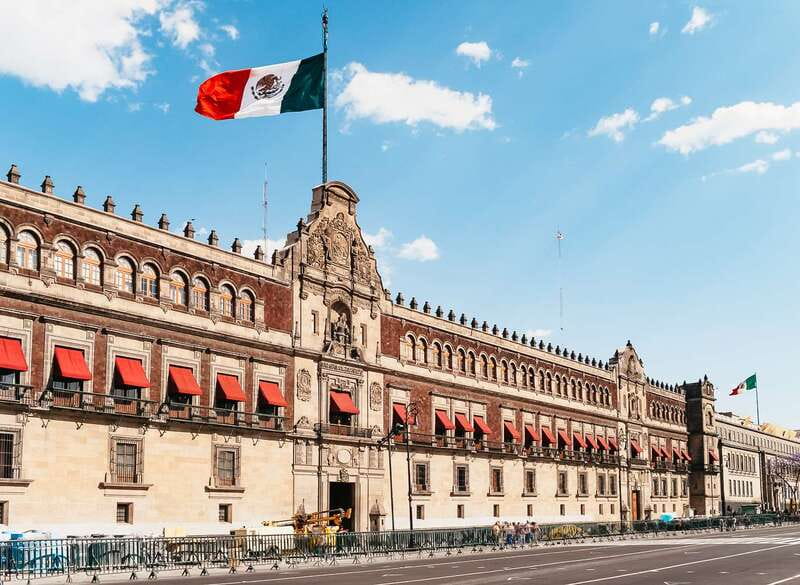
The multilingual audio is useful, but it is not perfectly consistent. Use channel 2 for English if that is your preferred language, and bring your own earphones. The supplied earbuds have been described as poor, and some buses have headphone jacks or speakers that do not work well.
The larger problem is sound balance. Spanish announcements played through the bus can be loud enough to drown out the English recording, especially near the speakers. Street noise adds another layer, and some commentary may end before the explanation is complete.
You can improve your chances by sitting away from the overhead speakers and testing the audio before the bus leaves. Ask for earphones when you board if you need them. The driver or staff may announce upcoming stops in Spanish, so keep an eye on the route and listen for stop names.
The narration is best treated as background context, not a full guided visit. It helps explain what you are passing, but you will still want to explore major museums, churches, and neighborhoods on foot.
Open-top views, weather, and city traffic
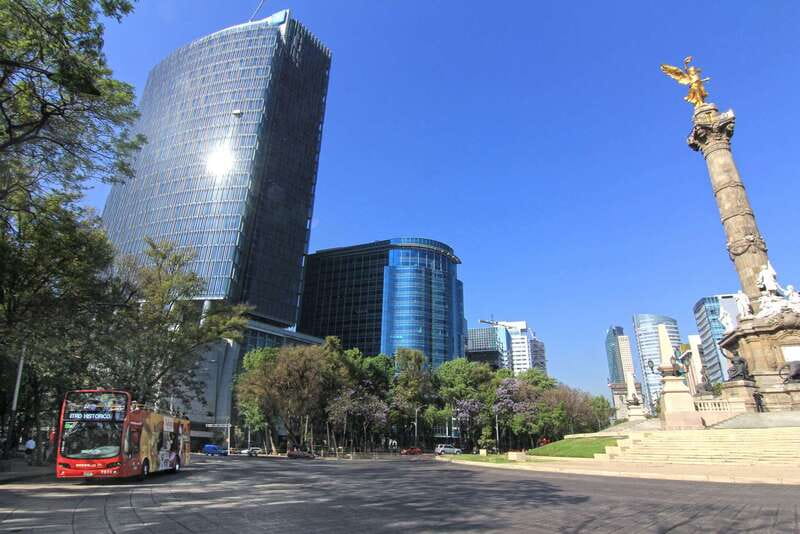
The upper deck is the reason many people choose this format. You get a wider view of monuments, tree-lined avenues, buildings, and street life than from a normal city bus. Morning and late afternoon can be comfortable and refreshing.
Midday is another matter. The upper deck can become very hot, and the metal seats may heat up in strong sun. Bring water, wear a hat, and use sunscreen. You can move downstairs when needed, but the lower deck gives you less of the open-air experience.
Watch for low-hanging power lines and other overhead obstacles. This is a city bus, not a quiet sightseeing vehicle, and the open roof brings you closer to the street environment.
Traffic is the biggest factor you cannot control. The route schedules are approximate, and delays can stretch the gap between buses. The main red route generally has the best frequency. The Polanco and Basilica circuits use scheduled departures, while the South Route may require a long wait.
Making the $21 fare work for you
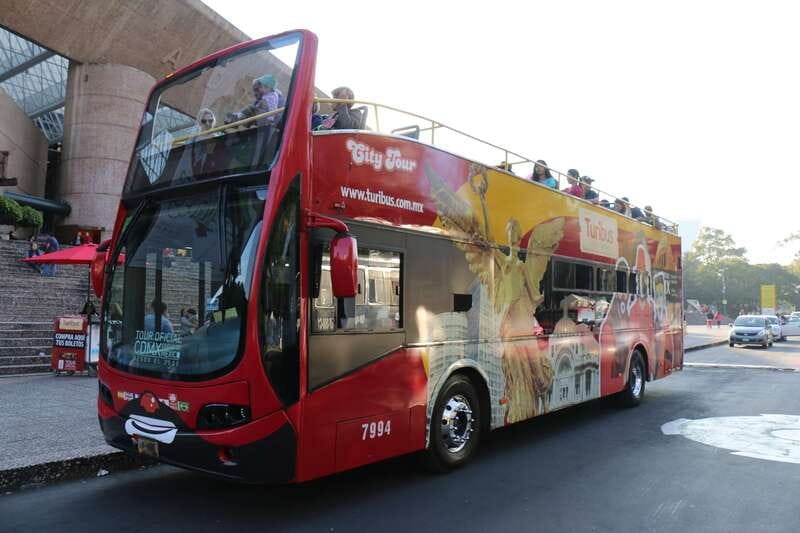
At about $21 per person, the one-day ticket is good value if you use it both as transport and as a narrated city overview. A few separate taxi or rideshare trips can cost more, especially if you are moving between distant districts. You also get access to all four routes rather than paying separately for each area.
The value drops if you spend most of the day inside one museum or wait through several traffic delays without getting off. The bus is not a shortcut through Mexico City. It is a comfortable way to cover ground and decide where to spend your limited sightseeing time.
The two-day option makes better sense for many people. One day is enough for a broad ride on the Historic Downtown circuit, but adding Polanco, Coyoacán, and the Basilica can make the schedule feel forced. With two days, you can give the South Route the time it needs and use the other circuits with less pressure.
A useful plan is:
- Day one: Ride the Historic Downtown circuit, then get off at the Zócalo or a museum stop.
- Day two morning: Take the South Route and choose Coyoacán or the Frida Kahlo Museum as your main stop.
- Day two afternoon: Use Polanco or the Basilica Route, depending on your interests.
You can begin at any listed stop by showing your printed or electronic voucher when boarding. The information about exact pickup points can be confusing, and stops may not always sit directly beside the attraction named. Leave extra time to find the stop, especially around the Frida Kahlo Museum.
Who will get the most from this tour?
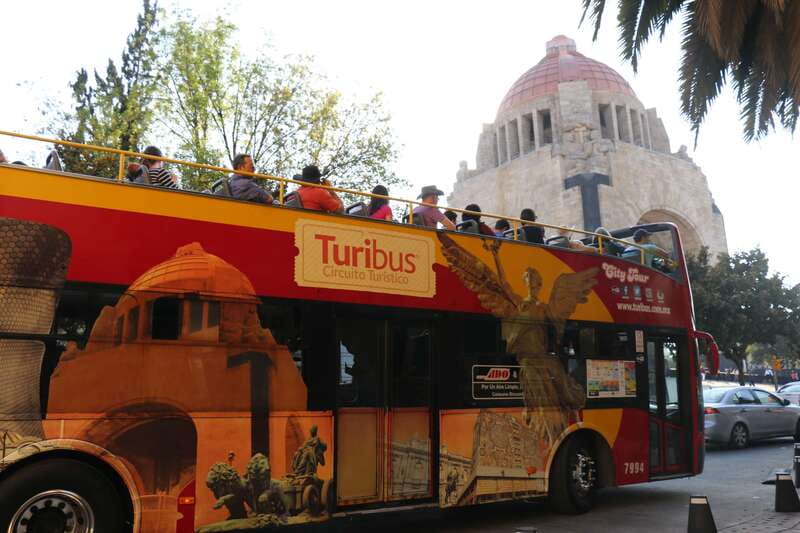
I would recommend it to first-time visitors, families, and anyone who wants a broad introduction before choosing where to return. It is also helpful if walking all day is tiring, since you can sit, listen, and cover long distances between neighborhoods.
It suits independent visitors who enjoy making their own plan. You decide when to get off, how long to stay, and which route to take next. The children’s audio channel adds a useful option for families.
It is less suitable if you need precise travel times or want a quiet, fully guided experience. Traffic can upset a carefully timed itinerary, and the audio may require patience. If you have only a few hours, choose one route rather than trying to collect all four.
Cancellation is available up to 24 hours before departure for a full refund, and you can reserve without paying immediately. The buses are wheelchair accessible. Children up to age three ride free but must sit on a parent’s lap. There are no restrooms onboard.
Should you book the Mexico City Turibus?
Book it if you want an affordable way to see how Mexico City fits together before exploring it more closely. The Historic Downtown Route gives the strongest first ride, while the South Route is worth adding if Coyoacán, UNAM, or the Frida Kahlo Museum matters to you.
Choose the two-day pass if your schedule allows. Bring your own earphones, avoid the hottest part of the afternoon on the upper deck, and treat traffic estimates as flexible. With those limits in mind, this is a practical city introduction and a useful way to reach districts that are too far apart for a relaxed walking day.
FAQ
How long is the Mexico City hop-on hop-off ticket valid?
You can choose a ticket valid for one or two days. Check availability for the current starting times.
Can I use one ticket on all four routes?
Yes. One bracelet gives you access to the Historic Downtown, Polanco, South, and Basilica routes.
Where can I board the bus?
You can begin at any of the listed stops. Show your printed or electronic voucher when boarding.
What time does the Historic Downtown Route operate?
It runs daily from about 9 a.m. to 7 p.m., with buses approximately every 30 minutes. Traffic can affect the actual frequency.
What languages are available for the audio guide?
The audio system offers Spanish, English, German, French, Italian, Chinese, Japanese, Portuguese, and Russian. A special audio channel is available for children.
Does the bus have restrooms?
No. The buses do not have restrooms.
Are children under three charged?
Children up to age three travel free, but they must sit on a parent’s lap.
Is the bus wheelchair accessible?
Yes, the activity is listed as wheelchair accessible.
Just joined the route map around Mexico
- Puerto Vallarta: Hop-On-Hop-Off City Bus Tour★ 4.1 · 386 reviews
- Puebla Sightseeing Tour by Double-Decker Tram★ 4.0 · 21 reviews
- Puebla: Hop-on Hop-off City Tour and Observation Wheel★ 5.0 · 2 reviews
- Puebla: Hop-On Hop-Off Bus Tour with Audio Guide★ 3.5 · 14 reviews
- Puebla: Cholula Magical Town Tour by Double-Decker Bus★ 4.3 · 74 reviews
- Oaxaca: Colonial City Bus Tour★ 3.8 · 14 reviews
- Mexico City: Night Bus Tour★ 3.4 · 33 reviews
- Mexico City: Hop-on Hop-off City Tour with Attractions★ 3.9 · 29 reviews
Mexico City Bus Tours, side by side.
Mexico City: Hop-on Hop-off City Tour by Turibus 1-Day Pass
Read our review →

Mexico City: Hop-on Hop-off City Tour with Attractions
Read our review →Other lists with this bus tour